
Unbiased headlines. Facts, not spin.
Unbiased Headlines is an independently owned news organization. We bring you the facts, not opinions, written fresh from 110+ named sources. Sources linked so you can verify it yourself.
 energy
Major Story (8/10)
Boehly-Led Consortium Signs Deal for Lukoil's Foreign Assets in $10 Billion Share Swap
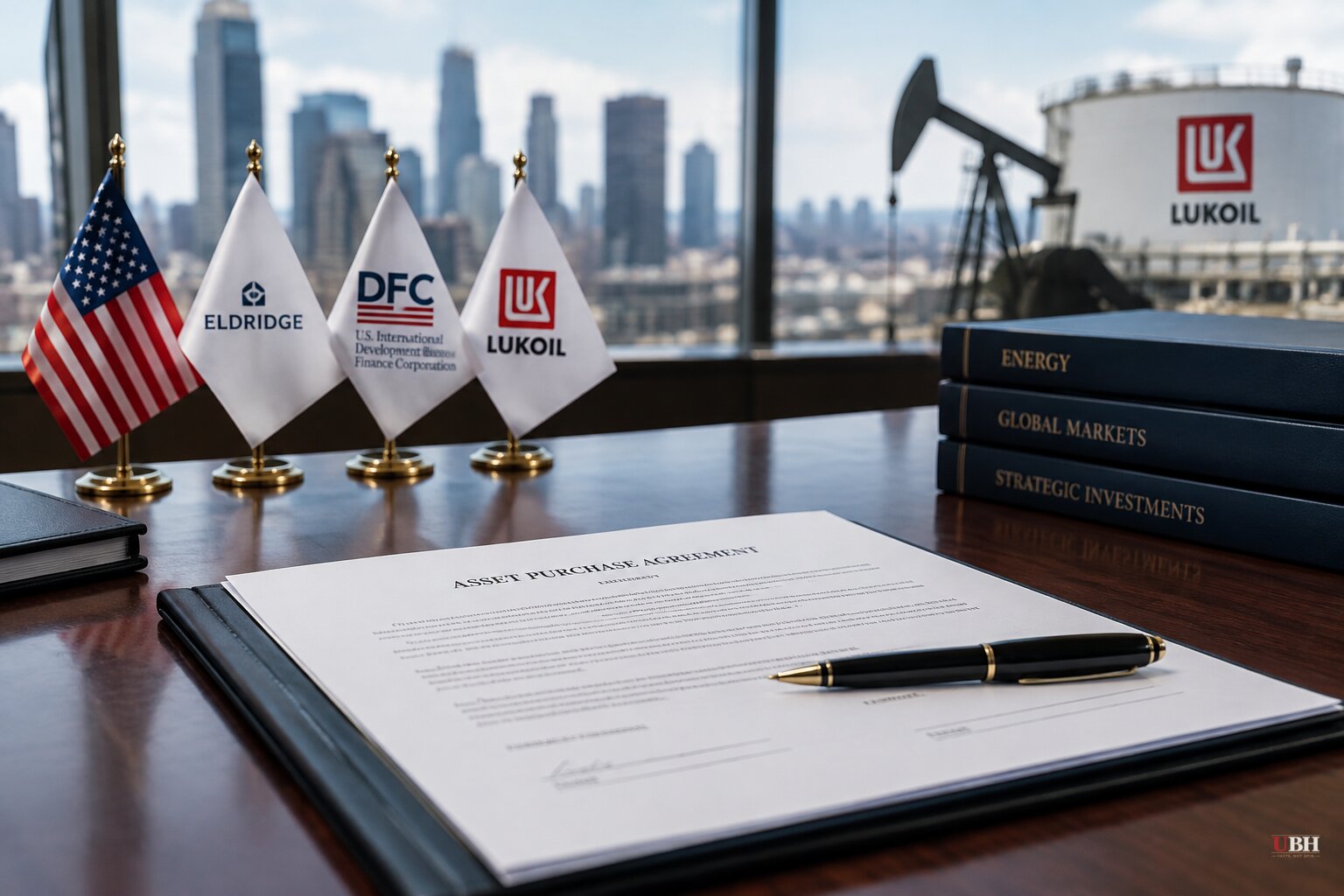
A U.S.-led consortium announced today, Nov. 25, that it has signed a definitive agreement to buy LUKOIL International GmbH from its sanctioned Russian parent. Eldridge, the asset manager run by billionaire Todd Boehly, leads the group. The U.S. International Development Finance Corporation (DFC), UAE-based Catena Investment Holding and Xtellus Partners are also in it.
The price was not disclosed in the consortium's release. Boehly and a DFC official put the value of the Lukoil securities to be exchanged at $10 billion. Two people familiar with the terms valued the asset portfolio at about $16 billion. Earlier this month, Reuters reported an initial valuation of $22 billion.
What is being bought
Lukoil International's upstream operations span 11 countries and produce about 350,000 barrels of oil equivalent a day. That includes major fields in Azerbaijan and Kazakhstan.
Three refineries come with it: Burgas in Bulgaria, the largest in the Balkans, Zeeland in the Netherlands, and Petrotel in Romania. Combined capacity is about 350,000 barrels a day. The package also includes the LITASCO trading business and more than 2,000 retail stations across 16 countries in Europe, North America and Central Asia.
The consortium says it will prioritize stabilizing operations after closing and bringing full refining capacity back online.
How the swap works
There is no cash payment to Moscow. The consortium would swap restricted shares in PJSC Lukoil and other Russian companies for 100% of Lukoil International's equity. Eldridge says the structure fully separates the assets from the Russian parent at closing. It also says sale proceeds would sit in a restricted custodial account for five years or until the relevant sanctions are lifted. A person familiar with the terms said the shares will be held in escrow in the UAE rather than going to Lukoil, to satisfy Treasury's bar on any windfall to the company.
The securities were bought from U.S. and British funds and from U.S. depositary banks that held them for retail investors. Western holders had been stuck with frozen, written-down shares since Russia invaded Ukraine in 2022. "We're basically exchanging shares that are worthless to Americans ... for cash that is going back to them," Boehly said.
The taxpayer angle
The DFC takes an ownership stake, which the agency has not sized. Washington would receive a share of future profits after the private investors recoup their capital and an agreed return, plus a seat on the governing board. The consortium's release says the transaction will "return billions to American taxpayers." No figure or schedule backing that claim has been published.
A DFC official said that moving strategic energy infrastructure into U.S. or allied hands is "a key policy priority of the administration." Petras Katinas, a research fellow at the Royal United Services Institute in London, told CNN earlier this month that a deal like this "demonstrates the efficiency of sanctions." He said Western sanctions are forcing Lukoil to give up assets built over decades, and that the transfer would remove a source of future earnings for the company.
Lukoil did not respond to requests for comment on the deal.
A long road to this point
The Treasury Department sanctioned Lukoil and Rosneft in October 2025. Secretary Scott Bessent said at the time that Treasury was targeting Russia's two largest oil companies because of Vladimir Putin's refusal to end the war. Lukoil was forced to put its foreign holdings up for sale.
Two buyers have already fallen through. Gunvor's offer died after Bessent called the trader the "Kremlins puppet." Lukoil then agreed in January to sell to Carlyle, excluding its stakes in Kazakhstan's Karachaganak and Tengizchevroil projects and the Caspian Pipeline Consortium. OFAC never licensed that deal. The agreement lapsed in July, and Carlyle left the race in October.
The Boehly group's own path was not smooth. One person familiar with the terms said the share-swap idea was first rejected by Treasury and won support from the State Department. That account comes from a single unnamed source, and Treasury has not commented on it.
The consortium's membership also shifted. Two partners left last week: the Syrian-Qatari Al-Khayyat brothers and Abu Dhabi's International Holding Company.
What still has to happen
The agreement is subject to conditional approval from OFAC, completion of due diligence, customary closing conditions and other regulatory approvals. A source familiar with the process said a full review could take time given the breadth of the portfolio. Boehly said closing could take up to a year. The source also said Treasury will review the deal to ensure U.S. national security is protected.
OFAC has issued 12 versions of its license covering the sale talks. The latest, issued Nov. 19, allows negotiations to continue until Dec. 19. Whether OFAC clears a structure its own department initially rejected, and whether the license is extended again before that date, are the next tests.
Treasury has also eased pressure elsewhere. It issued temporary waivers beginning in March to release sanctioned Russian crude already on vessels, aimed at easing oil prices during the Iran war.
Sources used for this briefing
7 links from 7 independent newsrooms (syndicated copies of the same report count once)
These are the sources it draws on, linked so you can verify.


