
Unbiased headlines. Facts, not spin.
Unbiased Headlines is an independently owned news organization. We bring you the facts, not opinions, written fresh from 110+ named sources. Sources linked so you can verify it yourself.
 energy
Notable (6/10)
Event date: November 18, 2026 ·
Data Center Developers Have Proposed 129 GW of On-Site Fossil Power, but Only 4.9 GW Is Running, Cleanview Says
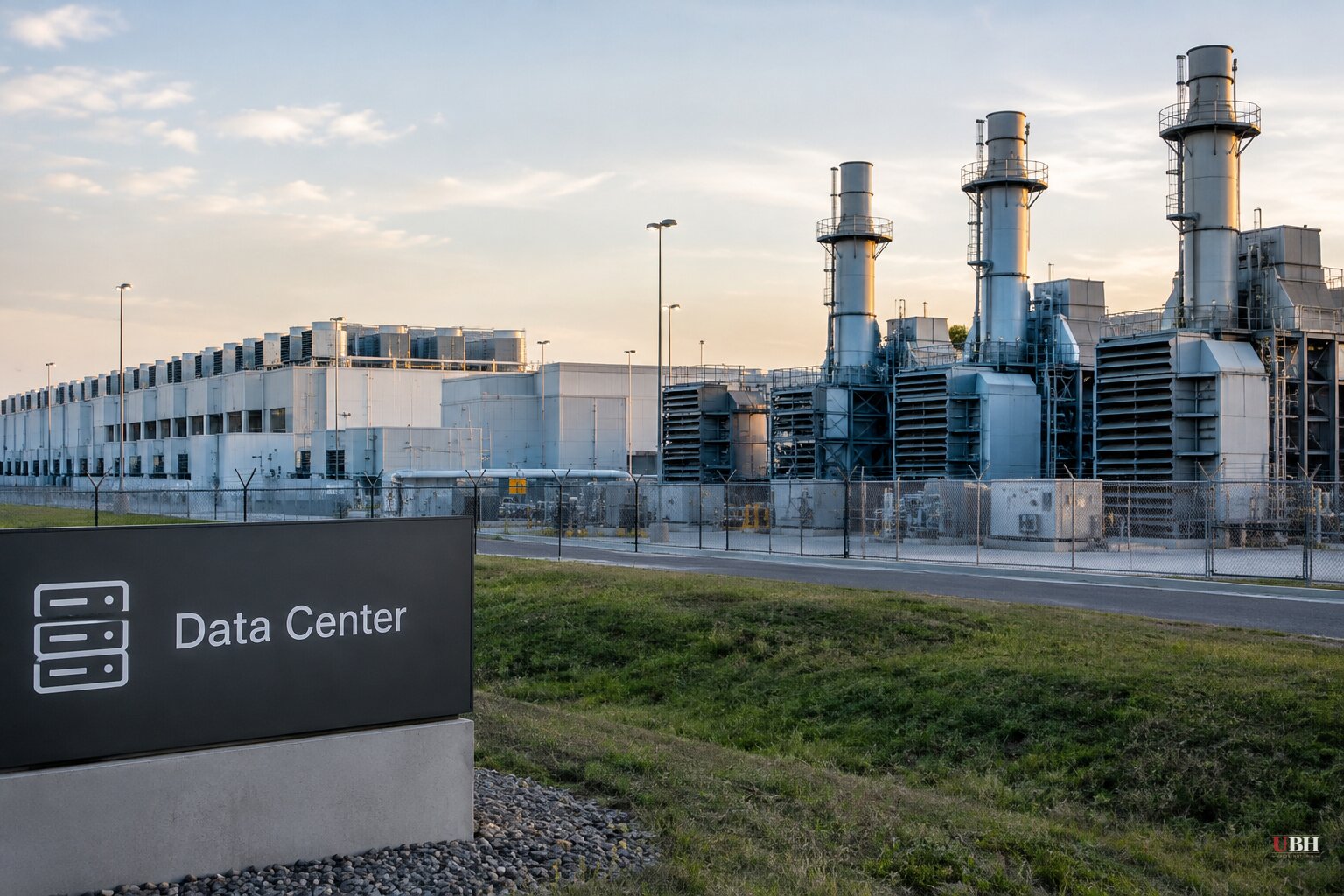
The argument over data centers has moved from how much power they need to where it comes from. Increasingly, the answer is gas turbines and engines built on site, next to the servers.
Energy research firm Cleanview counted more than 100 on-site fossil-fuel projects at U.S. data centers as of October, totaling over 115 gigawatts. Its latest tally is 120 projects and 129 GW. Cleanview's figures were relayed in a Nov. 24 MIT Technology Review report.
The pipeline is far bigger than what exists. Only 4.9 GW was operating as of October, and 15.8 GW was under construction. The rest is announced, not built.
Why developers are building their own plants
The driver is the wait for a grid connection. Large loads can face delays of up to 10 years because of limits on transmission lines and transformers, according to the MIT Technology Review account of Cleanview's data. The Natural Resources Defense Council puts interconnection backlogs at five to seven years in some regions.
BloombergNEF, in a Nov. 11 report commissioned by Bloomberg Philanthropies, says the financial rewards for energizing quickly are pushing developers to build on-site gas while they wait. The Rocky Mountain Institute estimates grid power for large U.S. users costs $55 to $115 per megawatt-hour. Self-generated fossil power runs an estimated $100 to $165.
So developers are paying more to get power sooner. In a race where speed is the whole game, they have decided it is worth it.
The emissions math
BloombergNEF has tracked 181 GW of announced gas-fired generation proposed alongside data centers worldwide. More than 90% of it is in the United States. The firm says that pipeline varies widely in maturity and should be read as an indication of potential scale, not a forecast.
If every proposed U.S. plant were built and run on BNEF's assumptions, they would emit about 345 million metric tons of CO2-equivalent a year. That is 152 million tons more than supplying the same data centers with average U.S. grid electricity, equal to 10% of U.S. power-sector emissions in 2025, BNEF says.
BNEF also flags a lock-in risk. Many projects are billed as bridges until the grid connection arrives, but once they are running, the economics could encourage them to keep generating.
The tallies differ by tracker. The NRDC cites experts counting anywhere from 90 GW to 177 GW of proposed behind-the-meter gas, and says the number of such projects doubled in the first half of 2026.
The NRDC, an environmental advocacy group, argues the build-out is "a costly shortcut." It says on-site engines, including reciprocating engines and repurposed jet engines, are less efficient and less regulated than grid-connected combined-cycle plants. It wants lawmakers and regulators to "step in to stop it." It also notes that many of the tech companies involved have publicly committed to fully decarbonizing their energy supply.
The BNEF report reaches a narrower conclusion. In the U.S. and Europe, it says, grid-connected data centers are the more sustainable option, which makes faster grid connections the priority.
Washington and the ballot box
On Monday, Nov. 9, the Senate voted 73–25 to begin debate on the Bipartisan American Affordability and Jobs Act of 2026 (S. 5653). The bill, written by Sens. Mike Lee, Shelley Moore Capito, Martin Heinrich and Sheldon Whitehouse, would ease federal permitting for energy projects and expand the power grid. President Trump urged senators to back it on Truth Social, calling it a "BIG WIN for U.S. ENERGY INDEPENDENCE and DOMINANCE."
Trump also pointed to provisions that would require builders of new data centers to pay for their own power and "help invest in their local communities." He has said China "will take any data center that we don't want."
Sen. Jeff Merkley (D-Ore.) voted no. He said the package would speed natural gas pipelines and LNG export facilities, weaken environmental protections and limit tools to challenge projects. He praised its transmission and data-center provisions and said he looks forward to working with colleagues "to get permitting reform right."
Voters are already weighing in. CNN's voter poll found about a quarter of voters called AI and data centers "crucial" to their midterm vote. Voters opposed building data centers in their communities by roughly 3 to 1. In Texas, where Democrats won the Senate race and unseated the Republican governor and lieutenant governor, activist Maggie Elizabeth Hill of Don't Drain Texas says she is already looking at what the new leadership can do to slow projects. Many opponents are pushing moratoriums. Others want transparency and local benefits.
Utilities are pricing it in
The cost question is already landing in rate cases. North Carolina regulators approved a rate increase of nearly 10% over two years for Duke Energy residential customers. That is about half the average of over 18% the utility first sought. Duke says the money funds grid upgrades needed for population growth.
The order also sets terms for data centers using 50 megawatts or more: minimum monthly payments, long-term contracts and up-front payments for transmission upgrades built for their facilities. If Duke fails to finish planned upgrades on time, customers get refunds with interest. "We are keeping affordability at the forefront while allowing us to make the investments needed," said Kendal Bowman, Duke's North Carolina president.
The Southern Alliance for Clean Energy is leading opposition to a separate gas storage and power project in the state. Davidson County commissioners voted 4-3 last week to rezone more than 1,600 acres for it, according to Business NC. The project could cost about $7 billion. A neighboring county's rezoning is the next step.
What comes next
The 73–25 vote only opened debate on the permitting bill. Whether the data-center-pays-for-its-own-power language survives to final passage, and whether it reaches the on-site gas plants that Cleanview and BNEF are tracking, is unresolved.
Sources used for this briefing
7 links from 7 independent newsrooms (syndicated copies of the same report count once)
These are the sources it draws on, linked so you can verify.


