
Unbiased headlines. Facts, not spin.
Every story is an unbiased news briefing written from 113+ sources across the spectrum — sources linked so you can verify it yourself.
 defense
Major Story (8/10)
Event date: September 23, 2026
defense
Major Story (8/10)
Event date: September 23, 2026
Army Reserve Weighs Sending Police and Medical Units Toward Cuba as Trump Renews Regime-Change Talk
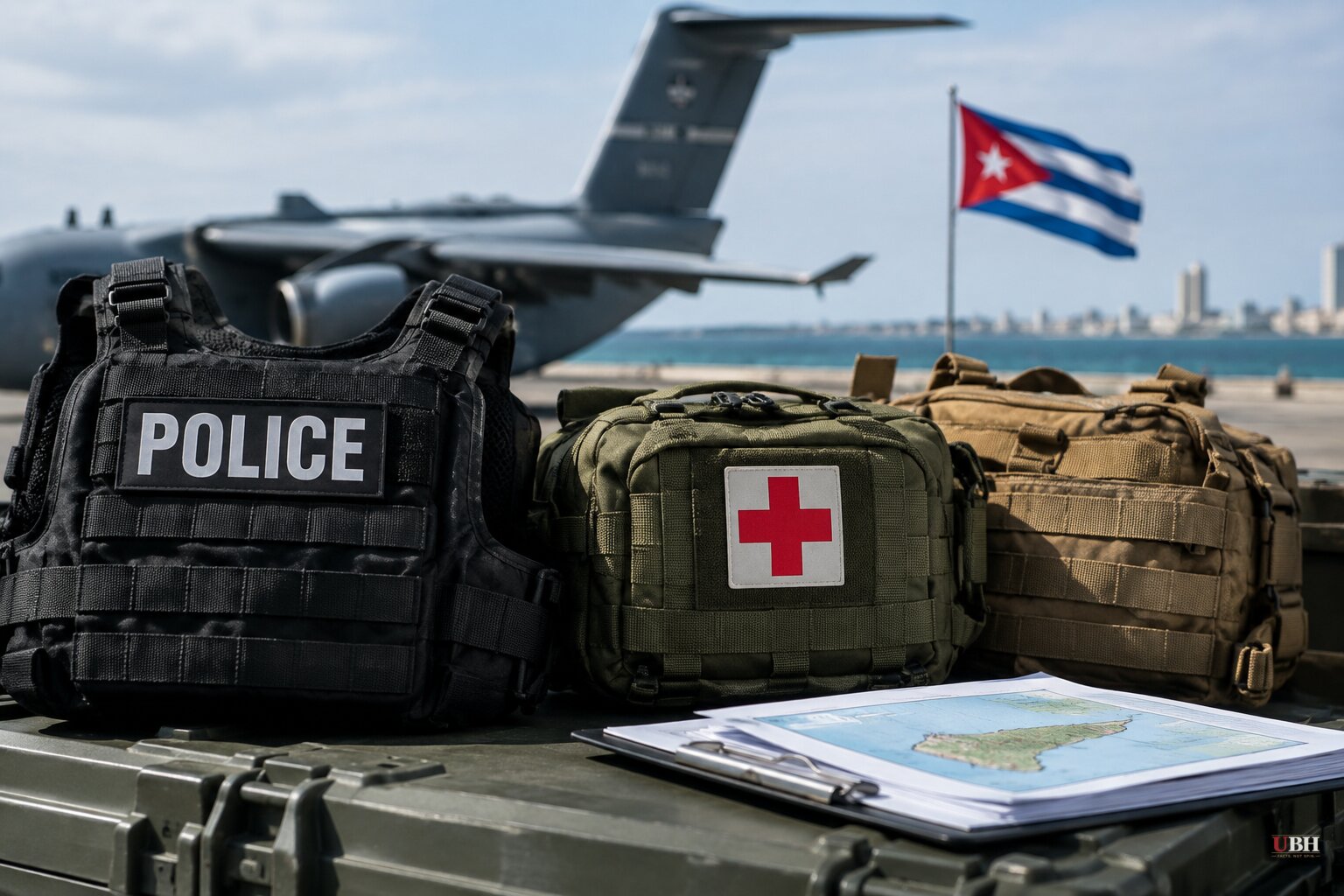
The U.S. Army Reserve is asking its subordinate commands whether they can supply police forces, medical personnel and logistics units to U.S. Southern Command within the next four months, according to an internal message reviewed by CBS News.
The document itself never mentions Cuba. But multiple U.S. officials who spoke to CBS News on condition of anonymity said the request is tied to continued military planning aimed at the island. Feedback from commands was due back to Army Reserve headquarters by September 25, the same day the document surfaced publicly.
CBS News reported there is no indication any unit has received an actual deployment order. The message doesn't say how many troops would be needed or where they'd go. It asks about six types of formations: a combat sustainment support battalion, an engineer battalion, an expeditionary sustainment command, a medical brigade, a forward resuscitative and surgical detachment, and a military police brigade (which typically handles detention and law enforcement missions, not combat).
A U.S. Southern Command spokesperson told CBS News it doesn't discuss operational movements or deployment timelines for security reasons, but said the command "continuously coordinates with the Joint Force to assess a range of potential requirements" in its region. The Army Reserve did not respond to CBS News before publication.
Trump's UN speech and the walkout
The planning document surfaced days after President Trump told the UN General Assembly on September 22 that his administration is "seeking a fundamental change in the situation in Cuba," calling the country an "absolutely failed state" and saying communist rule there "will fall," according to the Epoch Times. Trump said Secretary of State Marco Rubio is handling negotiations with Havana.
Trump also accused Cuba of spending decades "coordinating with left-wing radicals and communist networks" in the U.S., naming Communist Party USA, Antifa and the Democratic Socialists of America as groups the State Department says Havana has cultivated ties to. The Cuban delegation walked out of the hall as Trump spoke, video reviewed by the Epoch Times showed.
Rubio: pressure, not a war announcement
At a press conference in New York on September 23, Rubio told reporters the U.S. is open to talks with Havana about a political transition and ending the decades-old trade embargo, according to Al Jazeera. "Cuba has a golden opportunity to place itself on an irreversible path towards a better future," Rubio said, adding Washington was willing to work with Cuban leaders whose "hands are not stained with blood."
Asked the next day whether the U.S. was considering a military action or extraction operation targeting Cuba, Rubio declined to confine his answer to Cuba specifically, according to CiberCuba. "If there is a threat to the national security of the United States, the president has both the power and the duty to address it," he said, speaking in general terms. Rubio did not announce or confirm any planned operation. He separately said no investor will put money into Cuba "under its current government model" and that a transition after "more than 60 years of mismanagement" won't happen in six months.
Cuba's side: a manufactured crisis
Cuban officials reject the idea that they're the ones escalating. Deputy Foreign Minister Carlos Fernández de Cossío told PBS NewsHour in an interview aired September 18 that the U.S. oil blockade is "inducing a humanitarian crisis" and amounts to an "international crime." Cuba has been running hours of daily blackouts and facing food and water shortages tied to the fuel squeeze, PBS reported. Al Jazeera separately reported Cuban officials have denied any active negotiations with Washington are underway, despite Rubio's talk of openness.
That blockade tightened after a U.S. military operation captured Venezuelan President Nicolás Maduro and his wife on January 3, 2026, according to PBS. Venezuela had long supplied Cuba with crude oil in exchange for Cuban military and intelligence personnel. With that pipeline gone, Havana has come under sharper economic pressure.
What's actually unresolved
No charges, indictments or formal military orders tied to Cuba have been reported. The Army Reserve document is a planning inquiry, not a deployment order, and CBS News found no evidence any unit has been told to move. Whether the September 25 feedback deadline produces an actual mobilization, or just shelved contingency planning like the kind the Pentagon runs routinely, is the open question. Rubio's own comments left the administration's next move deliberately vague: pressure and openness to talks, with military options acknowledged as available but not ordered.
Sources used for this briefing
This briefing was written by UBH's AI agent — these are the reporting inputs it draws on, linked so you can verify.


