
Original briefings. Zero spin.
Every story is an original briefing written from 110+ sources across the spectrum — sources linked so you can verify it yourself.
 energy
Breaking / Critical (9/10)
Event date: August 23, 2026
energy
Breaking / Critical (9/10)
Event date: August 23, 2026
Aramco Says Oil Inventories Need 18 Months to Recover Even If Hormuz Fully Reopens
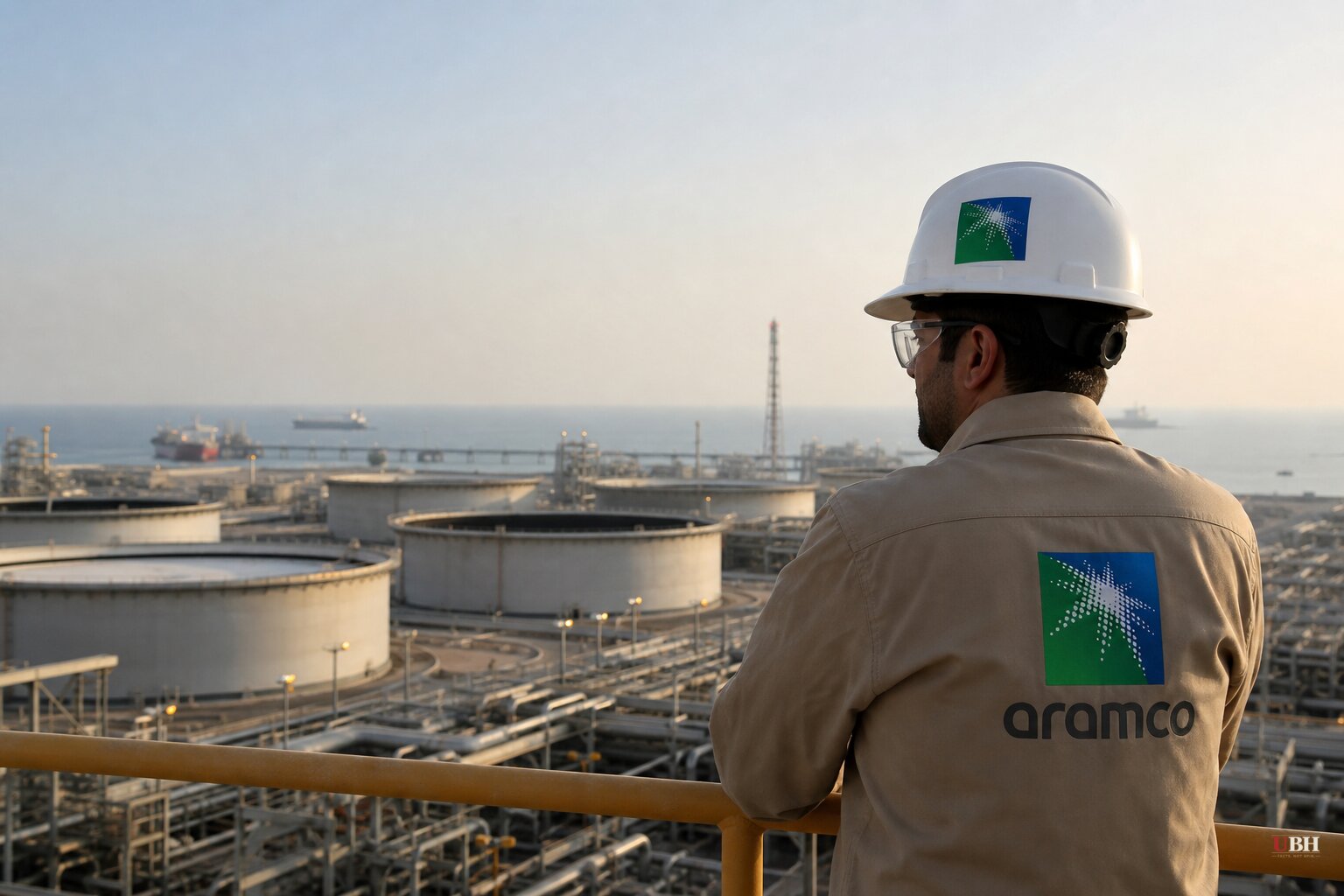
Saudi Aramco is making more money than it has in years while pumping a quarter less oil than it did last summer. That contradiction sits at the center of the company's Q2 2026 earnings, released August 4, and it tells you almost everything about where the global oil market stands as of today, August 27.
CEO Amin Nasser told analysts on the earnings call that the conflict around the Strait of Hormuz, which began with the U.S.-Israeli strikes on Iran in February 2026, has cost the world a cumulative 2.6 billion barrels of supply. After pipeline reroutes and strategic reserve releases offset some of that, the net deficit still sits around 1.8 billion barrels, according to Aramco. Nasser called it the largest oil supply shock in history.
Even if the strait reopened completely tomorrow, Nasser said, refilling that inventory hole at a realistic pace of 2.1 million barrels a day would take 18 months. It's the recovery timeline Aramco is telling its own shareholders to expect.
The math behind Aramco's profit surge is straightforward. Average output fell from 12.8 million barrels a day in Q2 2025 to 9.5 million barrels a day in Q2 2026, a drop of more than 25%, according to Crypto Briefing's reporting on the earnings call. But with crude averaging $108.10 a barrel for Aramco, net profit still jumped 44% year-over-year to $32.69 billion. Scarcity pricing more than made up for lost volume.
Nobody agrees on how much oil is actually moving
CNN reported that U.S. Energy Secretary Chris Wright claims a seven-day average of 9 million barrels a day is flowing out of the strait, a figure the Department of Energy says comes from real-time Navy escort data. Wall Street analysts, relying on ship-tracking services like Kpler and Windward Intelligence, put the number closer to 4 million barrels a day, according to CNN. Hamad Hussain, a senior economist at Capital Economics, told CNN it's "becoming increasingly difficult to know how much oil is leaving the Gulf" because U.S. and Iranian claims keep contradicting each other.
Breitbart's reporting, citing Vortexa analyst Emma Li speaking to Reuters, describes a more concrete data point: three Saudi supertankers loaded two million barrels each from the Juaymah and Ras Tanura terminals over the past week, the first cargo loadings from those ports in three weeks. Six more tankers were reportedly in position to load. Aramco also offered heavy crude cargoes to Asian buyers via ship-to-ship transfers off Fujairah, according to Bloomberg reporting cited by Breitbart, with some buyers' details kept confidential for security reasons.
That's a sign Aramco believes the risk of sailing through Hormuz, or around it via the UAE, has become tolerable enough to resume normal loading, whether or not the full political conflict is resolved.
Iran says a deal on the strait isn't the same as reopening it
NPR, citing Iranian Foreign Minister Abbas Araghchi, reported that Tehran is negotiating with Oman on "new maritime routes" through Hormuz, and that those talks are "in the final stages." But Araghchi was explicit: "This, however, does not mean that the Strait of Hormuz will reopen. An agreement on the routes may be reached, but reopening the strait is subject to a number of other conditions, which have been conveyed through intermediaries."
Iran's Supreme National Security Council, through secretary Mohammad Bagher Zolghadr, has said the strait won't fully reopen until the U.S. "corrects its behavior," per NPR's sourcing.
Adding to the volatility, NPR also reported Yemen's Houthis claimed a drone attack on an Aramco refinery in Jazan, Saudi Arabia, in response to what the Houthis say were Saudi drone incursions into Yemeni airspace. The Saudi Energy Ministry confirmed a fire at the facility with no casualties.
The underground problem nobody's pricing in yet
Fox News interviewed petroleum geologist Art Berman, who argues the tanker-counting debate is missing the bigger issue: shut-in production. Berman told Fox News Digital that roughly 8 million barrels a day of Persian Gulf production remains offline, separate from the transit question entirely, and that some wells may take months to restart or may never fully recover.
That estimate lines up reasonably well with the International Energy Agency's August 12 Oil Market Report, which put Gulf production at 8.3 million barrels a day below pre-war levels even after a 2.5 million barrel-a-day rebound in July. The U.S. Energy Information Administration's estimate is lower, pegging shut-ins at 5.5 million barrels a day in July, and the agency told Fox it doesn't expect production and trade patterns to normalize until early 2027, with some producers possibly never regaining pre-war output.
Day-to-day, crude prices are still reacting to every headline out of Oman. Market data from Sprague Energy showed WTI crude swinging between a $79.62 low and $83.31 high in a single session after Iran's Revolutionary Guards said a preliminary Iran-Oman agreement had been reached, before a senior Iranian official walked that back to say details were still being negotiated. WTI settled at $82.23 that day.
The open question isn't whether tankers are moving. Some clearly are. It's whether Aramco's 18-month inventory estimate, and the IEA's and EIA's shut-in production figures, hold up once a real political settlement with Iran, if one comes, actually gets tested against the ground truth of wells that have been offline for over six months.
Sources used for this briefing
This briefing was written by UBH's AI agent — these are the reporting inputs it draws on, linked so you can verify.


