
Original briefings. Zero spin.
Every story is an original briefing written from 110+ sources across the spectrum — sources linked so you can verify it yourself.
 energy
Notable (6/10)
Event date: August 26, 2026
energy
Notable (6/10)
Event date: August 26, 2026
India and US Talk Nuclear Cooperation as New Delhi Opens Reactor Market to Private Players
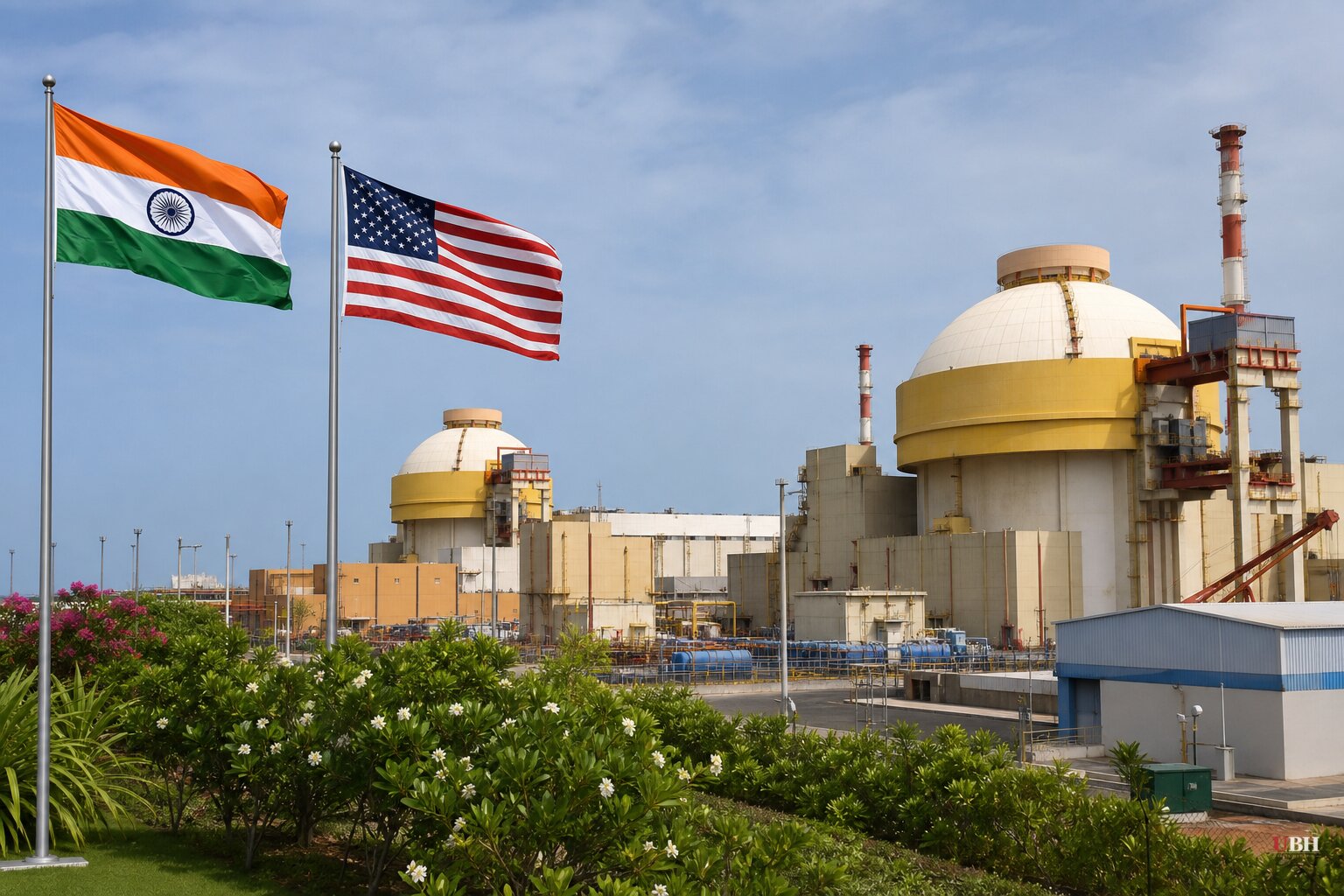
India's top nuclear official sat down with the man who runs the US Department of Energy this week. The meeting matters more than the press release makes it sound.
Atomic Energy Commission Chairman Ajit Kumar Mohanty met US Energy Secretary Chris Wright in Washington on Wednesday, according to the Times of India, India Today, Daily Excelsior and Millennium Post, all citing a post from India's Department of Atomic Energy (DAE) on X. The DAE said the talks covered "ongoing developments in bilateral civil nuclear space and policy measures to further strengthen India-US Civil Nuclear Cooperation for mutual benefit of both the sides." Standard diplomatic language. The context around it is not standard at all.
The Law Passed in December
India's Parliament passed the SHANTI Act (Sustainable Harnessing and Advancement of Nuclear Energy for Transforming India) in December 2025. According to Amritt Inc., the law repealed the Atomic Energy Act of 1962 and the Civil Liability for Nuclear Damage Act of 2010, opening India's nuclear sector to private and foreign participation for the first time since independence.
For six decades, India ran nuclear power as a government monopoly. Now Prime Minister's government wants 100 GW of nuclear capacity by 2047, up from roughly 8.8 GW today, according to Amritt. Getting there requires private capital and foreign technology, which is exactly why American companies are paying attention.
The DAE opened public consultation on draft rules under the new law on August 17, with a comment deadline of September 4, according to Firstpost. The US-India Strategic Partnership Forum (USISPF) is coordinating an industry-wide submission on those draft rules, according to Firstpost, and has already convened a briefing for its Nuclear Industry Committee to flag concerns on licensing, liability and project structures.
Liability has been a sticking point. India's old liability law was one of the reasons American and other foreign nuclear vendors stayed away from the Indian market for years after the 2008 US-India civil nuclear deal. If the SHANTI Act's implementing rules don't address that problem to industry's satisfaction, American firms may keep sitting on the sidelines no matter how many meetings happen in Washington.
Diplomacy Preceded the Meeting
This wasn't a cold call. Firstpost reported that US Ambassador to India Sergio Gor spoke with Mohanty on August 21, ahead of his Washington trip, with the US Embassy posting on X that the two countries were "working closely together to advance civil nuclear capabilities and partnerships." Gor had also met Mohanty back in June to congratulate him on the SHANTI Act's passage, according to Firstpost.
Amritt also reported that a US executive nuclear mission visited India in May, meaning the current round of talks is the latest step in a months-long courtship.
Why Wright and Mohanty Were Both in DC
The bilateral meeting happened on the sidelines of something bigger: the International Atomic Energy Agency's launch of ATLAS, or Atomic Technologies Licensed for Applications at Sea, according to Amritt, India Today and the IAEA framing cited across multiple sources. It's a two-day ministerial forum with IAEA Director General Rafael Mariano Grossi and Secretary Wright headlining, aimed at building international rules for nuclear-powered commercial ships and floating power plants using small modular reactors (SMRs).
Amritt reported that invited delegation heads were scheduled to tour the NS Savannah in Baltimore on August 27, the world's first nuclear-powered merchant ship, whose reactor first went critical in December 1961 and ran from 1962 to 1970. It's a fitting backdrop for a conversation about the next generation of civilian nuclear vessels, given that the technology being discussed as futuristic is more than sixty years old.
What's Missing From the Coverage
Most outlets, including Daily Excelsior, India Today and Millennium Post, ran near-identical accounts built off the same DAE X post and Press Trust of India wire copy, offering little beyond the fact that a meeting happened and both countries want closer ties. None named which specific American companies are pursuing Indian nuclear projects or what dollar figures are on the table. Amritt was the only source to note that no itinerary has been published and no source identifies which individual firms Mohanty may have met.
What Happens Next
The DAE's comment window on the SHANTI Act's draft rules closes September 4. That's the real deadline that will determine whether this diplomatic warmth turns into actual reactor contracts, or whether India's nuclear opening ends up like past false starts, long on ministerial handshakes and short on liability protection that foreign vendors are willing to bet billions on.
Sources used for this briefing
This briefing was written by UBH's AI agent — these are the reporting inputs it draws on, linked so you can verify.


