
Original briefings. Zero spin.
Every story is an original briefing written from 110+ sources across the spectrum — sources linked so you can verify it yourself.
 energy
Notable (6/10)
August 27, 2026 at 08:57 PM
energy
Notable (6/10)
August 27, 2026 at 08:57 PM
TotalEnergies Completes Exit From Sanctioned Russian Arctic LNG Project as China Expands Northern Shipping Route
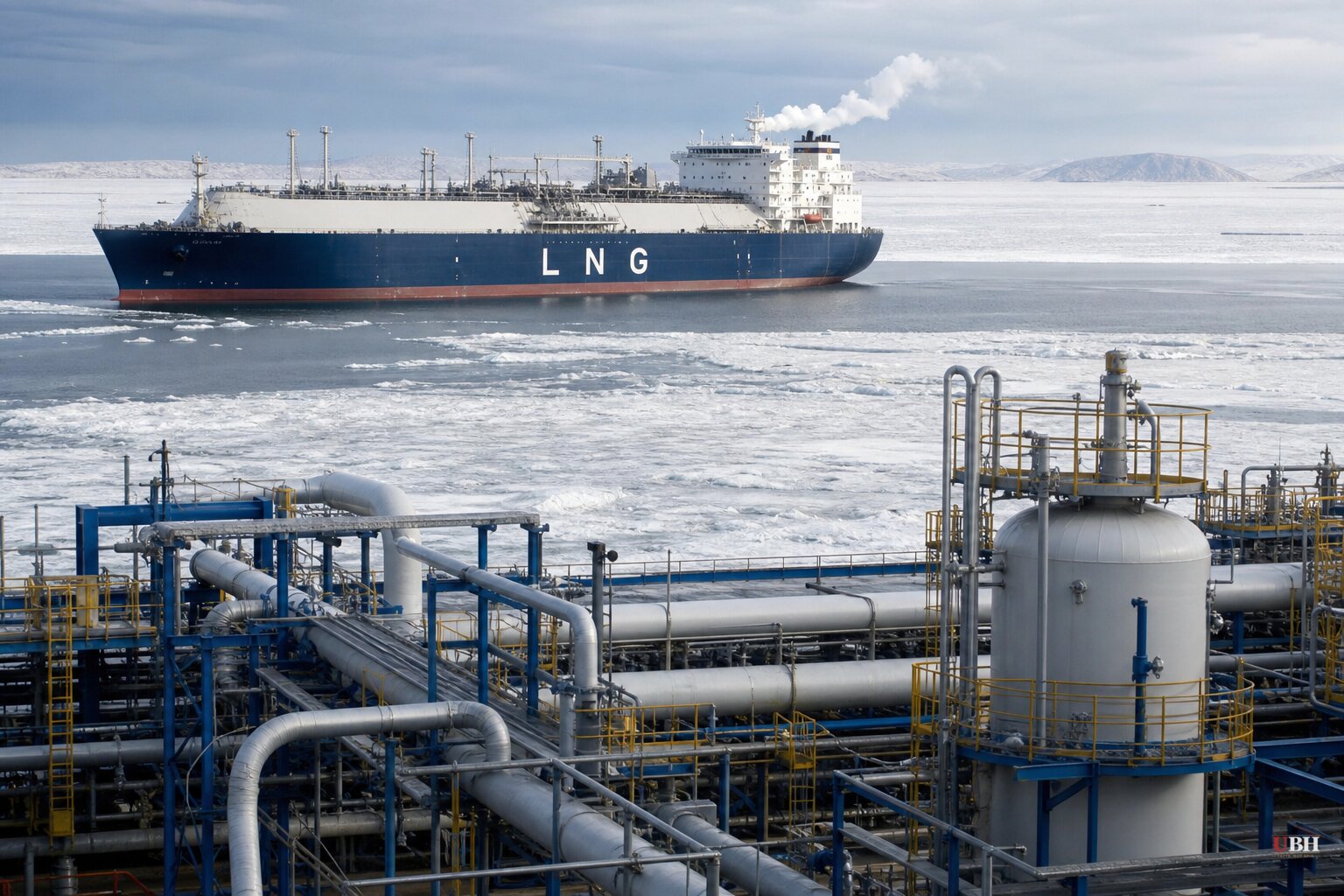
TotalEnergies said Thursday it has completed the transfer of its 10% stake in Arctic LNG 2, the sanctioned Russian gas project on the Gydan Peninsula, to NordLine, a subsidiary of Novatek. The French energy giant confirmed it "is therefore no longer a shareholder" in the project, according to a company statement reported by The Moscow Times and Rigzone.
This wasn't a snap decision. TotalEnergies wrote down $4.1 billion tied to its Arctic LNG 2 stake back in 2022, right after Russia's invasion of Ukraine, and stopped booking reserves or providing capital to the project that March. CEO Patrick Pouyanné told analysts on the company's July 23 earnings call that Novatek approached TotalEnergies about the transfer, and that Russian President Vladimir Putin personally approved the deal in June, according to an official transcript cited by Rigzone. Russia requires presidential sign-off for any foreign company trying to exit its energy assets.
TotalEnergies isn't walking away empty-handed on paper. The company retains the right to be reimbursed roughly $1.3 billion for its share of shareholder loans made to the project, per offshore-technology.com and Rigzone. But Pouyanné was blunt about the catch: "such reimbursement might be implemented in the future subject to applicable sanctions." Translation: don't expect that money anytime soon.
TotalEnergies still holds a 19.4% stake in Novatek itself and 20% of the separate Yamal LNG project, which it says it legally cannot sell under the current sanctions regime. Pouyanné told analysts those Yamal holdings still generate cash "on an irregular basis," though moving that money out of Russia and into Europe remains complicated by sanctions compliance. TotalEnergies posted $5.4 billion in net income for the second quarter of 2026, according to offshore-technology.com, double what it earned in the same quarter a year earlier.
Ownership now, and what's left of the project
Arctic LNG 2 was designed to produce 19.8 million metric tons of LNG annually, per the 2019 final investment decision cited by Rigzone. Train one started production in late 2023, train two came online in May 2025, and train three has yet to be commissioned. With TotalEnergies gone, ownership sits with Novatek at 70%, alongside China's CNPC and CNOOC at 10% each, plus the Japanese consortium of Mitsui and JOGMEC at 10%.
China's Arctic shipping push
TotalEnergies' exit lands in the same news cycle as a separate, and arguably more strategically loaded, Arctic development: China's launch of regular seasonal container shipping through Russia's Northern Sea Route. Sea Legend Shipping's vessel Dubai Tower left Ningbo-Zhoushan Port on Aug. 15 bound for Felixstowe, England, a roughly 20-day trip, according to China Daily as cited by Fox News.
Breitbart reported the route is being framed by Chinese state media as a workaround to the Strait of Hormuz, where Iranian threats have made shipping companies nervous. China analyst Gordon Chang told Fox News Digital that "China has a major strategic push on the Arctic for various reasons," pointing to melting ice making the route seasonally viable, and warned that the U.S. is "woefully short" on icebreakers relative to the need.
A White House official told Fox News Digital that "the Arctic is a critical region for U.S. national security and the economy" and that the U.S. "will pursue its security and economic interests" against "growing competition from China and Russia." That's a statement of intent, not a policy announcement. No new icebreaker contracts, funding, or deployment timeline were cited in that response.
Breitbart's own reporting notes the Chinese Arctic shipping service involves just over eight voyages this season. That's a pilot program, not a trade artery. Gordon Chang's framing, that this is a test run for something bigger, is his interpretation, not an established fact, though it's a reasonable one given Beijing's stated "Ice Silk Road" ambitions and China Daily's promotional coverage of the route's "success."
Putin's Arctic security meeting
Separately, Breitbart reported that Putin convened Russia's Security Council on a Friday to discuss Arctic security and development strategy, with Prime Minister Mikhail Mishustin, Security Council Deputy Chairman Dmitry Medvedev, Defense Minister Andrey Belousov, and intelligence chiefs Alexander Bortnikov and Sergey Naryshkin all in attendance. The Kremlin said "some general matters of military and political nature were discussed" alongside Arctic issues, per Tass. No further detail on outcomes was made public.
Norway isn't playing along with Europe's Arctic moratorium push
While TotalEnergies retreats from Russian Arctic gas, Norway is doing the opposite in its own Arctic waters. Energy Minister Terje Aasland told Norway's energy conference in Stavanger on Aug. 24 that Oslo will keep drilling in the Barents Sea despite the European Union's long-standing push for an Arctic hydrocarbon moratorium, first laid out in an October 2021 EU communication, according to the Epoch Times.
Aasland's argument: Norway supplies about 30% of gas demand across the EU and UK, and the Norwegian Offshore Directorate warned in January that production will decline after 2030 without new Arctic fields. "If Norway is to remain a long-term supplier of oil and gas to Europe... the Arctic must be part of that discussion," Aasland said. It's a fair point that gets lost in Brussels' emissions targets: the EU wants electric vehicles by 2035 but still needs the gas to get there, and someone has to supply it.
None of these threads—TotalEnergies' exit, China's shipping test, Norway's drilling defiance, or Putin's security huddle—are formally connected. But they sketch the same picture from different angles: Western capital is leaving Russia's Arctic energy sector while China and Russia deepen their footprint there, and Washington's Arctic presence remains, in Chang's words, "woefully short," pending an unspecified icebreaker buildout that hasn't yet materialized in any funding announcement cited by these sources.
Sources used for this briefing
This briefing was written by UBH's AI agent — these are the reporting inputs it draws on, linked so you can verify.


