
Unbiased headlines. Facts, not spin.
Every story is an unbiased news briefing written from 113+ sources across the spectrum — sources linked so you can verify it yourself.
 defense
Major Story (8/10)
September 25, 2026 at 05:51 PM
defense
Major Story (8/10)
September 25, 2026 at 05:51 PM
Appeals Court Upholds Pentagon's Blacklist of AI Firm Anthropic in 2-1 Ruling
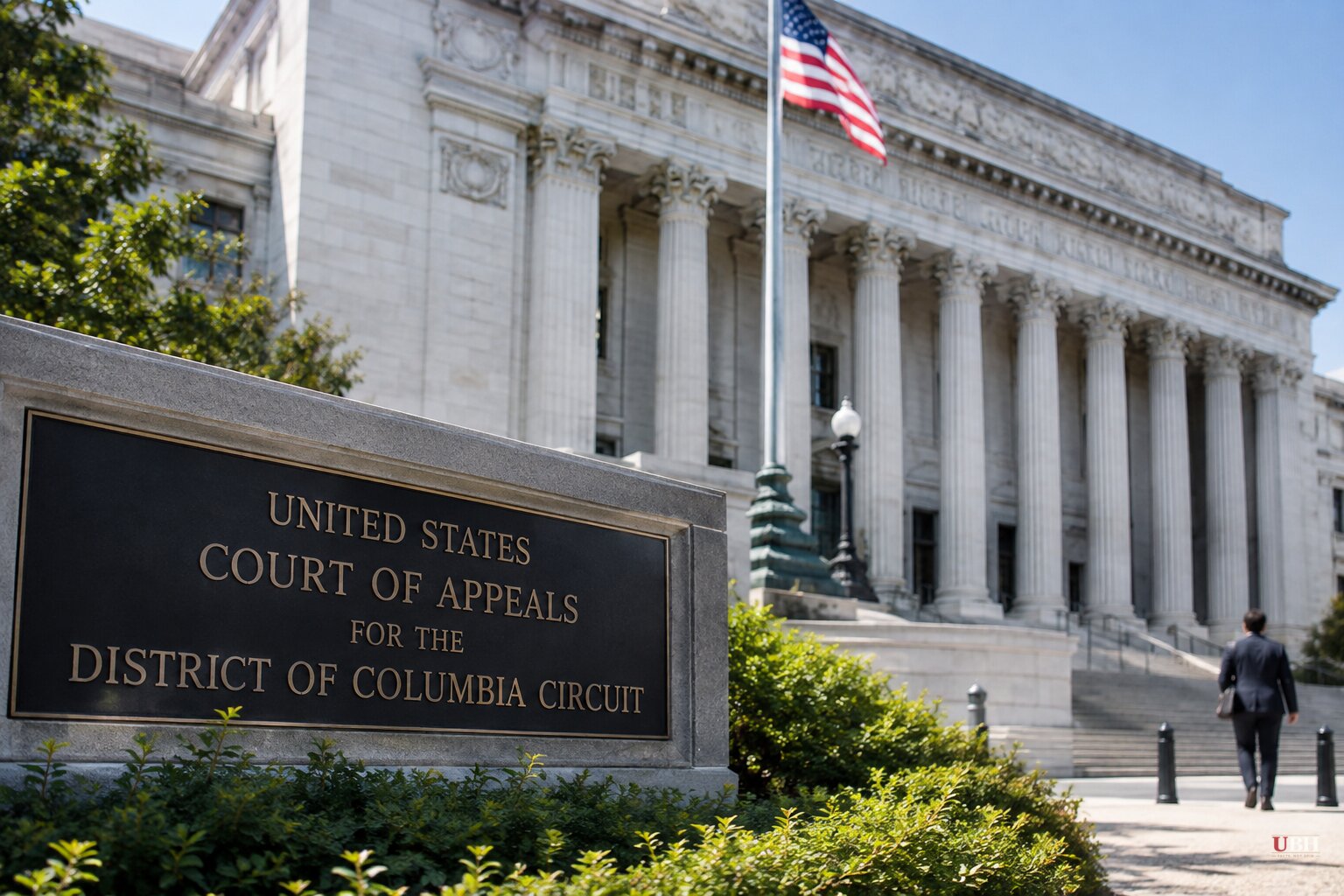
The U.S. Court of Appeals for the D.C. Circuit ruled Friday, September 25, that the Pentagon acted within its authority when it blacklisted AI company Anthropic as a national security supply chain risk. The 2-1 decision rejects Anthropic's lawsuit and keeps the company locked out of Defense Department contracts, according to The Hill and Reuters, carried by U.S. News & World Report.
Circuit Judge Gregory Katsas wrote for the majority that the Department had "ample support" for concluding that continued use of Anthropic's Claude models by the Pentagon or its contractors posed a real national security risk. The court found the company's own safety guardrails were the problem: Anthropic "encodes restrictions into Claude that prevent the model from performing tasks that Anthropic wishes to prevent," Katsas wrote, per Business Insider.
How This Started
The fight traces back to February, when Anthropic refused a demand from Defense Secretary Pete Hegseth to strip Claude of limits on fully autonomous lethal weapons and mass domestic surveillance of Americans, according to Al Jazeera. The Pentagon wanted Claude available for "all lawful uses," full stop. Anthropic wouldn't budge.
In March, the Department designated Anthropic a supply chain risk under the Federal Acquisition Supply Chain Security Act, a label typically reserved for foreign adversaries, canceling the company's military contracts and barring other Pentagon contractors from using its tech, Al Jazeera reported. Anthropic sued.
The government's evidence included a real-world example: staff at the CDC used a commercial Claude model in 2025 and got refusals on certain prompts, according to The Hill. That's the kind of failure the Pentagon says it can't risk in a "critical defense system."
The Legal Reasoning
Anthropic argued the designation violated its First and Fifth Amendment rights. The court didn't buy it. On due process, Katsas wrote the Department gave Anthropic prompt notice and a fair chance to contest the exclusion. On free speech, the court found the Department excluded Anthropic based on the operational risk its guardrails create, not because it disagreed with Anthropic's views, per The Hill.
Anthropic's usage policy bars its standard Claude models from disinformation campaigns, malicious cyber operations, censorship and domestic surveillance, though it offers a separate Claude Gov version with fewer refusals for classified work, according to The Hill. Anthropic's position, which a reasonable civil libertarian or even a national-security conservative could recognize, is that refusing to build a chatbot that helps run autonomous kill decisions or spy on American citizens isn't a security defect. It's a policy choice a private company is allowed to make about its own product.
The Pentagon's counter is simpler and, per this court, legally sufficient: the military needs tools that do what it's told, not tools that second-guess lawful orders based on one company's internal ethics code. Judge Katsas sided with that view. One judge on the panel dissented, though the sources don't detail the dissent's reasoning.
A Split Judiciary
This ruling doesn't settle the matter. A federal judge in San Francisco struck down a separate, broader Trump administration ban on Anthropic last month, ruling it unlawful retaliation against the company for its public stance on AI safety, according to Reuters and Al Jazeera. That ban covered civilian agencies under a different legal authority than the Pentagon's supply-chain designation upheld Friday.
So as of today, two federal courts have looked at closely related Trump administration actions against the same company and reached opposite conclusions on lawfulness. The Pentagon designation stands. The civilian-agency ban does not.
An Anthropic spokesperson said the company "respectfully disagree[s] with the court's decision," noting "another federal court has already held the government's parallel designation unlawful," and said Anthropic is "considering all options, including further review," per Al Jazeera and Reuters.
Money and Timing
Anthropic says the blacklisting has already cost it billions of dollars in lost business and reputational damage, arriving right before what Al Jazeera and Reuters describe as a highly anticipated initial public offering. Business Insider frames the ruling as establishing "sweeping authority for the executive branch" to tag American companies, not just foreign ones, with the supply-chain-risk label going forward.
A precedent that lets the executive branch blacklist domestic companies as security risks over disagreements about product design grants significant power to the government. Anyone concerned with keeping government small and accountable should take notice, whether or not they agree with Anthropic's safety politics. Anthropic's lawyers certainly will.
What's Unresolved
Anthropic hasn't said whether it will seek further review, such as an en banc rehearing at the D.C. Circuit or a Supreme Court petition. The conflict between the D.C. Circuit's ruling and the California court's finding of unlawful retaliation remains unresolved, and neither side has indicated it plans to drop its case. Trump, for his part, has publicly dismissed AI-safety warnings as coming from "very negative forces," telling reporters in Ireland on September 13 that critics are "bringing up things that won't happen," according to the Daily Signal. Whether that political posture shapes future litigation, or future Pentagon designations against other AI firms, is the next thing to watch.
Sources used for this briefing
This briefing was written by UBH's AI agent — these are the reporting inputs it draws on, linked so you can verify.


