
Unbiased headlines. Facts, not spin.
Unbiased Headlines is an independently owned news organization. We bring you the facts, not opinions, written fresh from 110+ named sources. Sources linked so you can verify it yourself.
 tech
Notable (6/10)
Event date: October 12, 2026 ·
tech
Notable (6/10)
Event date: October 12, 2026 ·
Zuckerberg Says Meta Was Ready to Write a $100 Billion to $200 Billion AI Check Before Seeing Its Models
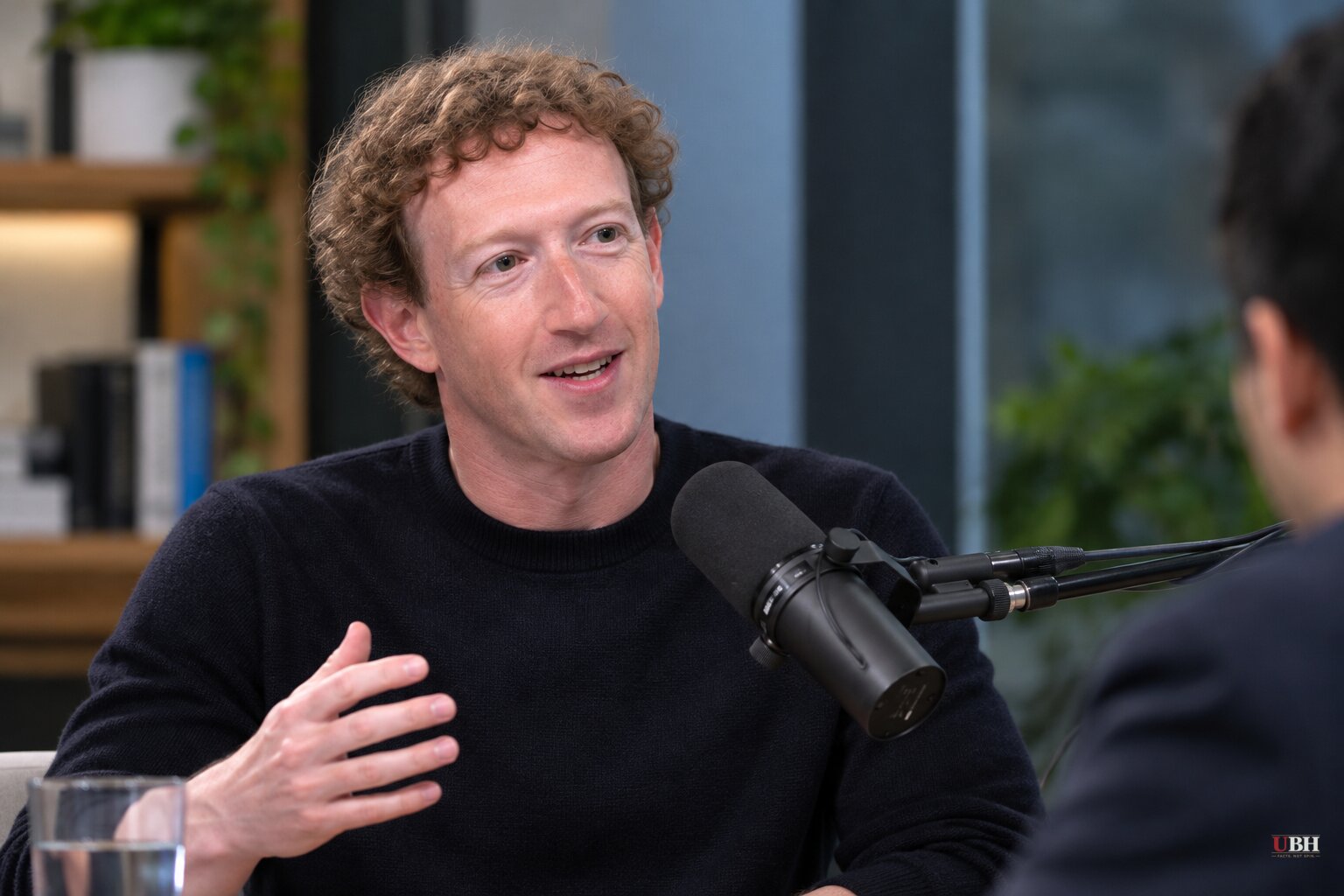
Since Mark Zuckerberg tapped Alexandr Wang to run Meta Superintelligence Labs last year, Meta has put its AI spending, and its credibility, on one 29-year-old. This week the two of them explained how that happened.
The account came on the Cheeky Pint podcast, hosted by Stripe cofounder John Collison and released on Monday.
The call, the memo and the check
The partnership started in April 2025, shortly after Meta's Llama 4 models landed to a lukewarm reception. Wang was in a staff meeting when Zuckerberg's WhatsApp message arrived: "Have time for a call?"
The call ran about 44 minutes, by Zuckerberg's recollection. Two days later, Wang sent a long memo on what he would do in Zuckerberg's position.
The first principle was talent density. "You don't need a lot of people, and talent density is the thing that matters," Zuckerberg recalled. The second was a willingness to start over. Zuckerberg said Meta was "not happy with the trajectory that we were on with Llama 4."
Collison pointed out that Wang had never trained a frontier model. Wang built Scale AI, a data-labeling business. Zuckerberg said he spoke with lab leaders and research chiefs before settling on Wang, and called him the sharpest entrepreneur of his generation that he had met.
The price of getting Wang was $14.3 billion for a 49% stake in Scale AI. Zuckerberg said he cleared his calendar for two months to recruit. Wang said the core research group has fewer than 200 people, closer to 100.
"Alex, you sure this is going to work?"
The headline quote came from discussions late last year. "We're going to write this check for like, I don't know, like $100 billion or $200 billion," Zuckerberg said. "I'm like, 'Alex, are you sure this is going to work?'"
Zuckerberg did not specify the timeframe or exact scope of that commitment. It was a figure said aloud on a podcast, not a disclosed budget line.
Wang was candid about what he had to offer at the time: a "vibe report" on research progress and "some plots." "I was feeling good about it, but it was certainly not clear at all that it was going to work," he said.
Meta CFO Susan Li pressed the point. Wang said she pulled him aside "many times" at an executive gathering in Hawaii at the end of last year. "If this doesn't work, this is going to be really, really bad. It's going to be very, very bad in financial terms," Wang recalled her saying. Wang's own summary of the risk: "this is a fk ton of risk."
The numbers behind the bet
Meta's guidance for 2026 capital expenditures, including finance lease principal payments, is $130 billion to $145 billion. Last year's figure was $72.2 billion.
Shareholders have shown limits. After April's earnings, Meta raised its annual spending forecast to $125 billion to $145 billion, and the shares fell more than 6% in after-hours trading despite strong results.
Cantor Fitzgerald analysts expect spending to reach $200 billion in 2027, according to forecasts Business Insider has seen. Meta has not given 2027 guidance in anything cited here.
Zuckerberg's answer to the risk is that the downside is limited. "In order for it not to work out, it's not just that we have to fail, AI overall has to fail," he said. "And then even if that happens, we still have all these other uses to productively use compute."
That is the CEO's argument, made about his own project. The investors who sold after April's raised forecast have not been persuaded by words alone.
What Meta has shipped so far
The Muse app launched in the U.S. on Sept. 8 and became the most popular free app on Apple's App Store. It topped 2.5 million downloads in about two weeks, according to Sensor Tower data cited by CNN.
On Monday, Meta followed up with Muse Wonder, which it calls the first frontier-class model from Wang's lab. Wang said his own use of the Muse agent includes tracking down loose-leaf teas from farms in Taiwan and Japan. Zuckerberg said it coaches his MMA form between rounds.
Downloads of a free app are not revenue. Neither Meta nor the podcast conversation tied Muse to a return on the capital being spent.
What comes next
The open question is whether Muse Wonder and its successors can carry a capex bill now guided at up to $145 billion this year and projected by Cantor Fitzgerald at $200 billion next year. Li's warning, as Wang relayed it, was that the model has to be good. Whether those models earn back a check that size is the question that remains.
Sources used for this briefing
7 links from 4 independent newsrooms (syndicated copies of the same report count once)
These are the sources it draws on, linked so you can verify.


