
Unbiased headlines. Facts, not spin.
Unbiased Headlines is an independently owned news organization. We bring you the facts, not opinions, written fresh from 110+ named sources. Sources linked so you can verify it yourself.
 tech
Notable (5/10)
tech
Notable (5/10)
Malaysia Unveils Six Locally Designed Chips With RM300 Million Sales Estimate, No Timeline Given
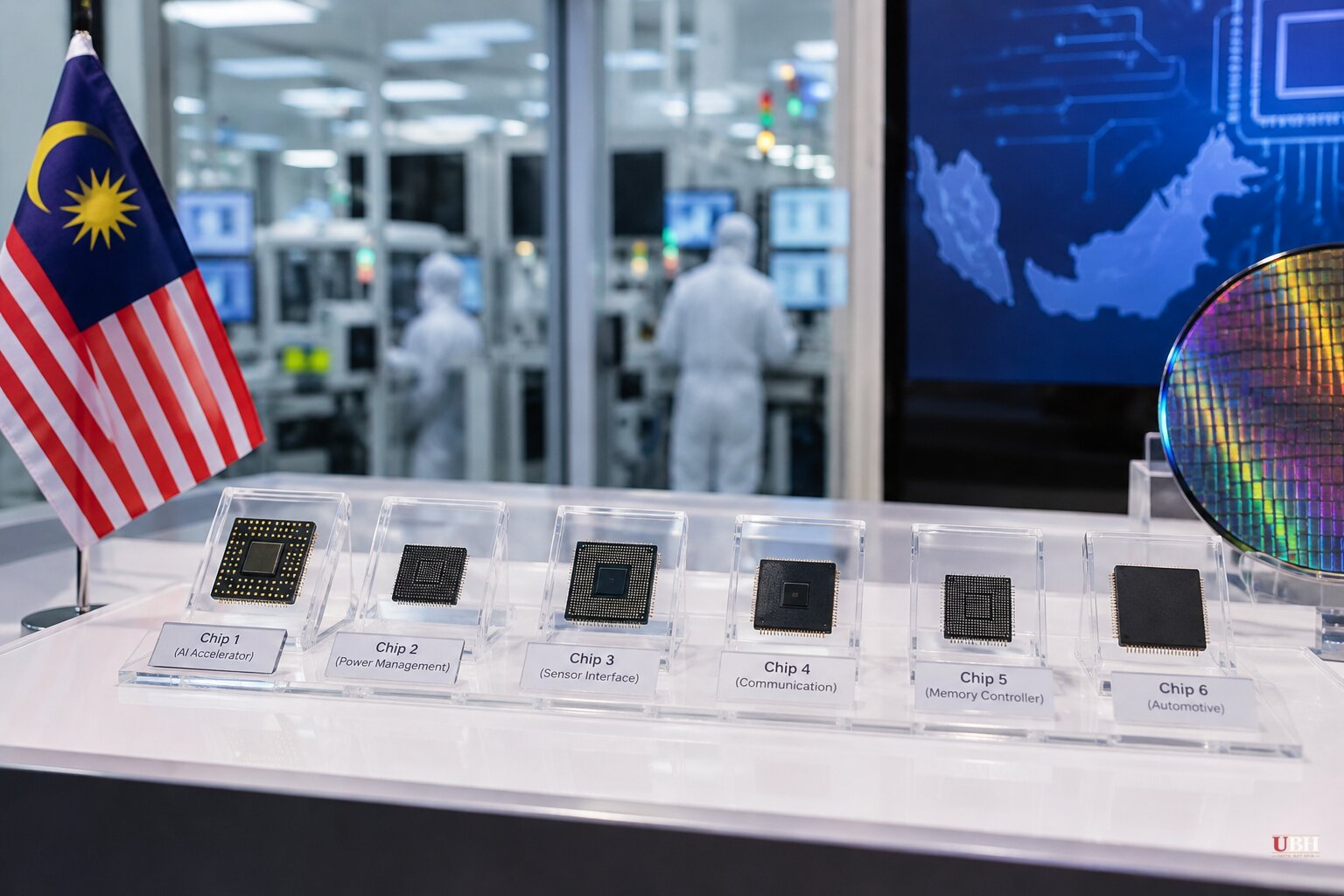
Malaysia has spent more than 50 years assembling, testing and packaging chips designed somewhere else. On Friday, Oct. 16, it put six of its own designs on a stage at the Grand Hyatt in Kuala Lumpur.
Economy Minister Akmal Nasrullah Mohd Nasir said the six chips have an estimated combined sales potential of RM300 million, about $74 million, a year. He did not say when that figure could be reached.
The six designs
All six came out of companies operating inside the Malaysia Semiconductor IC Design Park.
- SkyeChip MARS1000: an edge-AI processor for cameras, robots and factory systems.
- MaiStorage aiDAPTIV+: storage for AI personal computers and servers.
- SiliconX FPGA: a reprogrammable chip for industrial and automotive use, billed as the first field-programmable gate array designed in Malaysia and Southeast Asia.
- Infinecs Maxwell: an automotive-grade power regulator.
- Weeroc Space power controller: a chip for satellites and other space systems.
- Alphaswift FC Mini: a flight controller for autonomous drones.
The SiliconX "first" is the company's billing, repeated by the government at the launch.
Where the work happens
Selangor Menteri Besar Amirudin Shari said the state opened the first design park in Puchong in August 2024 and a second in Cyberjaya in November 2025. The Cyberjaya site houses what he described as Southeast Asia's first Advanced Chip Testing Centre.
Between them, the two parks hold 407 engineers across 20 companies, including firms from Taiwan, France, Japan and Australia, Amirudin said.
SkyeChip listed on the main market of Bursa Malaysia in May and raised RM352 million, he said. Weeroc Space has finished its second tape-out, the stage at which a design is sent off for manufacturing.
The national plan behind it
The launch sits inside the National Semiconductor Strategy and the 13th Malaysia Plan. The strategy targets 110 high-value Malaysian semiconductor companies: 10 existing ones and 100 new ones. It also aims to train and upskill 60,000 engineers.
A separate Arm On-Demand Training programme targets 10,000 Malaysians in specialised IC design skills over four years. Akmal pointed to a collaboration with Arm as the route to design intellectual property. "Over the past decade, we have proven our expertise in testing, documentation and packaging," he told reporters. "At the same time, looking at those strengths, Malaysia has embarked on collaboration with Arm Limited, for example, to gain access to IP design."
Akmal framed the goal as a change in what the label means. "Made in Malaysia" says where a product was manufactured. "Made by Malaysia" means the country created and owns the technology. He said the country needs both, but future growth should come from creating and keeping more value at home.
The hard part is still ahead
The minister was blunt about what remains. "The next milestone is to secure customer adoption, meet industry qualification requirements and scale these innovations into successful commercial products," he said.
He called it a long journey. He also said the government has to build demand for locally designed chips so Malaysian products draw customers and more investment.
That is a real hurdle in automotive and space work, where qualification requirements are strict. The RM300 million figure is a government estimate for what the designs could earn, not revenue the companies have booked.
Amirudin explained the stakes in terms of the country's existing business. "If a country does not adapt and move up the value chain, we stand to lose if a company decides to close shop and move their production elsewhere," he said.
Why Malaysia is in the position it's in
Malaysia hosts packaging operations for Intel, GlobalFoundries and Infineon. It has also attracted Chinese chipmakers looking for easier access to foreign capital and technology, according to Bloomberg's reporting.
Demand for AI-related electronics has helped cushion the trade-dependent economy from global shocks, according to the same reporting. A move into design would put more of the profit from that demand in Malaysian hands. Assembly and packaging capture less of it.
No government spending figure for the design park push appeared in the launch remarks. Neither did a date for the first commercial shipments of any of the six chips.
What to watch is whether any of the six lands a named customer, and whether Akmal's ministry puts a date on the RM300 million estimate.
Sources used for this briefing
7 links from 6 independent newsrooms (syndicated copies of the same report count once)
These are the sources it draws on, linked so you can verify.


