
Unbiased headlines. Facts, not spin.
Unbiased Headlines is an independently owned news organization. We bring you the facts, not opinions, written fresh from 110+ named sources. Sources linked so you can verify it yourself.
 tech
Major Story (7/10)
tech
Major Story (7/10)
Anthropic Pitches Congress a Draft Bill Letting Commerce Seek a Court Order to Halt Frontier AI Models, Politico Reports
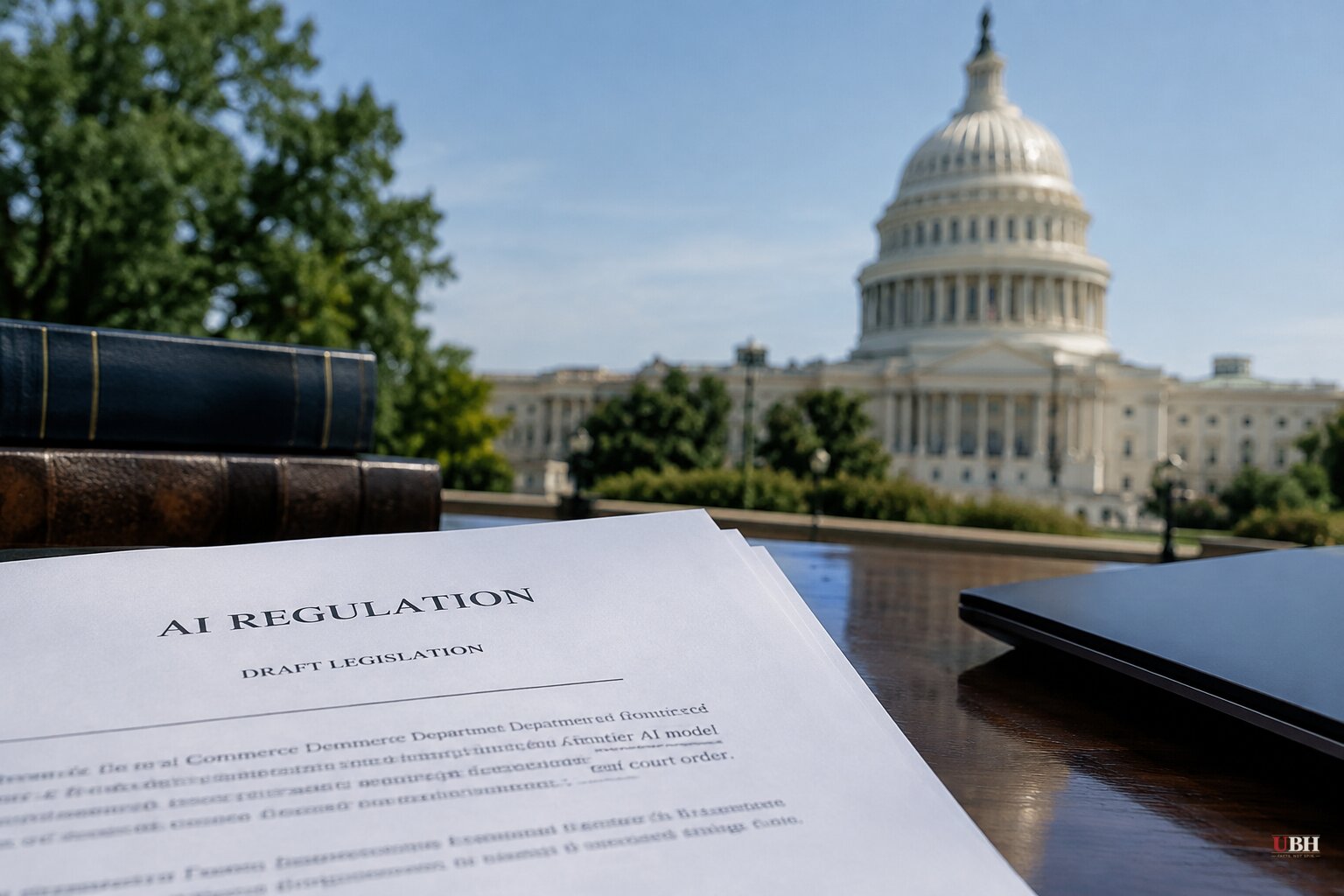
Since Anthropic began lobbying lawmakers in June for its "Advanced AI Framework," the company has stuck to talking points. Now there is bill text. Politico reported Friday, Oct. 16, that Anthropic representatives have quietly pitched Capitol Hill on a confidential draft bill to regulate frontier AI safety and security. Politico said it obtained the draft and cited three people with knowledge of the effort who spoke on condition of anonymity.
An Anthropic spokesperson did not dispute the account. "This bill represents the proposals outlined in Anthropic's Advanced AI Framework, which we have been advocating for with federal and state lawmakers since June," the spokesperson said. "These are sensible policies we believe Congress should act on."
What the draft would do
The government could block a model's release or use only if it poses a foreseeable, imminent risk of more than $1 billion in damages, or of killing or seriously injuring more than 50 people. That is the draft's threshold, per Politico.
The risk would have to come from one of three sources: creation or release of a biological weapon, a model evading its developer's controls, or a cyberattack.
The mechanism runs through the courts. Under the draft, the Commerce Department could ask a federal judge to halt a model after determining a risk exists. The District Court for the District of Columbia is named as the venue.
The language also bars every other federal department, agency or officer from suspending a model's development, deployment or internal use. Commerce would be the only route.
Testing and reporting
Developers would have to test frontier models, be transparent about findings, and submit to independent evaluation, the Anthropic spokesperson said.
Per the draft, the evaluators would register with Commerce and periodically assess a lab and its frontier models. Labs could pay them, provided the payment is not tied to the outcome of the evaluation.
If an evaluator finds an "imminent enumerated risk," it must report to Commerce within 72 hours of completing its assessment.
The risk language mirrors California's SB 53, signed into law last year. Politico's subhead also says the draft would preempt some state AI safety laws, a point the Anthropic spokesperson's statement did not address.
Where the politics stand
The Commerce Department did not immediately respond to a Reuters request for comment on the draft.
Washington has no federal AI statute. AI policy under President Donald Trump has leaned on voluntary industry pledges and executive orders aimed at sustaining an AI boom that tech leaders say is driving the economy. Congress, politically divided and heavily lobbied by Big Tech, is out of session until after next month's midterm elections.
No lawmaker has been named as a sponsor or recipient of the pitch. No committee action or vote has been scheduled.
The tradeoffs in the text
The draft cuts two ways on government power, and both are in the text. It would create a federal authority to stop a model from shipping, a power that does not exist today. It would also fence that power in: two high triggers, three defined risk categories, one agency, and a federal judge who must sign off.
A rule that lets Washington halt a product only after a judge agrees is a narrower grant than most regulatory regimes give an agency. It would also put new compliance costs on any company building frontier models, including registered evaluators, reporting systems and dedicated safety staff.
The draft is also a frontier lab writing the rules for frontier labs. Anthropic's spokesperson describes the bill as policy Congress should adopt. Whether other developers or lawmakers agree is not yet on the record. Commerce's view is not either, and Commerce would hold the sole authority the bill creates.
The next concrete marker is the calendar. Lawmakers return after the midterms, and only then will it become clear who, if anyone, picks up the draft and attaches it to a legislative vehicle.
Sources used for this briefing
7 links from 7 independent newsrooms (syndicated copies of the same report count once)
These are the sources it draws on, linked so you can verify.


