
Unbiased headlines. Facts, not spin.
Unbiased Headlines is an independently owned news organization. We bring you the facts, not opinions, written fresh from 110+ named sources. Sources linked so you can verify it yourself.
 tech
Notable (6/10)
tech
Notable (6/10)
Apple Rewrites App Store Rules to Ban AI 'Nudify' Apps and Hidden Post-Approval Features
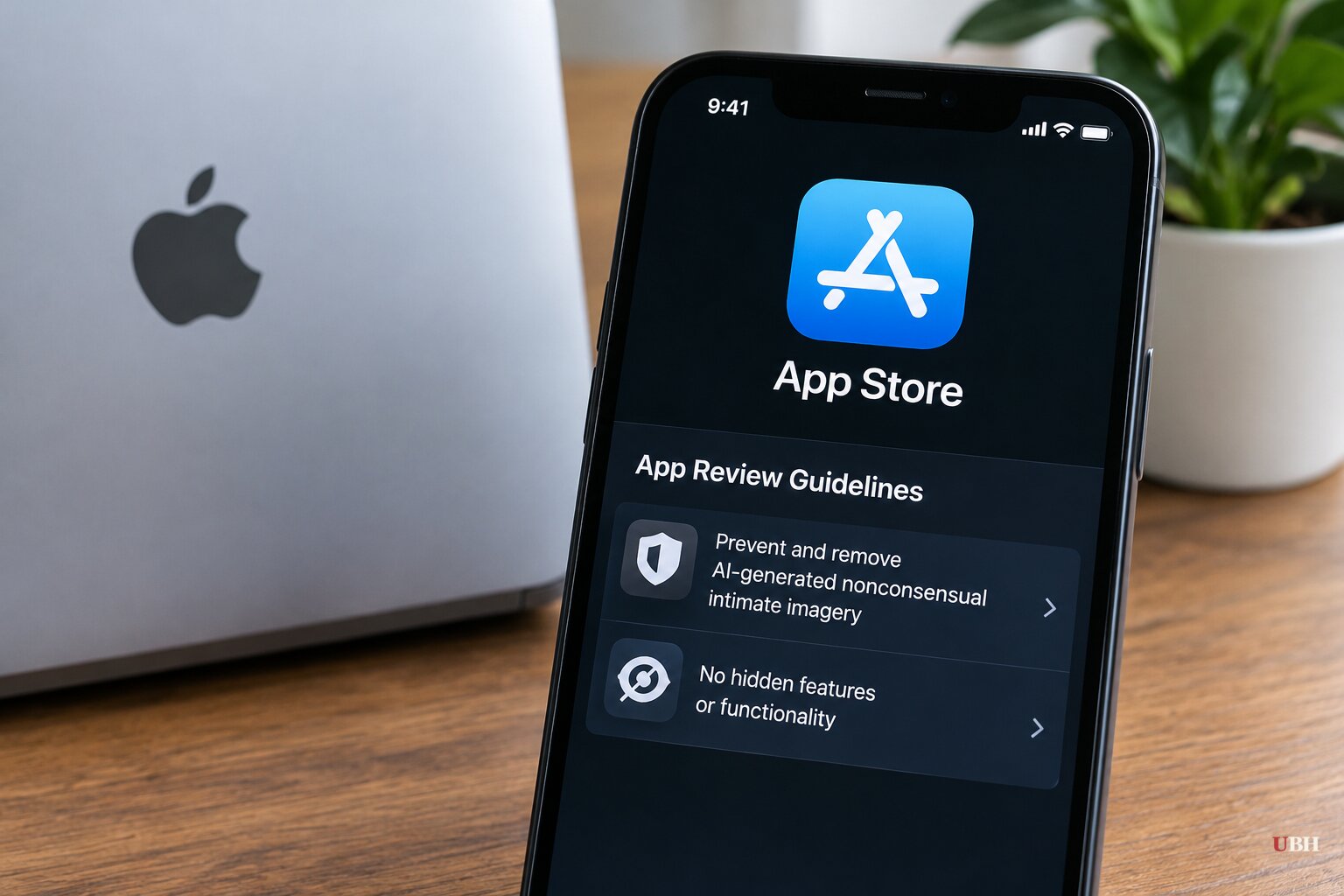
Apple changed its App Store rules on Friday, Oct. 16, to more explicitly ban apps that use AI to generate nude or sexual images of real people without their consent.
The update touches three parts of the App Review Guidelines. Each one targets a gap that critics, researchers and city officials spent most of this year pointing at.
What the new rules say
Section 1.2 covers apps that let users create, generate, upload or share content. It now lists nonconsensual intimate imagery, including imagery generated using AI tools, among the content developers must proactively prevent and remove.
Developers who fail to put appropriate safeguards in place, or who don't fix violations after Apple notifies them, may be considered in violation of the Developer Code of Conduct. They can be removed from the App Store.
A new Section 2.5.19 bars hidden, dormant or undocumented features. The text says an app's functionality "should be clear to end users and App Review." Trying to hide features in the app binary, "such as through code obfuscation or other methods," is grounds for removal and termination of the developer account.
Apple says the rule targets apps that misrepresent their purpose during review and reveal harmful capabilities, "such as 'nudification,'" only after approval. Hidden functionality was already barred under Section 2.3.1. The new rule spells it out and names obfuscation.
Section 5 also changed. Apps that facilitate human trafficking or the exploitation of children will be removed from the App Store and blocked from alternative distribution. That reaches the sideloading channels Apple has been forced to open in some regions.
"We do not hesitate to remove apps, and terminate the developers behind them, when they violate these guidelines," Apple said in its developer news post.
The pressure behind the change
Apple's rules already prohibited pornographic content, including apps that generate sexually explicit images of real people. That did not keep nudify apps off the store.
In January, the Tech Transparency Project identified dozens of AI-powered nudify apps on the App Store. A follow-up investigation in April found that Apple's search suggestions and advertisements were steering users to them.
In July, San Francisco's city attorney ordered Apple to pull nudify apps from the store. Apple said it removed them. Reported counts of the apps in that order differ, with figures of 8 and 13 appearing.
The bait-and-switch problem is documented too. A July 9to5Mac investigation found dozens of apps posing as simple games and utilities that showed hidden betting platforms when opened from Brazilian IP addresses. Many were available to children.
The Grok question
The biggest flashpoint was Grok. Earlier this year, users of Elon Musk's X platform used the Grok chatbot to produce sexualized deepfakes of women and minors.
Apple did not pull X or Grok. It told U.S. senators it had privately warned xAI that Grok could be removed unless the problem was addressed. xAI added safeguards, and Apple approved an updated version of the app.
Protesters at Apple's WWDC event in June took a harder line. They demanded Apple "remove Grok, X, and all nudify technology from the App Store." Lawmakers and advocacy groups made similar calls for removal, according to the reporting around the dispute.
Apple's own account is that the warning worked and the fix was enough. The new Section 1.2 language gives that position a written standard. Apple's announcement does not name Grok or any other app, and Apple has not said whether any specific app is affected by the update.
What is still open
The rules put the burden on developers, not just on users who report abuse. "Appropriate safeguards" is not defined in the text, and Apple has not said how App Review will test whether an image generator stops prompts or uploaded photos meant to produce explicit images of real people.
The 2.5.19 rule runs into a practical limit. Apps that pass review clean and change behavior later, whether through server-side switches or geography-based triggers like the Brazil gambling apps, are hard to catch by inspecting a submitted build.
The first real measure will be removals. Apple has not said whether it will publish enforcement figures, and the Tech Transparency Project has run repeat searches of the store this year. A fresh sweep of the App Store would show whether the new language changed anything on the shelf.
Sources used for this briefing
7 links from 7 independent newsrooms (syndicated copies of the same report count once)
These are the sources it draws on, linked so you can verify.


