
Unbiased headlines. Facts, not spin.
Unbiased Headlines is an independently owned news organization. We bring you the facts, not opinions, written fresh from 110+ named sources. Sources linked so you can verify it yourself.
 tech
Notable (6/10)
tech
Notable (6/10)
UN Adviser Says Drone Strikes on Data Centres Should Make Europe Rethink AI Gigafactory Sites. EU Tender Closes Nov. 12
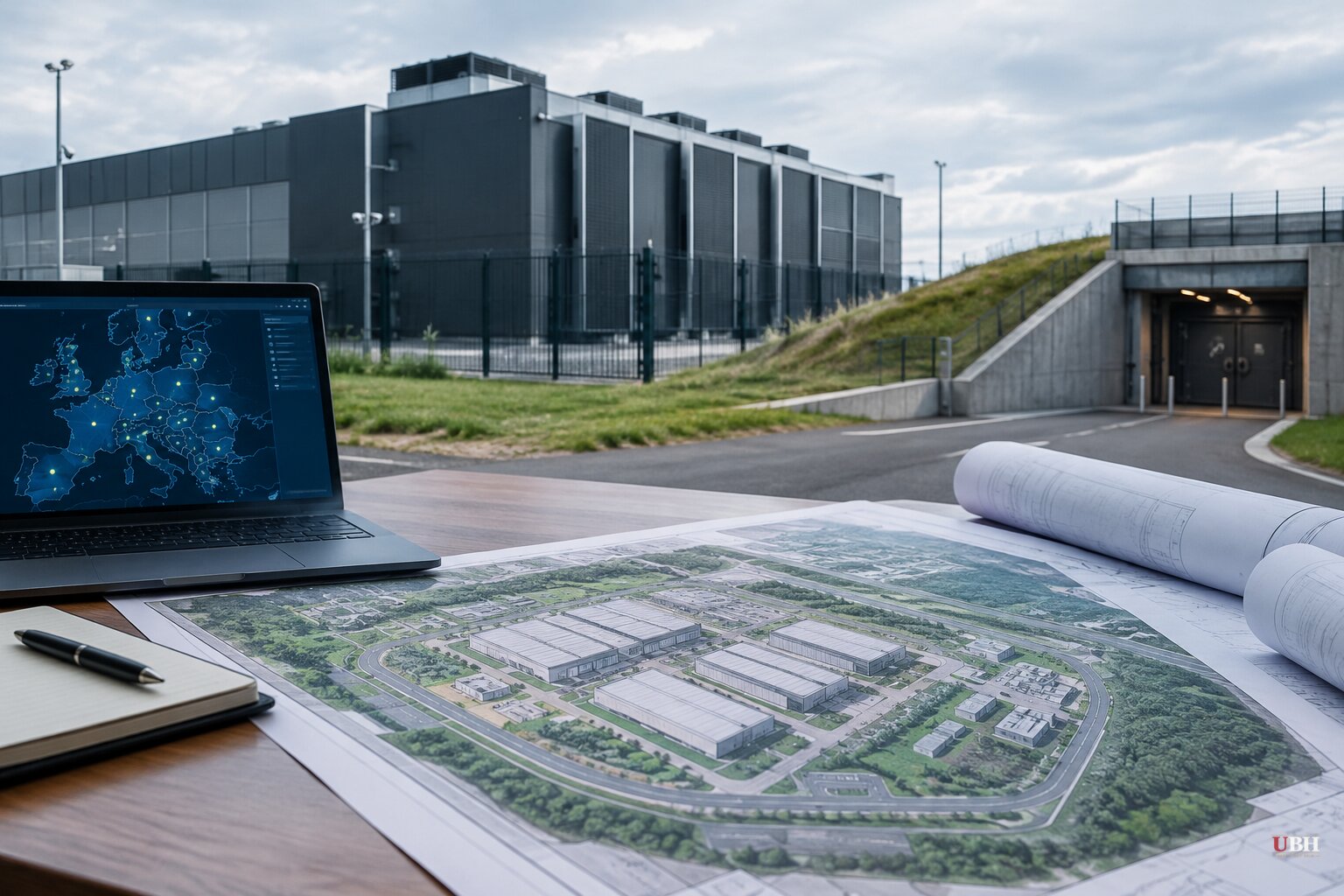
Since Russia struck data centres in Kyiv and Ukrainian drones began hitting data centres inside Russia in recent weeks, the physical security of AI infrastructure has become a live question for Europe. One adviser to the United Nations says the answer is not yet on the table.
Mehdi Paryavi, founder of the International Data Center Authority think tank and a UN adviser, told Euronews Next that data centres have become prime military targets. "When you hit enough important targets, you can take down the entire economy," he said.
His argument is about dependence. As societies digitise, he said, knocking out a data centre can mean "paralysing the functions of military, healthcare and finance."
What Paryavi wants changed
Paryavi said the industry's long-standing practice of picking sites carefully and keeping their locations quiet may no longer be enough.
"Maybe you need iron domes, maybe you need to build them underground, or you need to build bunkers," he said. He declined to give specifics, citing national security.
He added: "The days that you would just build data centres in random locations are over."
Asked whether the strikes will make European governments rethink their AI gigafactory plans, he answered: "100%."
Paryavi also conceded a hard limit. No country, he said, has a solid answer on how to harden these sites without slowing the race to build AI capacity.
Kyiv has said its strikes target facilities that provide revenue streams for Moscow's war machine. Paryavi pointed to Ukraine's own use of AI for drone targeting and other military purposes as part of why the sites matter in wartime.
The price tag
The economics are steep. Paryavi said data centres can cost up to $25 billion each and take up to three years to build. Replacing a destroyed one, he said, can be "almost irreversible" for many countries, Europe included.
That cost is why he argues siting and defence belong at the front of the planning process rather than the back.
Brussels is not signalling a change
The European Commission has a tender open to establish up to seven AI gigafactories across the EU. A Commission spokesperson told Euronews Next: "The call is still open. Once closed, the proposals will be evaluated and then the award decisions will be taken." The call closes Nov. 12.
The Commission gave no specific comment on whether the targeting of data centres in warfare would alter any data centre plans.
The broader political mood in Brussels points toward speed, not caution. At this week's International AI Summit in Dublin, EU justice chief Michael McGrath told reporters, "We are satisfied for now. We have an appropriate system of regulation in place." He called the EU's AI Act "future-proof," according to Politico's Decoded briefing.
Microsoft President Brad Smith, in an interview with Decoded on the sidelines, described a European sense that officials "want to have rules that are a little lighter in weight, that are more supportive of innovation, while they protect public safety." Europe, Politico reported, is easing off its regulatory push as it tries to catch up with the U.S. tech sector.
That sets Paryavi's call to slow down against officials who are trying to move faster.
The grid problem is separate and documented
Security is not the only constraint. The UN Economic Commission for Europe warned on Sept. 8 that AI data centres are growing faster than power grids can expand.
Citing the International Energy Agency, UNECE said global data-centre electricity use was about 485 terawatt-hours in 2025 and is projected to reach about 950 by 2030, roughly 3 percent of world electricity demand.
A large facility can be built and connected in two to five years. New transmission lines can take more than ten.
UNECE said Ireland restricted new grid connections in Dublin and the Netherlands limited where data centres may be built. It also said there is no consistent way to split the cost of grid upgrades among developers, power companies and ordinary consumers, and that this uncertainty may delay investment.
The agency also warned that AI workloads can swing suddenly, and that overloaded grids can suffer voltage oscillations, unintended disconnections and cascading failures.
What comes next
Paryavi's own organisation sells expertise in data centre standards, so his recommendations come from someone with a stake in the subject. He offered no specific designs, and no government has published a hardening standard for gigafactories.
The next fixed date is Nov. 12, when the Commission's call closes. After that, proposals will be evaluated and awards decided. Whether any bidder is required to address missile, drone or sabotage risk in its site plan has not been stated by the Commission.
Sources used for this briefing
6 links from 5 independent newsrooms (syndicated copies of the same report count once)
These are the sources it draws on, linked so you can verify.


