
Unbiased headlines. Facts, not spin.
Unbiased Headlines is an independently owned news organization. We bring you the facts, not opinions, written fresh from 110+ named sources. Sources linked so you can verify it yourself.
 tech
Notable (6/10)
tech
Notable (6/10)
Amazon, JPMorgan, Schwab, Yelp and Delta Block Outside AI Agents as Meta, OpenAI Push Consumer Launches
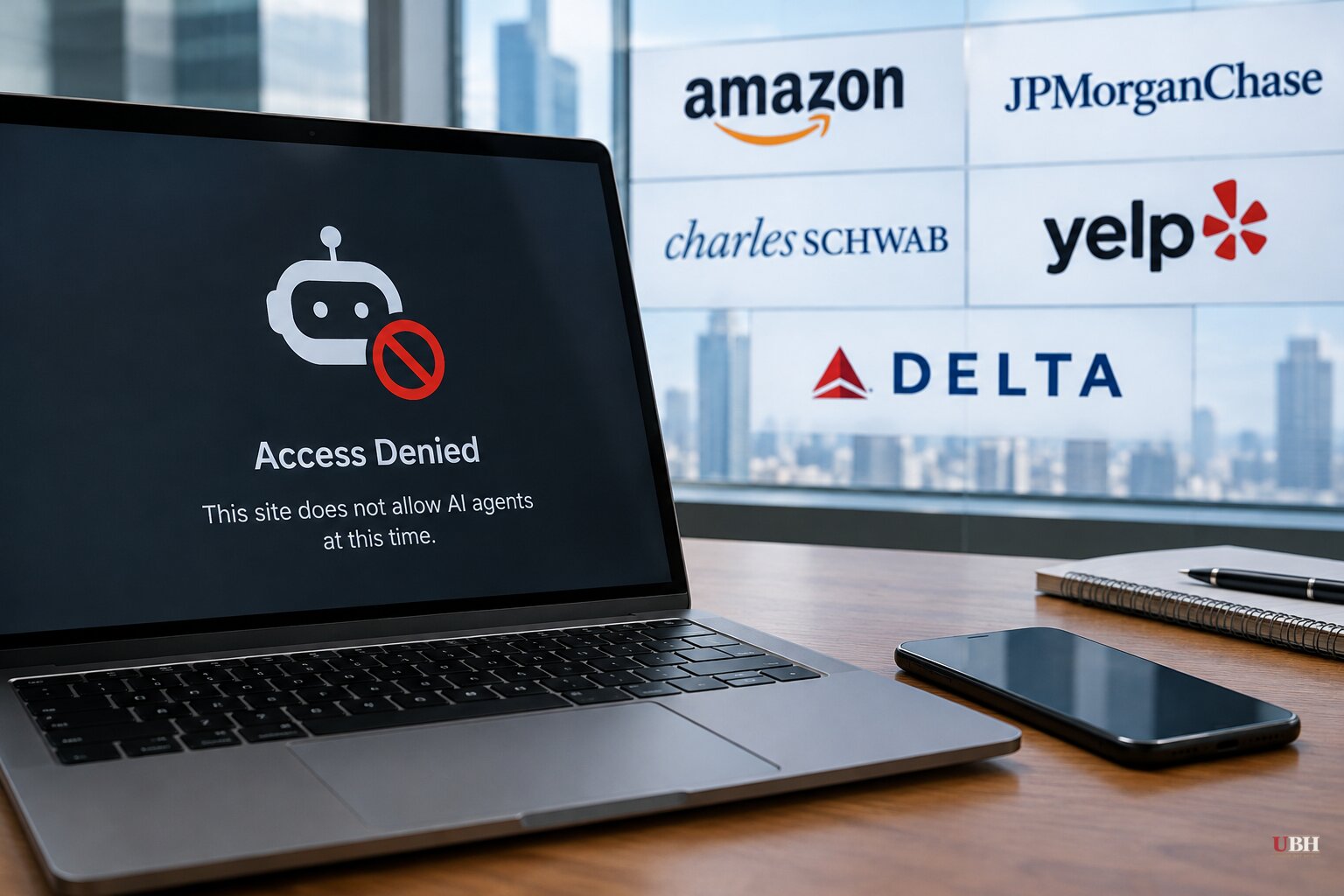
The pitch from OpenAI, Meta, Google and a handful of startups is simple: an AI agent that books your dinner, clears your inbox and buys your shoes. The sites those agents need to log into have a different view.
In recent weeks, users of Meta's Muse, xAI's Grok, OpenAI's Dots and Instinct have reported being blocked from top websites. Some blocks are deliberate. Some appear to be accidents of old anti-bot technology.
Who is saying no
Amazon began blocking Muse from its retail site last month, shortly after Meta launched the assistant in September. Amazon said Muse failed to identify itself and raised concerns about how it handles customers' credentials and account data. Amazon also said its "continued access" violates the site's policies. Users report Grok, Instinct and Dots can't use Amazon either.
Yelp said it only allows AI agents that pay into its data licensing program. Delta Air Lines is preventing agents from booking tickets for users. JPMorgan Chase and Charles Schwab have both confirmed they are blocking agents from accessing customer accounts over security concerns.
Users also say Cars.com and Amtrak no longer work with agents that previously could use them. Neither company has been quoted explaining why, so whether those are deliberate blocks is unconfirmed.
The bank position
Jamie Dimon laid out JPMorgan's stance on the bank's Oct. 13 earnings call, warning about the prospect of thousands of rogue agents.
"We're not going to allow just any … outside agent to come in inside the company, because it's just too risky for clients and for JPMorgan," Dimon said.
A Chase spokesperson confirmed that third parties cannot obtain customers' banking credentials and log in on their behalf. The bank has given no timeline for allowing agents to interact directly with accounts.
There is a narrow opening. Chase still supports customer-authorized data sharing through open banking providers, so an agent can pull something like an account balance through an approved connection. That access does not cover sending money or paying bills.
Bank of America and other major banks have also issued warnings about fraud risks tied to AI agents.
Not every block is on purpose
Walmart shows the other side of the problem. It is a Muse partner, announced at Meta's Connect developer conference in September. Even so, users have complained on social media that Muse can't finish purchases on Walmart's site.
A Walmart spokesperson told TechCrunch those failures were not intentional. The site shows a button customers must click to prove they are human. If an agent's session is interrupted, the check fails and the agent gets kicked out. NBC has reported Walmart ran into the same issue in its own tests of the agent.
That leaves users guessing whether a retailer said no or a bot filter simply misfired.
The Amazon-Perplexity fight
The legal question is not new. Last year Amazon banned Perplexity's agentic shopping feature and sued the startup. Amazon said it "repeatedly requested" that Perplexity stop, and argued that third-party companies that buy on behalf of customers "should operate openly and respect service provider decisions whether or not to participate."
Perplexity's response: Amazon objects because agents mean fewer human eyeballs on its ads. The startup likened its agent to an extension of the user and said Amazon "does not believe in your right to hire labor, to have an assistant or an employee acting on your behalf."
A judge later ordered Perplexity to stop its agents from shopping on Amazon. An appeals court overturned that order in August. Amazon has since filed an amended complaint.
Both arguments rest on property and consent. Amazon says it controls who enters its store. Perplexity says the customer, not the store, decides who acts for the customer. No court has settled that on the merits.
Elon Musk's reaction
When reports surfaced that Grok couldn't use Amazon, xAI owner Elon Musk responded that maybe he "should start a competitor to Amazon." No plan has been announced.
The industry's workaround
Meta, Walmart, Stripe, Sierra, Genesys, Rocket, NiCE and Decagon have started work on an open standard for how AI agents communicate with businesses. Meta said in a blog post that the protocol will focus on agent-to-agent communication for online commerce. The goal is to separate good bots acting for a user from bad ones.
The standard is in development. It does not yet bind Amazon, Delta, Yelp, JPMorgan or Schwab, none of which is named as a participant.
What's next
The next concrete marker is the Amazon-Perplexity case, now back at the trial level with Amazon's amended complaint on file. Its outcome will say a lot about whether a user's agent has any standing to enter a site that has told it to stay out.
On the banking side, Chase's refusal of credential-based logins stays in place with no end date.
Sources used for this briefing
7 links from 6 independent newsrooms (syndicated copies of the same report count once)
These are the sources it draws on, linked so you can verify.


