
Unbiased headlines. Facts, not spin.
Unbiased Headlines is an independently owned news organization. We bring you the facts, not opinions, written fresh from 110+ named sources. Sources linked so you can verify it yourself.
 energy
Major Story (8/10)
Event date: October 19, 2026 ·
Zelensky Offers to Halt Refinery Strikes if Russia Stops Hitting Ukraine's Grid, as Kyiv Faces Winter Blackouts
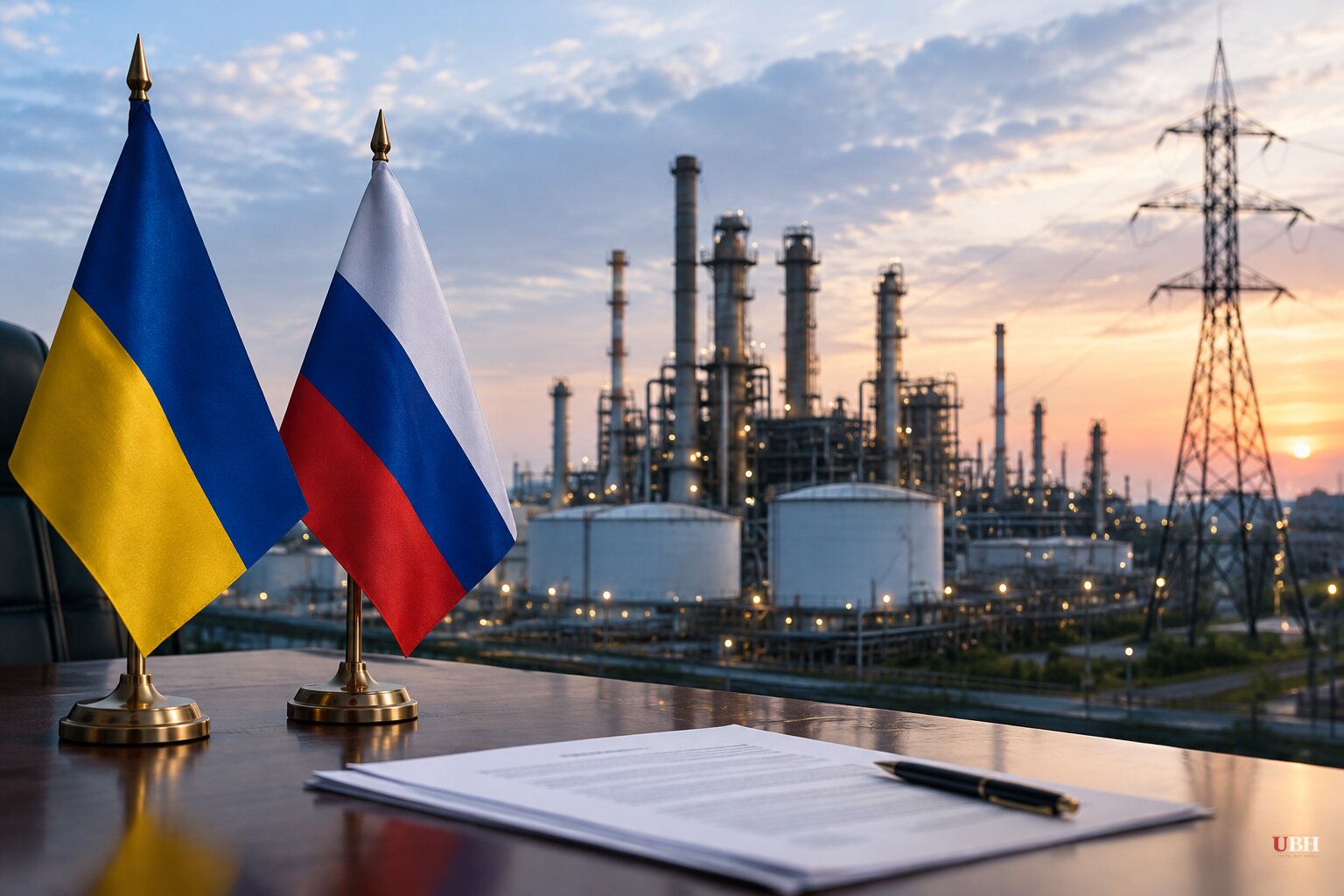
Since Russia's Oct. 14 barrage on Kyiv's substations, the capital has been back on scheduled power cuts, and the argument over who is responsible for the energy war has spread to Washington.
Zelensky's offer and the Trump dispute
President Volodymyr Zelensky said on X that Ukraine would stop striking Russian oil refineries if Russia stops striking Ukrainian energy infrastructure. "Any de-escalation steps must be reciprocal and backed by real guarantees," he wrote.
The offer followed a blow-up with President Donald Trump. Trump announced a deal under which Russia would release large volumes of diesel onto global markets in exchange for sanctions relief. Zelensky called it a weak decision that would encourage Moscow to keep attacking Ukraine.
Trump then said Ukraine's refinery strikes were to blame for rising fuel prices. Zelensky rejected that, calling the claim "wrong and unacceptable," according to Kyiv Post. He pointed to the Iran war as the cause and demanded pressure on Putin and more air-defense missiles.
The facts on prices are not in dispute. U.S. gasoline and diesel prices have surged since late February, when joint U.S.-Israeli strikes on Iran led Tehran to block the Strait of Hormuz, a key oil export route from the Gulf. What is disputed is how much Ukraine's strikes on Russian refineries add to the problem.
Trump has his own political reasons to care. The row is unfolding weeks before closely fought U.S. elections dominated by voter frustration over the cost of living. Drivers paying more at the pump are a problem for any incumbent party.
Zelensky's position is that the trade should run both ways. Russia has hit Ukrainian power and heating since invading in February 2022, knocking out electricity and warmth for millions in winter.
Kyiv's grid under strain
The outages are already here. Ukrenergo, the state grid operator, imposed emergency outages in parts of Kyiv and Kyiv Oblast on Oct. 8 because of falling voltage in the high-voltage network. Hourly schedules were suspended.
That day, Russian attacks on the capital killed four people and injured 19, according to Ukrainian authorities. The Kyiv City Military Administration said power disruptions briefly halted metro trains and escalators. Water pressure dropped on the right bank of the Dnipro in the Holosiivskyi, Sviatoshynskyi, Solomianskyi and Shevchenkivskyi districts.
On Oct. 9, Ukrenergo announced all-day restrictions in affected regions, including limits on industrial and business consumers. It urged Ukrainians to conserve power during the 5 p.m. to 10 p.m. evening peak.
Prime Minister Serhii Koretskyi said in late September that attacks on energy facilities had been occurring almost daily since the summer. He described the Sept. 29-30 strike as the first massive combined attack on the energy system since the last heating season.
Then came Oct. 14, one of Russia's biggest attacks on the capital's substations, which left many households without water and power. Kyiv has since returned to scheduled outages, which had not been imposed since spring. DTEK, Ukraine's largest private energy provider, has announced further outages in the capital.
The power ring
Kyiv consumes about 1 to 1.2 gigawatts, or 12 to 15% of the national total, according to energy experts. Winter demand can reach 1.8 to 2 GW.
The city generates far less than it uses. It depends on a ring of high-voltage lines and 330-kilovolt substations, plus the 750 kV Kyivska substation that carries power from the Rivne and Khmelnytskyi nuclear plants. Ukrenergo has said the layout is no secret to Russia.
Ukrainska Pravda reports that Russian forces are systematically targeting both the capital's combined heat and power plants and the substations that feed it from other regions. The city has already lost a significant share of its own generation. The paper says a 20-hour outage in severe frost "no longer seems far-fetched."
Oleksii Andriiashchenko of pump maker Grundfos Ukraine said a worn grid makes it harder for pumping stations to get the power they need.
Water and sewage
Kyiv's water system pumps about 700 million liters of clean water a day from the Dnipro and is one of the city's biggest electricity users.
Oleksandr Skhin, director of Ukraine's Association of Water Utilities, told the Kyiv Independent that aging equipment and a lack of pumping power could have serious consequences. Water experts say the larger danger is wastewater. Without electricity to move sewage to treatment plants, untreated waste could flood parts of the city.
Serhii Horkutsenko, deputy head of Kyivvodokanal, said in an interview with Ekonomichna Pravda published Oct. 12 that constant voltage swings make the aged system "burn out."
Olena Pavlenko, head of the Dixi Group energy think tank, said Russia has increased the intensity of its attacks on Ukraine's energy system fivefold since 2024. She said Kyiv's energy system is in a more critical state than in previous years.
The government says the country is well prepared for winter. Residents are less sure. The Kyiv Independent has reported that the capital lacks enough backup generation and that anger over winter preparations has fueled calls for Mayor Vitali Klitschko to resign.
Kyiv residents
Many are staying put. Kyiv Post interviewed residents, and several said they are not planning to leave. Nelia, a pensioner, said she had no heating until February last year and expects cold again. Another resident said his family has ordered a large portable power station and has wood-burning boilers.
Roman, a delivery worker, said apartment temperatures fell to 7 or 8 degrees Celsius in past winters. "I honestly don't understand what I'm paying for," he said.
Open question
Alanna Novetsky wrote in War on the Rocks on Oct. 22 that Western support for Ukraine's grid has followed the same pattern since fall 2023: warnings, too little aid, then applause for Ukrainian endurance. She argues that the West treats the war as a short-term problem.
Whether Zelensky's reciprocal offer gets any traction is unsettled. Whether Kyiv's air defenses and repair crews can prevent the 20-hour outages Ukrainska Pravda describes depends on how hard Russia hits the capital before the frosts arrive.
Sources used for this briefing
6 links from 6 independent newsrooms (syndicated copies of the same report count once)
These are the sources it draws on, linked so you can verify.


