
Unbiased headlines. Facts, not spin.
Unbiased Headlines is an independently owned news organization. We bring you the facts, not opinions, written fresh from 110+ named sources. Sources linked so you can verify it yourself.
 energy
Major Story (7/10)
Event date: October 14, 2026 ·
Trump Signs Wind Turbine Import Proclamation as Interior Seeks to Revisit Revolution Wind Approval
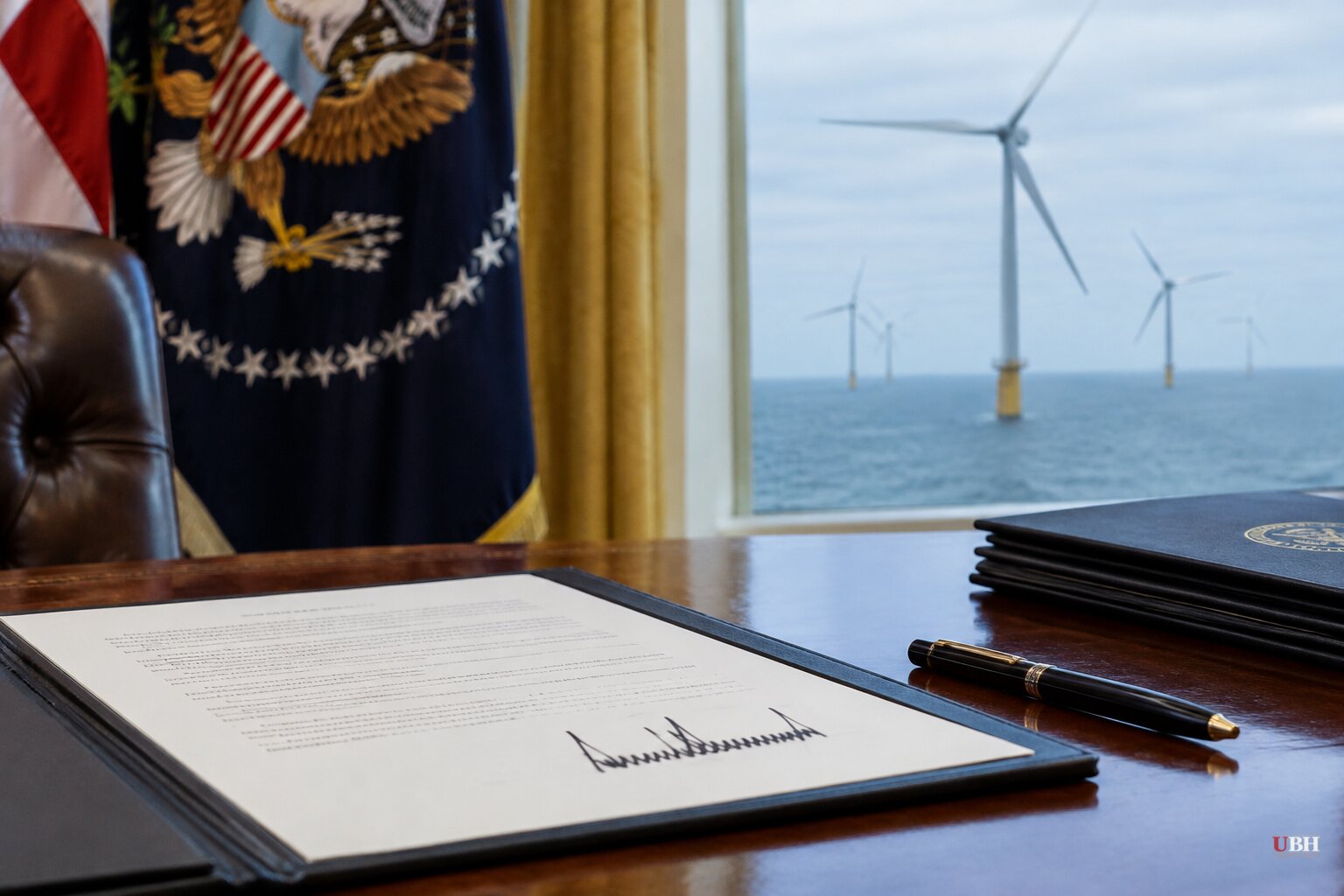
Since Interior asked a federal court on Oct. 9 to send back its approval of Revolution Wind, the administration has opened a second front against the wind industry: a presidential proclamation on turbine imports.
Trump signed it Thursday, Oct. 22. It follows a Commerce Department investigation. Trump wrote that Commerce Secretary Howard Lutnick "found and advised me of his opinion that wind turbines and their components and subcomponents are being imported into the United States under such circumstances as to threaten to impair the national security of the United States."
What the proclamation does
It rests on Section 232 of the Trade Expansion Act of 1962, which lets the executive branch limit imports on national security grounds.
The proclamation does not impose a tariff or ban on its own. It sets up negotiations to address cybersecurity risks in turbine components, heavy reliance on foreign manufacturers, the effect of intermittent generation on the grid, and radar interference with air traffic control, weather forecasting, homeland security and defense missions.
Trump wrote that, based on the results of those talks and a later report, "I may consider alternative remedies in the future." Those could include tariffs, prohibitions, licensing and other limits on turbines and related parts.
By law, Trump can decide 180 days after the proclamation that not enough progress has been made and then act. That points to around April 2027.
Such an action could be challenged in the U.S. Court of International Trade. Reporting on the proclamation describes that as a long shot. The court wrote in 2019 that a Section 232 action "plainly unrelated to national security" would in theory be reviewable, but said the question would likely end up at the Supreme Court.
No source ties the proclamation to the court filings. Both fit Trump's long-stated opposition. In July 2025 he said: "We will not allow a windmill to be built in the United States. They're killing us. They're killing the beauty of our scenery."
The Revolution Wind filing
The Oct. 9 motion was filed in federal court in Washington in a case brought in 2024 by the anti-wind group Green Oceans. The suit challenged approvals for Revolution Wind and South Fork Wind.
Interior said it agrees that remand of the 2023 construction and operations plan approval "is warranted so that the agency can reevaluate its compliance with the Outer Continental Shelf Lands Act." It also argued the court "need not reach Plaintiffs' other claims."
The filing did not cite new concerns. It said the Bureau of Ocean Energy Management's 2023 decision failed to "adequately explain" how the project fits with other ocean uses, including fishing and recreation.
That is a different argument from the national security case Interior used in December 2025, when it included Revolution Wind in stop-work orders over radar concerns. In January, U.S. District Judge Royce Lamberth ruled the government's radar evidence was not enough to justify halting a project so far along. Construction resumed. An earlier August 2025 stop-work order had also been rejected by the courts.
Interior's position is that nothing has changed. "The Department of the Interior is complying with a briefing schedule, not announcing a policy change," the agency said. It added that the filing "should not be misconstrued as a shift in the Department's approach to offshore wind."
The filing does not stop the turbines or revoke the permit. The request has to go through the court, and the process could run into early next year.
What is at stake in Rhode Island and Connecticut
Revolution Wind is a 704-megawatt, $6.2 billion project about 15 nautical miles off Rhode Island, led by Denmark's Ørsted. It began delivering power on March 13, and the 65th and final turbine went up in September.
The developers say it will supply more than 350,000 homes and businesses under fixed-price, 20-year contracts with Connecticut and Rhode Island utilities. Full operation is expected by the end of the year.
Connecticut's top officials objected on Oct. 14. Gov. Ned Lamont, a Democrat, said the action contradicts the administration's stated support for permitting reform meant to speed energy projects and cut costs. He said the state is reviewing its options with Ørsted and the attorney general's office.
"This makes zero sense," Attorney General William Tong said. He added that Connecticut is prepared to go back to court to defend the project.
Connecticut's Department of Energy and Environmental Protection estimates that by 2028 the project will cut wholesale electricity costs for New England ratepayers by about $500 million a year. That is the state's estimate, not an independent finding.
Hillary Bright, executive director of the offshore wind group Turn Forward, said the filing "injects uncertainty into a nearly completed offshore wind project that electricity planners and consumers in the Northeast are counting on."
Maryland follows the same path
The same remand approach has surfaced in Maryland. The administration asked Baltimore U.S. District Judge Stephanie Gallagher to remand, without vacatur, the construction permit for US Wind's project off Ocean City. Without vacatur, the permit stays in place while Interior reconsiders it.
Justice Department lawyers cited possible harm to the North Atlantic right whale, scenic and visual resources, some commercial fisheries and scientific research. The case was originally filed nearly two years ago by the Town of Ocean City, and the federal government first defended the permit before reversing course.
The town welcomed the filing. "Ocean City has raised these concerns from the start, and we welcome this acknowledgment," it said in a statement.
US Wind said it is confident a court will uphold its permit's validity. Gallagher earlier declined to block the government from revoking it, ruling the company must wait for an Interior decision with legal consequences before challenging it.
What comes next
The next ruling on Revolution Wind rests with the D.C. court, where Lamberth has already rejected one administration attempt to halt the project. Connecticut has not said whether it will formally intervene. The Section 232 clock runs separately: the 180-day window to judge progress on the turbine-import negotiations closes around April 2027.
Sources used for this briefing
7 links from 7 independent newsrooms (syndicated copies of the same report count once)
These are the sources it draws on, linked so you can verify.


