
Unbiased headlines. Facts, not spin.
Unbiased Headlines is an independently owned news organization. We bring you the facts, not opinions, written fresh from 110+ named sources. Sources linked so you can verify it yourself.
 energy
Major Story (7/10)
EPA Claims $1.6 Trillion in Deregulatory Savings, Driven Largely by Two Actions
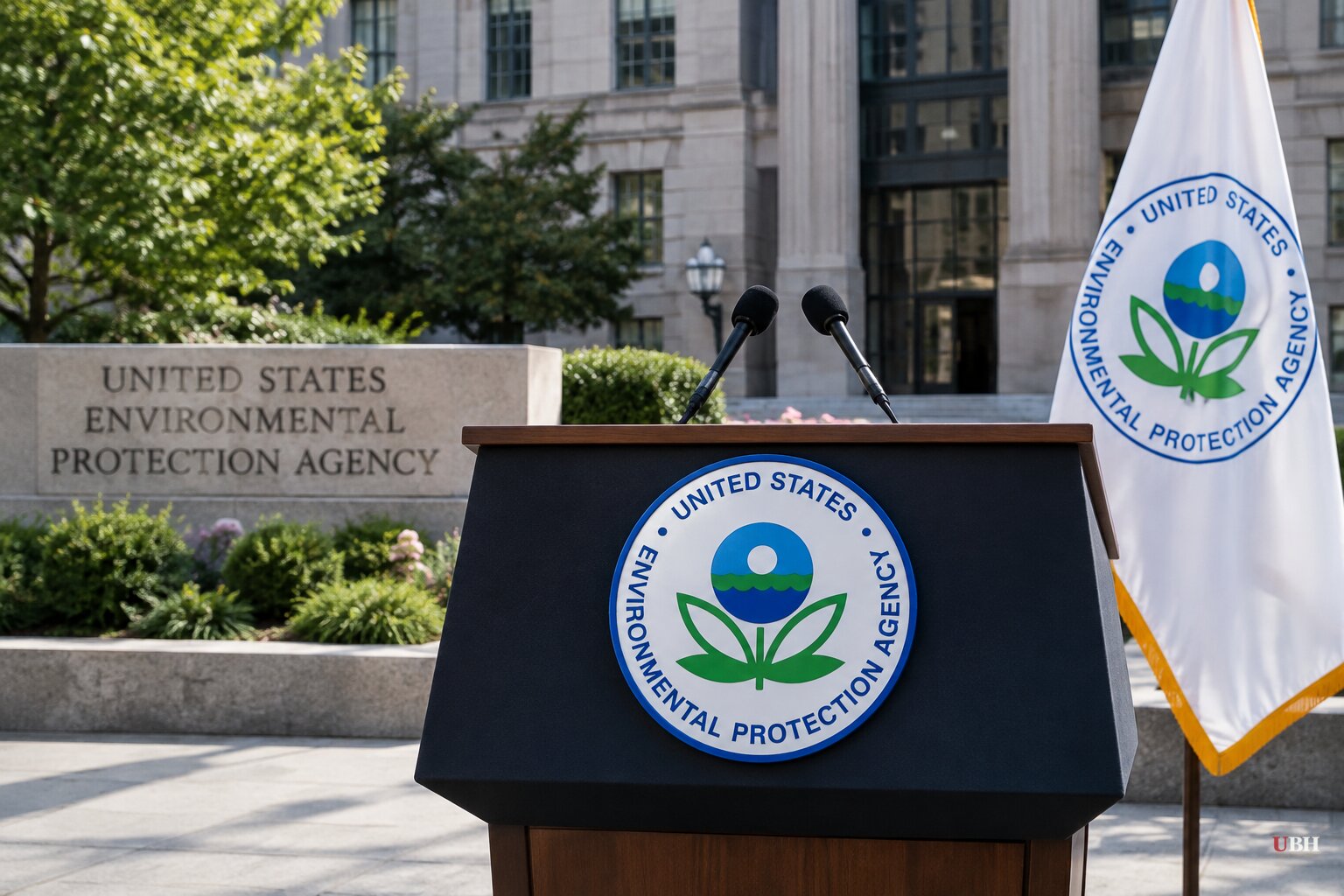
The Environmental Protection Agency announced Friday, Oct. 23, that deregulatory actions it finalized in the past fiscal year generated more than $1.6 trillion in savings. The window runs from Oct. 1, 2025 to Sept. 30, 2026.
The agency says that is more than past administrations achieved across all agencies over entire terms. EPA launched a new webpage and video to promote the figure under its "Powering the Great American Comeback" initiative.
"The Trump EPA is proving you can lower costs, restore consumer choice, and protect the environment at the same time," Administrator Lee Zeldin said.
Two rules drive the number
EPA says its savings are "driven in large part by two historic actions."
The February 2026 rescission of the 2009 Endangerment Finding is credited with more than $1.3 trillion in savings, including roughly $2,400 per new vehicle. The September 2026 repeal of most power-plant greenhouse-gas requirements adds about $310 billion.
The agency also lists other actions: six Congressional Review Act resolutions the President signed, relief on gas cans, ending the incentive behind engine start-stop, diesel derate relief for truckers and farmers, and refrigerant and air-toxics rules.
EPA frames the baseline this way: by the end of the Biden administration, EPA rules accounted for more than $1.3 trillion of roughly $1.8 trillion in added cumulative federal regulatory costs, an estimated $10,000 per household.
These figures come from EPA's regulatory impact analyses under Executive Order 12866, which estimate costs and benefits of rules. They are estimates, not cash returned to anyone. The announcement puts dollar figures on compliance costs avoided. It gives no figure for the health or climate benefits those rules were designed to deliver.
Other EPA savings claims
Zeldin has separately touted savings from the agency's own spending. Those figures include $30 billion in cancelled grants, $257 million in contract cancellations and $825 million a year in reduced contracting. That is a different category from the regulatory estimate and far smaller.
EPA also says it is streamlining permitting. Proposed NEPA procedures would cut a typical environmental review from four years to two. Those procedures are proposed, not final.
Supporters of the approach argue that stacked federal rules raise prices for vehicles, energy and shipping. EPA points to a truck EV mandate and a 2024 methane fee on energy producers, both nullified through the Congressional Review Act, as examples.
The pushback
Critics dispute that the rollback comes at no environmental cost. The New York Times reported that President Trump has exempted 202 facilities in 39 states and Puerto Rico from clean-air regulations that were going into effect. Among them are chemical manufacturers, copper smelters and coal-burning power plants.
About 3.3 million people live within three miles of at least one affected facility, the Times reported. It called the exemptions the biggest presidential intervention in enforcement of the Clean Air Act in the half-century since Richard Nixon signed the law.
The United Nations Environment Program made a wider argument Wednesday, Oct. 21. Its Emissions Gap Report 2026 says the chance of holding warming to 1.5°C with no or limited overshoot "has been lost." It says that if all national pledges are delivered, there is a 66% chance warming is limited to 2.6°C by 2100. The report calls that a worse outcome than expected last year, citing the formal U.S. withdrawal from the Paris Agreement and revised estimates of historical emissions.
The report also says most climate-related policies from the Inflation Reduction Act have been repealed under the One Big Beautiful Bill Act. It lists rolled-back EPA regulations on power plant and vehicle emission standards, electric vehicle support and methane emissions.
The White House's broader approach is also drawing questions from commentators on process rather than the environment. An opinion writer in The Fulcrum acknowledged that Washington has too many outdated and duplicative rules. The writer argued that Trump's 10-to-1 policy, which requires agencies to eliminate at least ten regulations for each new one, treats rule counts as a success measure. The piece pointed to Head Start requirements as an example of where uniform standards can matter.
What is still unsettled
The $1.6 trillion is a number generated by the agency that wrote the rules, and EPA says it is driven in large part by two actions. Whether it holds depends on whether those actions survive.
The UNEP report says that "a significant number of these attempts are in a judicial state of uncertainty, as they are being challenged in courts," in its discussion of the power-plant repeal and other rollbacks. If a court reinstated the Endangerment Finding or the power-plant standards, much of the headline savings would be at risk.
No court ruling has been cited that would settle the question, and EPA has not said what its total would be if its two largest actions were set aside.
Sources used for this briefing
5 links from 5 independent newsrooms (syndicated copies of the same report count once)
These are the sources it draws on, linked so you can verify.


