
Unbiased headlines. Facts, not spin.
Unbiased Headlines is an independently owned news organization. We bring you the facts, not opinions, written fresh from 110+ named sources. Sources linked so you can verify it yourself.
 energy
Major Story (7/10)
Chinese State Firm Plans to Restart 600-Megawatt Unit at Venezuela's Planta Centro Next Month, Sources Say
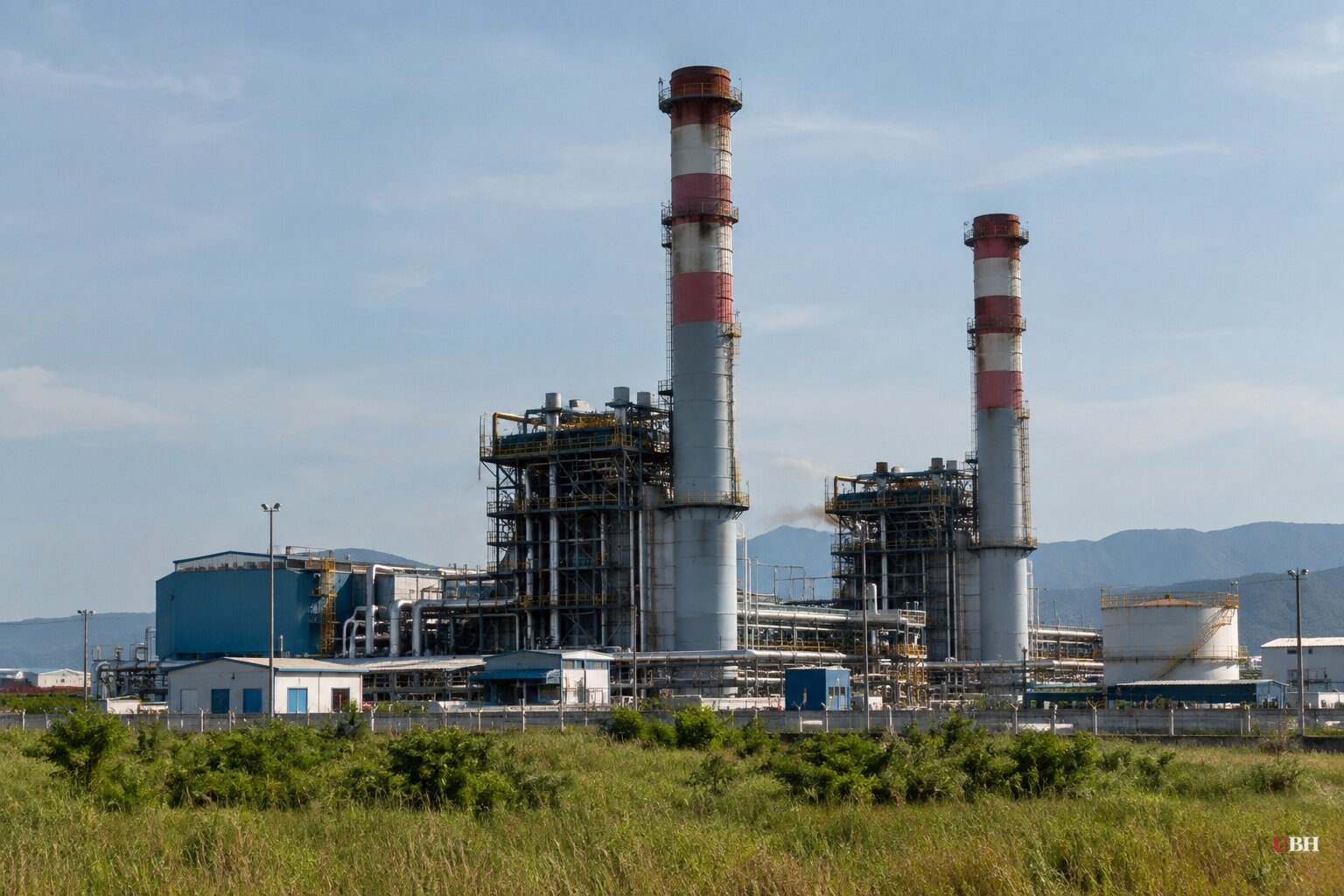
A Chinese engineering company is preparing to partially restart one of the biggest power plants in Venezuela, which has sat largely idle for years.
China Machinery Engineering Corp. plans to switch on a 600-megawatt, oil-fired unit at the Planta Centro complex next month, according to people familiar with the matter who asked not to be named because the plan is not public. The company is working under a contract that dates to the presidency of the late Hugo Chávez.
Venezuela's Information Ministry and China Machinery Engineering did not respond to requests for comment.
A grid in disrepair
Planta Centro is Venezuela's largest fossil fuel-burning plant. It sits about 85 miles (135 kilometers) west of Caracas in Carabobo state and was first developed about 50 years ago. It has been largely shut since 2021 because of equipment failures, aging machinery, fuel shortages and other factors. If fully operational, the six-unit complex could produce more than 2,500 megawatts. China Machinery Engineering, which has had a contract to work at the plant since about 2010, is restarting unit number 6, which would bring about 25% of the complex's former capacity back online. Once operational, the generator will use fuel oil supplied by state-owned Petroleos de Venezuela SA, the people said.
On paper, Venezuela can generate roughly 37,000 megawatts, with about half from hydroelectric dams, according to BloombergNEF. In practice, many plants are in serious disrepair, and parts from some units have been cannibalized to fix others.
Two earthquakes, magnitude 7.2 and 7.5, struck northern Venezuela on June 24. They knocked out 800 megawatts of generating capacity and worsened power rationing across much of the country.
On Saturday, acting president Delcy Rodríguez said 600 of those 800 megawatts had been recovered, according to Xinhua. Blackouts are still being reported across the country.
The Venezuelan Observatory of Social Conflict documented 531 protests over power failures in September alone, up more than 20-fold from a year earlier. One of the only places that doesn't regularly go dark, aside from occasional flickers, is Caracas.
Who gets the blame
The Venezuelan government puts much of the responsibility on Washington. The state news agency AVN, citing the Ministry of Communication and Information, said the grid was affected by U.S. "unilateral coercive measures" that prevented access to original spare parts. AVN reported that new equipment and spare parts had arrived for the country's thermal plants. The government says it aims to rebuild the power sector in the medium term, through partnerships among the national government, the private sector and Venezuelan engineers.
The grid has also suffered from years of underinvestment and lack of maintenance as U.S. sanctions squeezed the economy.
The oil sector needs the lights on
Keeping the power on is especially vital for oil, the backbone of Venezuela's economy. Crude operations rely heavily on the grid, even as new legislation requires companies to install their own generators. Several oil companies, including Repsol, Chevron and the Pentagon's partner, North American Blue Energy Partners, are conducting repairs to power infrastructure to ensure reliable access to electricity, the people said.
That puts the plant restart squarely in the path of the Trump administration's Venezuela oil plans. In August, President Donald Trump announced a sweeping deal under which the U.S. would take control of some Venezuelan reserves, claiming it would ultimately control more than 65 billion barrels of proven oil.
Half a dozen experts told The Associated Press the underlying numbers are shaky. Venezuela reports 303 billion barrels of proven reserves. The experts put a realistic figure at 60 to 120 billion barrels, about one-third of the official claim, because the estimate is rooted in exaggerated, aging data from a corrupt government. They said that makes the August deal much less profitable than Trump asserted.
"That's a funny, funny proposal," said Evanan Romero, a former Venezuelan energy official now based in Houston. He said he believes the Trump administration did not fully research Venezuela's claims before getting involved.
The White House has not publicly disclosed how it arrived at the 65-billion-barrel figure. White House spokesperson Taylor Rogers defended the deal as a major step toward stabilizing Venezuela's economy.
China is still in the building
Trump and members of his administration have been making the case for reducing Chinese leverage in Venezuela since shortly after U.S. forces captured former President Nicolás Maduro in January. "For the first time in 20 years, we are having serious conversations about eroding and eliminating the Iranian presence, the Chinese influence, the Russian presence as well," Secretary of State Marco Rubio said at a Jan. 28 Senate Foreign Relations Committee hearing.
Yet a Beijing-controlled company is the one doing the repair work on the country's largest fossil fuel-burning plant, under a contract dating back to the Chávez era. It is a reminder that China remains active in Venezuela even as the administration has vowed to reduce its influence.
That is a practical problem, not a rhetorical one. If American money is going to drill and pump Venezuelan crude, the electricity behind those operations may be restored in part by a Chinese state-controlled contractor.
The Planta Centro work is part of a broader series of repairs on Venezuela's electricity infrastructure, all of which is owned by the national power company, Corporación Eléctrica Nacional SA. GE Vernova signed a preliminary agreement with Venezuela in June to help repair the grid, but progress has been slowed by negotiations and equipment delays, the people said. Argentina's Impsa SA is repairing the Tocoma hydroelectric station.
The first test is whether the 600-megawatt unit actually comes online next month, and whether that eases the blackouts driving the protests. Neither Venezuela's government nor China Machinery Engineering has responded to requests for comment on the plan.
Sources used for this briefing
5 links from 5 independent newsrooms (syndicated copies of the same report count once)
These are the sources it draws on, linked so you can verify.


