
Unbiased headlines. Facts, not spin.
Unbiased Headlines is an independently owned news organization. We bring you the facts, not opinions, written fresh from 110+ named sources. Sources linked so you can verify it yourself.
 energy
Major Story (7/10)
Event date: October 19, 2026 ·
QatarEnergy Signs LNG Deal With Cheniere Through 2054 as FERC Proposes Faster Gas Project Reviews
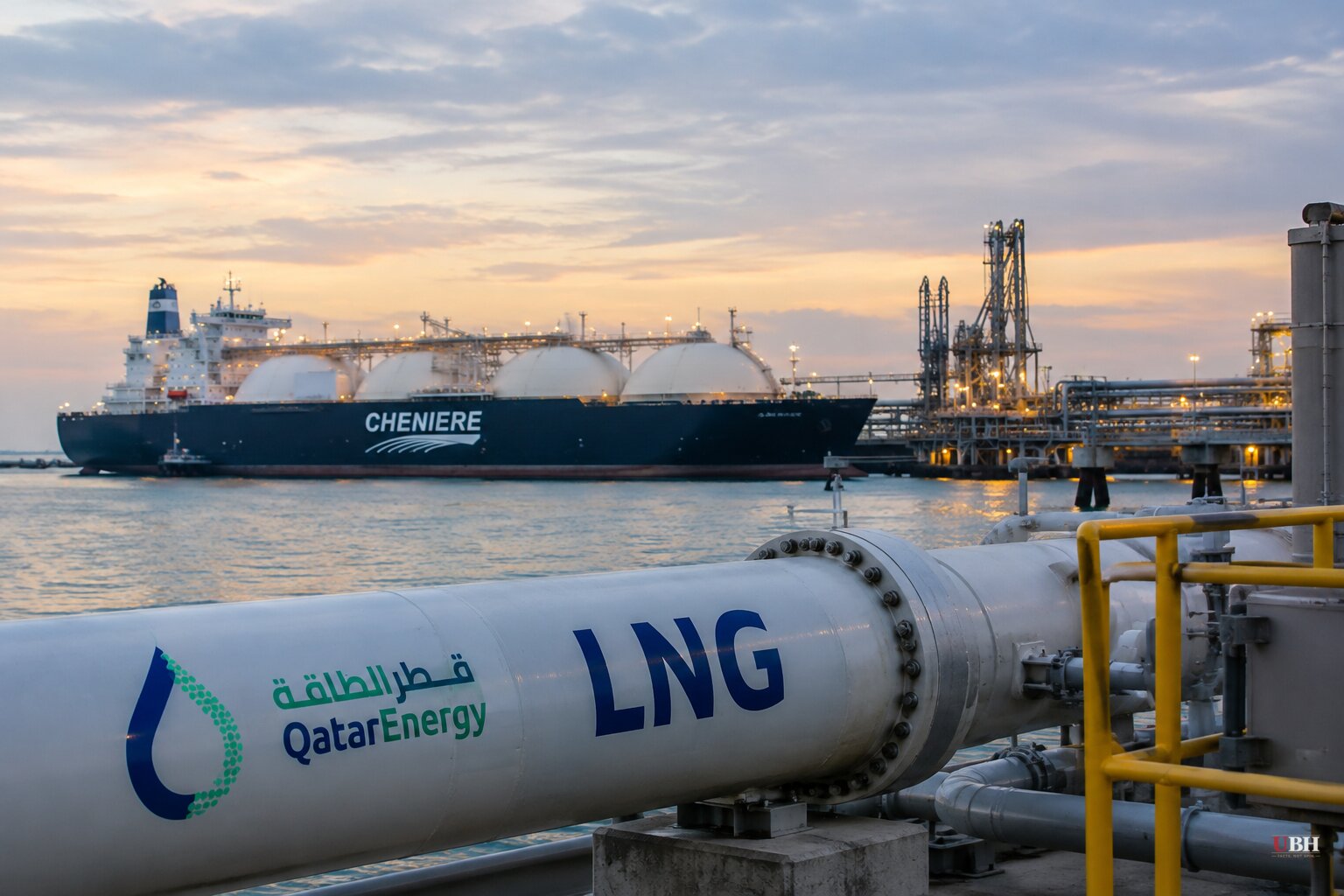
Since Iran's March strike on Qatar's Ras Laffan complex, the world's gas map has been getting redrawn. Two developments this month show where the pressure is landing: a long-term Qatari purchase of American LNG, and a federal push to make it easier to build the pipes and terminals that move U.S. gas.
Qatar buys American
QatarEnergy signed a long-term purchase agreement on Thursday, Oct. 22, to take 4 million metric tons of LNG a year from Cheniere Energy through 2054. Pricing is indexed to the U.S. Henry Hub benchmark plus a fixed fee. Deliveries are slated to begin in the 2030s.
"We look forward to reliably supplying QatarEnergy from both Sabine Pass and Corpus Christi into the second half of this century," Cheniere CEO Jack Fusco said.
The volume is under 1% of a global LNG market above 400 million metric tons a year. Alex Munton of Rapidan Energy still called it "about as big as you see in the U.S" for a single deal.
The backdrop is ugly for Qatar. Before the war it was the second-largest LNG exporter behind the United States. Iran's strike damaged two production lines at Ras Laffan, removing roughly 17% of Qatar's export capacity. Energy Minister Saad Sherida Al-Kaabi said in September that repairs will take about three years. Qatar has declared force majeure every month since the attack.
The bigger problem is the water. Al-Kaabi said Qatar is exporting "very little" because "we can't export through the Hormuz Strait." Munton read the Cheniere contract as a sign that Qatar believes freedom of navigation in Hormuz "will never return" while Iran keeps attacking tankers. He also described the deal as a vehicle for QatarEnergy to broaden its LNG trading operations. That is his interpretation. QatarEnergy has not been quoted saying so.
A tight global market
Oil & Gas Journal's Conglin Xu wrote on Oct. 20 that prolonged Hormuz disruptions are tightening global gas markets. Spare liquefaction capacity is limited, and alternative suppliers cannot quickly replace the lost volumes. That leaves demand cuts as a key way to restore balance, Xu wrote, with European inventories low and prices elevated in Europe and Asia. The risk of tightness extending into 2027 is rising.
Washington moves to clear the path
At its monthly meeting, the Federal Energy Regulatory Commission proposed changes aimed at making gas pipelines and LNG export projects easier to approve. FERC Chairman Laura Swett tied the push partly to power generation. "Building generation involves gas," she said. "The only current restriction on getting American gas is our ability to get the gas to market and the infrastructure bottlenecks."
By a 4-1 vote, FERC proposed ending air dispersion modeling in its National Environmental Policy Act reviews of gas projects. The draft policy statement says the change would bring FERC's analysis "back in line with the statutory text and common sense" and avoid duplicating Clean Air Act permitting handled by the EPA and state agencies.
Swett called the models "an unnecessary source of confusion, delay and litigation risk" and said they have been "a tremendous boon for the infrastructure opponents and lawyers."
Commissioner Judy Chang dissented. She said the change would make it harder to assess how people living near gas projects may be affected. Air dispersion models are "the best tool we have for understanding the likely local and regional air impacts of the projects we permit, outside of actually having physical monitors," Chang said.
FERC also proposed a three-tiered blanket authorization framework for LNG projects. Some activities would proceed without an application. Others would need a 60-day notice and comment period. Adding liquefaction trains, LNG tanks or marine berths to an existing plant would need 90 days. Commissioner Lindsay See, who spearheaded the idea, said FERC should "devote our resources to projects that warrant searching scrutiny and provide a more efficient pathway for those that don't."
These are proposals, not final rules.
Who gets the molecules
Domestic demand is climbing alongside exports. Energy News Beat's Stuart Turley and consultant Steve Reese, citing the EIA's Oct. 6 Short-Term Energy Outlook, put U.S. LNG exports at 17.6 billion cubic feet a day in 2026 and 18.6 in 2027, up from 10.6 in 2022. Gas generated about 40% of U.S. electricity in 2026, by their count of EIA data.
Data centers are the other draw. Lawrence Berkeley National Laboratory's reference case has them rising from about 4.4% of U.S. electricity in 2023 to 11.8% by 2030. Wall Street estimates for the added gas demand run from 4.8 Bcf/d (Morgan Stanley) to 6.1 Bcf/d (RBC Capital Markets) by 2030.
Household bills are already higher. Using EIA's 18.24 cents per kWh residential price and about 10,587 kWh of average use, Turley and Reese calculate the average home will spend about $1,931 on electricity this year, versus about $1,710 in 2024. In July, Massachusetts households paid 30.49 cents per kWh and Texans paid 15.88 cents, according to the EIA.
Gas itself was not expensive in mid-October. November futures settled at $3.198 per MMBtu on Oct. 14. Turley and Reese argue the constraint is pipeline capacity, winter weather and the rules, not the resource.
The next EIA Short-Term Energy Outlook is due Nov. 10. FERC's proposals now go through comment before any final action, and that will test whether faster approvals can be squared with the local air-impact concerns Chang raised.
Sources used for this briefing
4 links from 3 independent newsrooms (syndicated copies of the same report count once)
These are the sources it draws on, linked so you can verify.


