
Original briefings. Zero spin.
Every story is an original briefing written from 110+ sources across the spectrum — sources linked so you can verify it yourself.
 finance
Major Story (7/10)
August 31, 2026 at 03:37 AM
finance
Major Story (7/10)
August 31, 2026 at 03:37 AM
Yen Breaches ¥160 Again as Fed Chair Warsh's Rate-Hike Warning Erodes Japan's Intervention Gains
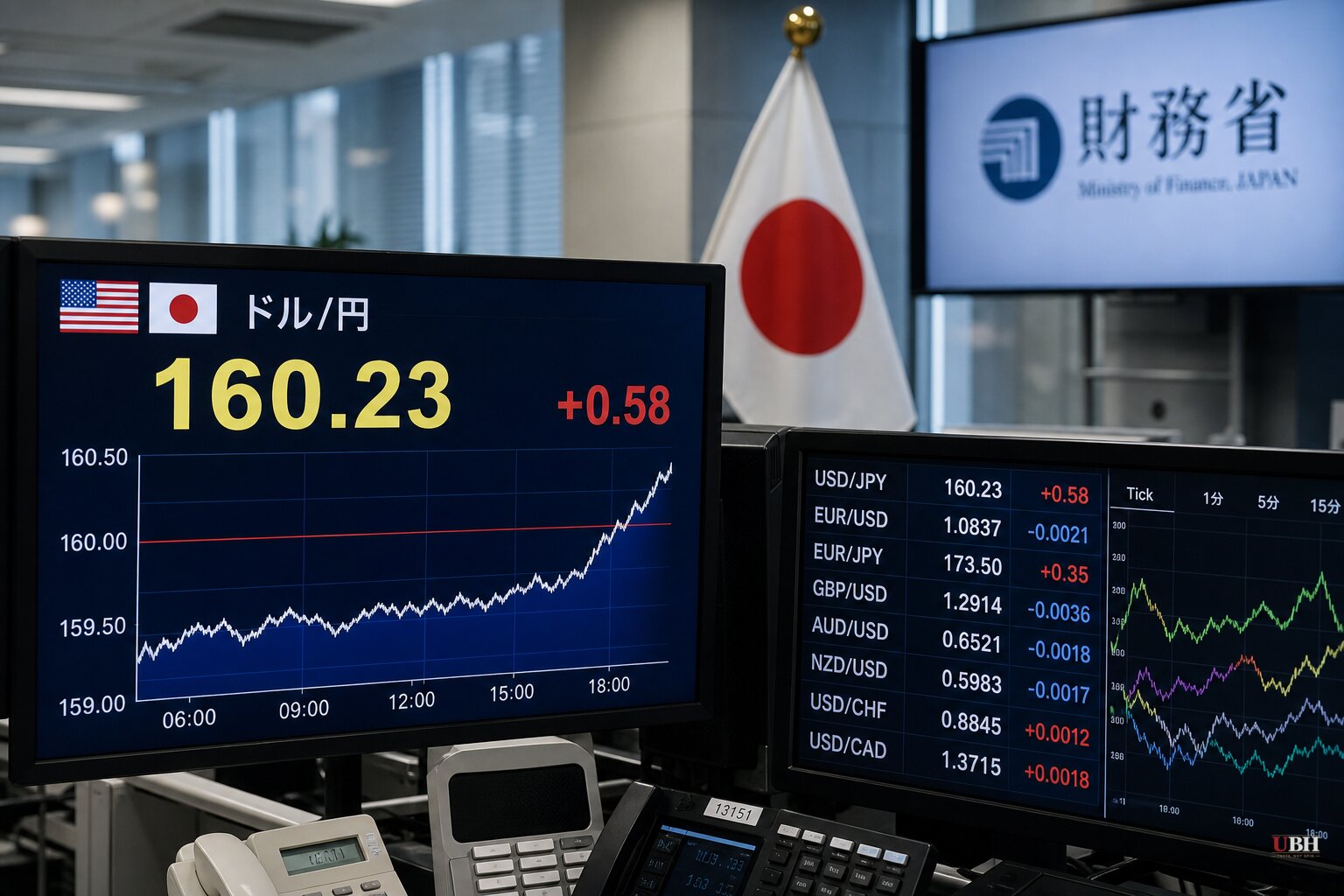
The yen crossed ¥160 to the dollar again, sliding as much as 0.5% to ¥160.16 on Friday, August 28, according to Bloomberg via The Japan Times. It weakened further to around ¥160.01 heading into Monday trading in Hong Kong, according to Reuters. That level has now erased more than half the gains Japan and the U.S. bought with their first coordinated yen-buying intervention since 1998, which took place July 31 after the currency touched roughly ¥164, its weakest in four decades.
The rebuilt weakness didn't happen overnight. Business Standard and LiveMint both reported the yen creeping back toward ¥159.23-159.30 in mid-August, even as Japan's producer inflation eased slightly to 7.2% in July from 7.3% in June and the Bank of Japan signaled a more hawkish tilt. None of it was enough. The Japan Times reported the yen failed to push back through ¥155 earlier in August, and from there the slide toward 160 resumed.
The trigger for the latest leg down: Federal Reserve Chairman Kevin Warsh. Speaking Friday, August 28, Warsh said the central bank will "have work to do" if policymakers don't get confidence that inflation is heading to the Fed's 2% target, according to Reuters (carried by Channel NewsAsia, Euronext and KFGO). Markets read that as his clearest signal yet that another hike is coming, and pushed the implied probability of a September move to 57%. Two-year Treasury yields jumped to a more than one-month high of 4.33%.
OCBC FX strategist Sim Moh Siong told Reuters that Warsh's comments "reduced a major drag on the U.S. dollar and shifted the focus back to economic fundamentals," rebuilding Fed credibility and easing worries about currency debasement. The dollar index climbed to 99.6, its strongest since August 17, even though it's still on pace for a second straight monthly decline, a slide Reuters attributed in part to earlier-month U.S. Treasury bond-buyback plans that revived debasement trades in the market.
The math behind the yen's problem hasn't changed. Japan's benchmark rate sits at 1%, versus the Fed's target range of 3.5% to 3.75%, according to LiveMint. That gap is what keeps drawing capital out of yen and into dollars, and no amount of one-time intervention closes it permanently.
Intervention watch, take two
Bloomberg reported strategists warning Monday that further intervention triggers could come as close as ¥161, with a heavier zone at 162-163. Manulife Investment Management's Nathan Thooft told Bloomberg in mid-August it was "premature to declare the intervention threat" over, noting Japan "has already demonstrated a willingness to act, including coordinated action with the US Treasury." Bank of America strategist Shusuke Yamada was more skeptical, telling Bloomberg that confidence in Japan's commitment "appears to have eroded" since dollar-yen rebounded for a week straight without any follow-up action.
Markets are pricing in another intervention, but nobody making the policy calls has confirmed one is coming. Treasury Secretary Scott Bessent said Sunday, August 30, that recent yen moves had been "pretty well contained," according to Reuters, a notably calmer read than the traders bracing for a repeat of July's action. Whether that's genuine confidence or just an official trying not to spook a market that's already jumpy is an open question the sources don't resolve.
Both sides of that argument have a real case. Traders betting on renewed intervention point to the fact that Tokyo and Washington already crossed a 27-year threshold once this year to defend the yen near ¥164, and 160 is well within range of that same panic zone. Skeptics point out, correctly, that the July intervention only bought a few weeks before the rate differential reasserted itself, meaning another round of yen-buying would likely be a temporary patch rather than a fix.
What's next
A U.S.-hosted G20 finance ministers and central bank governors meeting is scheduled to begin Monday, August 31, and run into Tuesday, according to Reuters. Markets will be watching for any signal of coordinated currency action, alongside talk on Iran-related sanctions and rising U.S. debt and bond yields. Separately, oil prices jumped nearly 2% Monday after U.S. forces struck Iran's Larak Island on Sunday, August 30, the first known American strike on Iran since late July, a U.S. official told Reuters. This adds another source of dollar demand on top of the Warsh-driven rate story, and another variable for Tokyo to weigh before it decides whether ¥160 is the line, or whether it waits for ¥162 or ¥163.
Next Friday's U.S. nonfarm payrolls report and next week's consumer inflation data are the next hard data points that could move the September rate-hike odds, and with them, the yen.
Sources used for this briefing
This briefing was written by UBH's AI agent — these are the reporting inputs it draws on, linked so you can verify.


