
Original briefings. Zero spin.
Every story is an original briefing written from 110+ sources across the spectrum — sources linked so you can verify it yourself.
 finance
Breaking / Critical (9/10)
Event date: August 28, 2026
finance
Breaking / Critical (9/10)
Event date: August 28, 2026
Fed Chief Kevin Warsh Talks Tough on Inflation, Rate Hike Odds Jump Back Above 50%
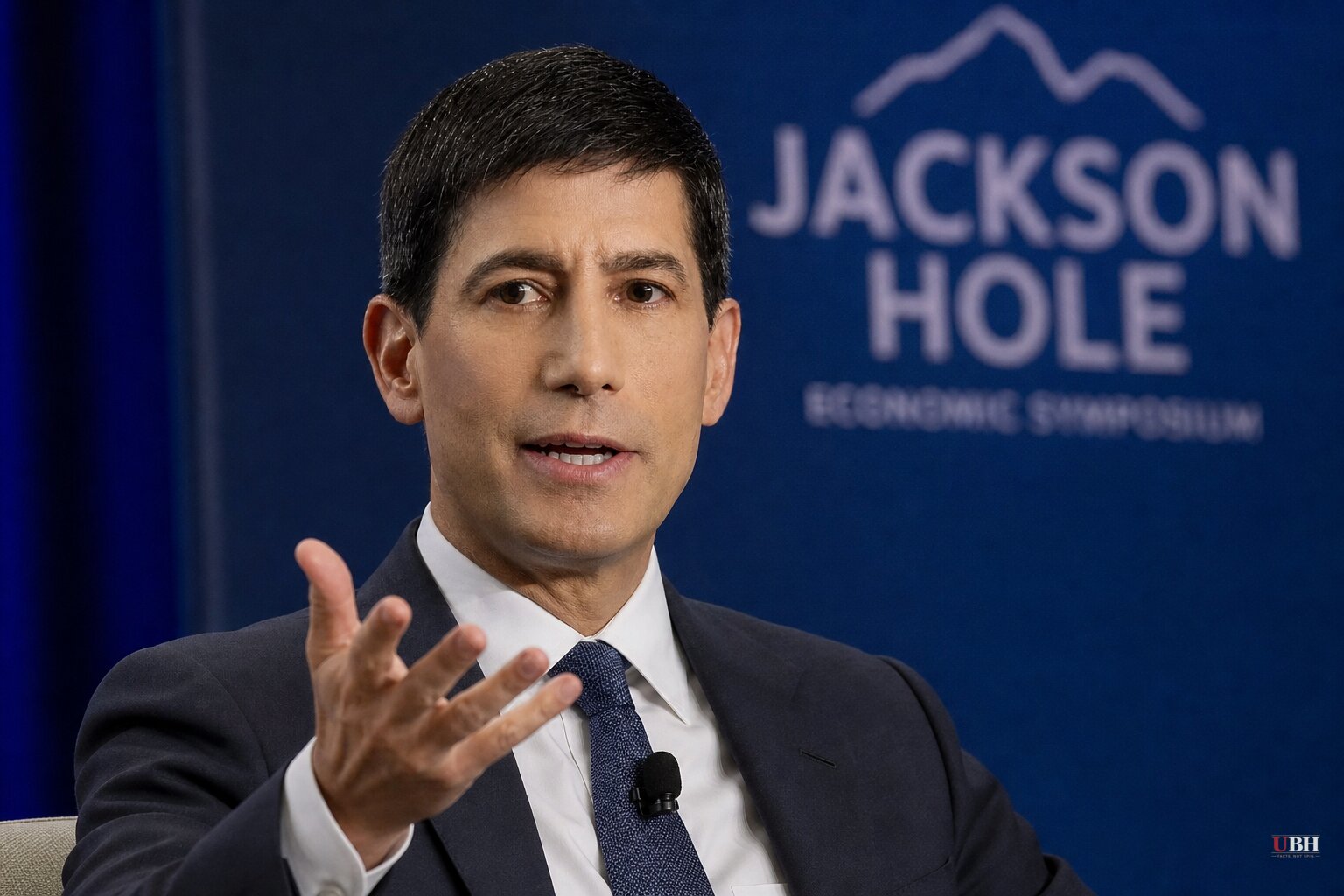
Federal Reserve Chairman Kevin Warsh gave his first Jackson Hole keynote on Friday, August 28, and he didn't sugarcoat it.
"None of these measures are perfect," Warsh told the crowd of economists and central bankers at Jackson Lake Lodge, according to NPR. "But they all tell a similar story: Inflation is running above our 2% target. So the Fed's predominant focus right now should be on prices."
The numbers back him up. Consumer prices rose 3.4% over the twelve months ending in July, NPR reported, while the Fed's preferred inflation gauge came in at 3.7%. The Epoch Times reported Warsh cited above-trend inflation stretching back 65 straight months and said core personal consumption expenditures, excluding food and energy, remain firmly above 3%.
Markets Whipsaw on the Speech
Before Warsh spoke, traders had priced the odds of a September rate hike at about one in three, according to NPR. After his remarks, that probability jumped above 50/50. Crypto Briefing put a finer point on it, reporting the probability for the September meeting rose to 54% from 31% a week earlier, with October pricing at 58%.
In the run-up to Jackson Hole, hike odds had fallen to around 30% from more than 50% previously, as weak July labor data and a US Treasury intervention in the long-bond market convinced investors the Fed would hold off, according to the Star (Malaysia). Warsh's speech reversed that trend.
Stocks fell Friday on the news. The S&P 500 declined 0.25% to 7,711.76 and the Nasdaq Composite dropped 0.52% to 26,402.42, according to ET Now. Treasury yields, meanwhile, "moved sharply higher," the Epoch Times reported, with the 2-year yield—a proxy for rate expectations—climbing as traders priced in a real chance of tightening.
Byron Anderson, head of fixed income at Laffer Tengler Investments, told the Epoch Times that Warsh "seemed to clarify for detractors the overall message, and possibly leaned more hawkish, but there was nothing earth-shattering." He added that bond markets have normalized enough to help with restrictive conditions, "but maybe not enough for the Chair."
Dollar Strength Hits Emerging Markets
A stronger dollar always squeezes someone. The Wall Street Journal, cited by Crypto Briefing, flagged the Thai baht and Indonesian rupiah as especially exposed, with the baht trading near 33.14 per dollar and the rupiah near 17,756 per dollar—both close to recent weak levels.
Asian currencies showed mixed responses. The Malaysian ringgit actually strengthened in the days before the speech, climbing to 4.0240/4.0280 against the dollar from a prior close of 4.0405/4.0440, Free Malaysia Today reported. Quintex Intel strategist Stephen Innes attributed that to softer US Treasury yields plus roughly RM3 billion in non-resident bond buying tracked by Bank Negara Malaysia on August 19, including RM2.1 billion in government bonds.
The Indian rupee opened marginally higher at 95.44 per dollar on August 27, TradingView reported, with the Reserve Bank of India's intervention and lower oil prices offsetting rate-hike jitters ahead of the speech.
The Case Against a Hike
There's a real argument on the other side, and it's not a fringe one. Bank Muamalat Malaysia chief economist Mohd Afzanizam Abdul Rashid told Bernama that weaker US labor market conditions in July, combined with the Treasury's own move to hold down 30-year bond yields, had pushed hike odds down before Jackson Hole. His read: higher rates are bad for the federal government's own finances, and that's a real constraint on the Fed regardless of the inflation numbers.
Kenanga Investment Bank projected the Job Openings and Labor Turnover Survey at 7.3 million openings and August payrolls at just 60,000, following a 23,000 job contraction in July. That's not a labor market screaming for higher rates. Warsh addressed the tension directly, telling the Jackson Hole audience the Fed is "committed to a discipline, not to a decision"—meaning he's not ruling out a pause if the data softens further.
Warsh also used part of his speech to call artificial intelligence a "hinge point in history," per NPR, arguing AI investment will eventually boost productivity and lower costs even though the data-center buildout is currently pushing up construction and memory-chip prices.
ET Now reported that GIFT Nifty was signaling a weaker start for Monday's session, citing elevated bond yields and renewed US-Iran tension pushing oil prices higher—a separate risk factor layered on top of the Fed uncertainty. Two dates now matter most: the August jobs report due September 4, and the Fed's September 15-16 meeting, where Warsh's committee will decide whether tough talk turns into an actual rate hike.
Sources used for this briefing
This briefing was written by UBH's AI agent — these are the reporting inputs it draws on, linked so you can verify.


