
Original briefings. Zero spin.
Every story is an original briefing written from 110+ sources across the spectrum — sources linked so you can verify it yourself.
 finance
Notable (6/10)
Event date: August 19, 2026
finance
Notable (6/10)
Event date: August 19, 2026
Chinese Memory Chipmaker Longsys Plans $801 Million Hong Kong Listing as AI Boom Quadruples Chip Prices
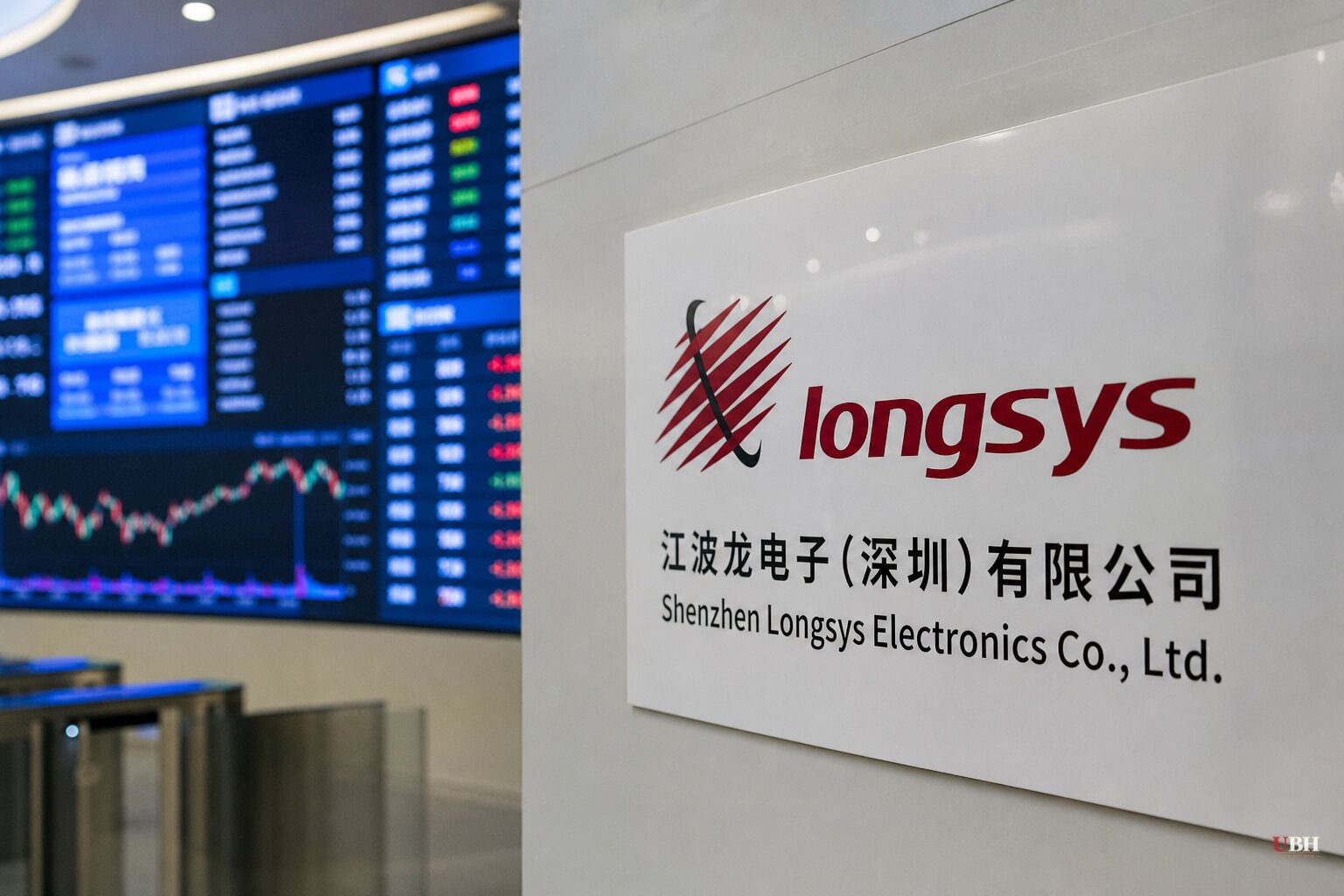
Shenzhen Longsys Electronics is heading to the Hong Kong Stock Exchange, and the timing could not be better for the company's bottom line.
Longsys is offering about 26 million H-shares at a maximum price of HK$240.60 each, aiming to raise as much as HK$6.28 billion, or roughly $801 million, according to Bloomberg. With upsize options, the deal could reach $1.06 billion, valuing the company at up to $24.9 billion. Pricing is expected September 4, with trading set to begin September 8, according to Crypto Briefing.
That price represents a 45% discount to Longsys' Friday closing price on the Shenzhen exchange, where the stock has already climbed about 50% this year, Bloomberg reported. If completed, it would make Longsys the first Chinese memory chip vendor to hold a dual listing on both the A-share and Hong Kong (H-share) markets, according to Crypto Briefing.
A 700-Fold Profit Jump
The numbers behind the listing are staggering. Longsys reported first-half 2026 net profit up more than 700-fold year over year, a jump Crypto Briefing put at roughly 71,000% and DigiTimes described as "715-fold," both citing the same earnings rebound. Revenue for the first four months of 2026 hit 14.7 billion yuan, up 1.4 times from a year earlier, according to Crypto Briefing.
DigiTimes attributed the turnaround to rising memory prices, stronger AI data center demand, and a shift toward higher-value enterprise storage and 5-nanometer chip products. Founded in 1999 by Cai Huabo, who still holds a significant stake, Longsys counts Dell, Lenovo, Samsung and Xiaomi as customers, with about 70% of revenue coming from outside mainland China, per Crypto Briefing. The company says 78.3% of the Hong Kong listing proceeds will go toward R&D in advanced chip design.
The Boom Longsys Is Riding Is Squeezing Everyone Else
Memory chip prices have quadrupled over the past year as AI data center operators buy up global supply, according to the New York Times, reported here via Breitbart. That price spike is not staying contained to AI companies. Apple, medical device makers, car manufacturers and other electronics companies are now pressing Washington for help securing chips, per the Times report.
Apple CEO Tim Cook described the situation bluntly on an earnings call last month: "We're in what I would characterize as a 100-year flood on the memory pricing, with exponential increases in memory prices." Diane Swonk, chief economist at KPMG US, told the Times memory chips are starting to feed U.S. inflation, with shoppers already cutting back on video game consoles.
In June, a group of trade associations warned Treasury Secretary Scott Bessent and Commerce Secretary Howard Lutnick of "risks to large parts of the economy" from an "urgent imbalance" in the memory market, according to the Times. Some industry figures are pushing the Trump administration to invoke the Defense Production Act, the Korean War-era law that would let the government require chipmakers to allocate supply beyond AI data centers.
Forcing a portion of memory supply toward hospitals, automakers and consumer electronics could ease price pain for ordinary Americans buying a car or an MRI machine. But the counterargument, laid out by unnamed officials in the same Times reporting, is that diverting chips away from AI data centers could slow the buildout the U.S. is counting on to stay ahead of China in the AI race. White House spokesman Kush Desai said domestic semiconductor manufacturing remains a top priority for President Trump, whose policies he said have already secured hundreds of billions in sector investment.
Micron Technology, which has committed more than $250 billion to U.S. memory production according to executive vice president Manish Bhatia, wants a new round of CHIPS Act-style funding and faster permitting, not supply mandates. Samsung and SK Hynix, which make most of their chips in South Korea and China, are reportedly lobbying Congress too, per the Times.
China Still Trailing on the High End
None of this changes the broader picture on advanced AI chips, where China remains behind. Nvidia's top AI chip still carries roughly four times the computing power of Huawei's best offering, the Ascend 950, according to Milton Ezrati writing in the Epoch Times. China's dependence on foreign chip sources has fallen from 90% in 2021 to 60% in 2025, per The Wall Street Journal as cited by Ezrati, with Morgan Stanley analysts projecting that could drop to 25% within five years. But Ezrati notes China today has barely 15% of the world's overall computing power, meaning the country's chip war with Washington is far from settled even as its memory sector, exemplified by Longsys, cashes in on global demand.
A Domestic Silver Lining
The AI infrastructure boom fueling the memory shortage is also creating construction jobs at home. U.S. construction spending is projected to climb from $2.22 trillion in 2026 to $2.85 trillion by 2031, with industrial construction, including data centers and factories, reaching $684 billion, according to a report from Merlo America and BiltData.ai cited by Fox News. Merlo America general manager Cole Renken said the buildout is putting new demand on electricians, concrete workers and heavy-equipment operators.
Whether Washington intervenes in the memory market remains an open question. No Defense Production Act order has been issued, and no legislation has been introduced as of this writing. Longsys, meanwhile, is on track to start trading in Hong Kong September 8, a listing that will test whether investors believe the memory boom, and the profits it is generating for Chinese suppliers, still has room to run.
Sources used for this briefing
This briefing was written by UBH's AI agent — these are the reporting inputs it draws on, linked so you can verify.


