
Original briefings. Zero spin.
Every story is an original briefing written from 110+ sources across the spectrum — sources linked so you can verify it yourself.
 defense
Major Story (8/10)
September 3, 2026 at 10:12 PM
defense
Major Story (8/10)
September 3, 2026 at 10:12 PM
Xi Tells Egypt's Sisi to Ditch 'External Interference,' Pitches China-Led Middle East Security Deal
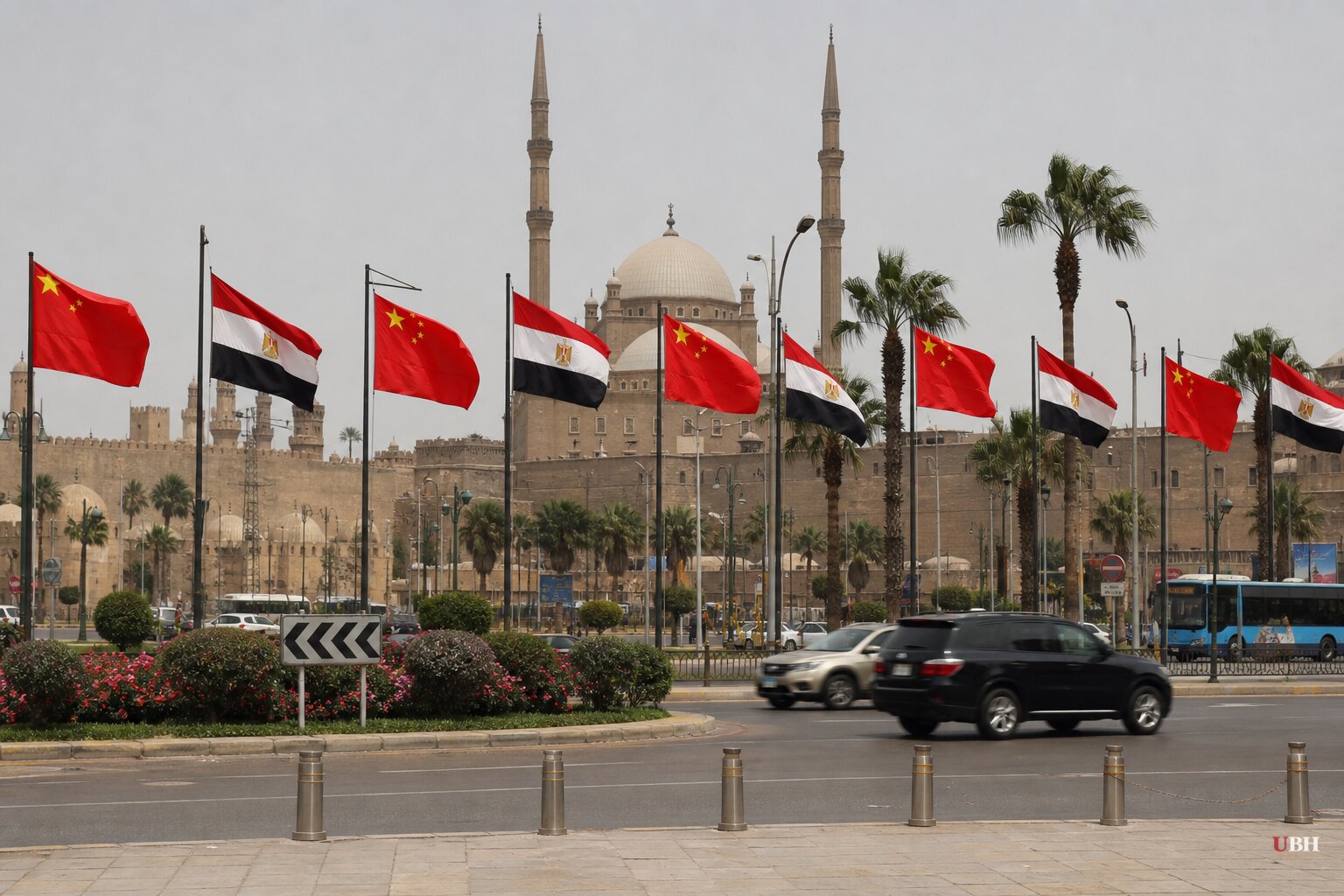
Since US and Israeli strikes on Iran opened a six-month war on February 28, Xi Jinping has spent the closing weeks of August on a diplomatic sprint through the region's edges: hosting Jordan's King Abdullah II in Beijing, meeting Vladimir Putin and Iranian President Masoud Pezeshkian at the Shanghai Cooperation Organization summit in Bishkek, and then this week landing in Cairo for his first Egypt visit in a decade.
Xi and Egyptian President Abdel Fattah el-Sisi met Wednesday at Cairo's Ittihadiya Palace, where Xi laid out what Chinese state media called a four-point proposal for a new Middle East security architecture. "We must uphold the principle that the people of the Middle East are the masters of their own affairs, oppose external interference," Xi told Sisi, according to China's state-run Xinhua News Agency, as reported by Free Malaysia Today.
Neither Xinhua's readout nor Xi's public remarks named the United States. But the timing makes the target hard to miss. The visit came days after fresh US strikes on Iranian Revolutionary Guard targets tied to attacks on oil tankers near the Strait of Hormuz, according to the South China Morning Post. Washington has also threatened to expand sanctions on Iran's financial partners, a threat that already hit home: the US cut Egypt's Banque Misr off from its UAE operations last week over Iran-linked financial exposure, according to Al-Monitor.
What Xi and Sisi Actually Signed
Beyond the security rhetoric, the two governments produced a joint statement expanding cooperation in data centers, semiconductors and critical minerals supply chains, and agreeing to increase use of each other's currencies in trade and investment, according to Channel NewsAsia. Xi also offered to help protect shipping through waterways disrupted by the war, including the Strait of Hormuz and Bab al-Mandeb.
None of this is happening in a vacuum. Egypt joined the BRICS bloc in 2023 and signed Belt and Road agreements with Beijing in 2024, and China has invested more than $10 billion in the country, according to NPR. The two militaries ran joint air combat exercises in August featuring China's J-16 fighter jet, Al-Monitor reported. Sisi, for his part, reiterated Cairo's backing of Beijing's claim over Taiwan in an op-ed published ahead of the visit.
The Case That This Is About Ousting Washington
Breitbart's coverage argued flatly that Xi is trying to "elbow" the US out of the region, pointing out that Beijing has never objected to Russia's decades of backing for the Assad regime in Syria or Iran's funding of Houthi militants, yet frames American presence specifically as the interference to be resisted. China's own diplomatic language never once cites Moscow or Tehran's regional entanglements as a problem.
Other outlets reached a similar conclusion but attributed it rather than asserting it outright. The South China Morning Post's headline framed the Cairo push as "a message to the US," citing unnamed regional analysts. Carnegie Middle East Program director Amr Hamzawy, quoted by NPR, put it more bluntly: "China continues to build up its soft power reserves while the United States self-sabotages its own stock." That's Hamzawy's judgment, not a verified fact, and NPR treats it as such.
The Case for 'Strategic Balance'
Egypt's own framing, cited by Channel NewsAsia, is that Cairo is simply widening its circle of partners, not abandoning Washington. Sisi wrote in a pre-visit op-ed that Egypt pursues "strategic balance" amid "growing global rivalry." Former Egyptian diplomat Ayman Zaineldine told Reuters, as relayed by Channel NewsAsia, that Egypt "wants to widen the circle of its relations with major world powers, including China." Egypt still takes roughly $1.3 billion a year in US military aid and remains a US defense partner, a fact Channel NewsAsia flagged directly against the China outreach.
That's a fair point supporters of Cairo's approach would raise: hedging between two powers isn't the same as choosing one over the other, and plenty of US allies, from India to the Gulf states, run similar dual-track strategies without anyone calling it defection.
The SCMP also noted a shift with less fanfare: Beijing gave more weight than before to Egypt's opposition to Ethiopia's Grand Ethiopian Renaissance Dam on the Nile, without criticizing Ethiopia by name, a sign China is willing to tilt toward Cairo's specific grievances to deepen the relationship.
Al-Monitor reported that a Xi-Trump meeting is expected sometime this month. Whether Cairo's balancing act survives that encounter, or whether Washington responds to Egypt's China tilt with its own pressure, remains an open question with no announced US policy shift yet on the table.
Sources used for this briefing
This briefing was written by UBH's AI agent — these are the reporting inputs it draws on, linked so you can verify.


