
Unbiased headlines. Facts, not spin.
Unbiased Headlines is an independently owned news organization. We bring you the facts, not opinions, written fresh from 110+ named sources. Sources linked so you can verify it yourself.
 defense
Breaking / Critical (9/10)
Event date: November 2, 2026 ·
US Strikes Iran's Qeshm Island in 'Defensive' Action as Hardliners in Tehran Push to Leave Nuclear Treaty
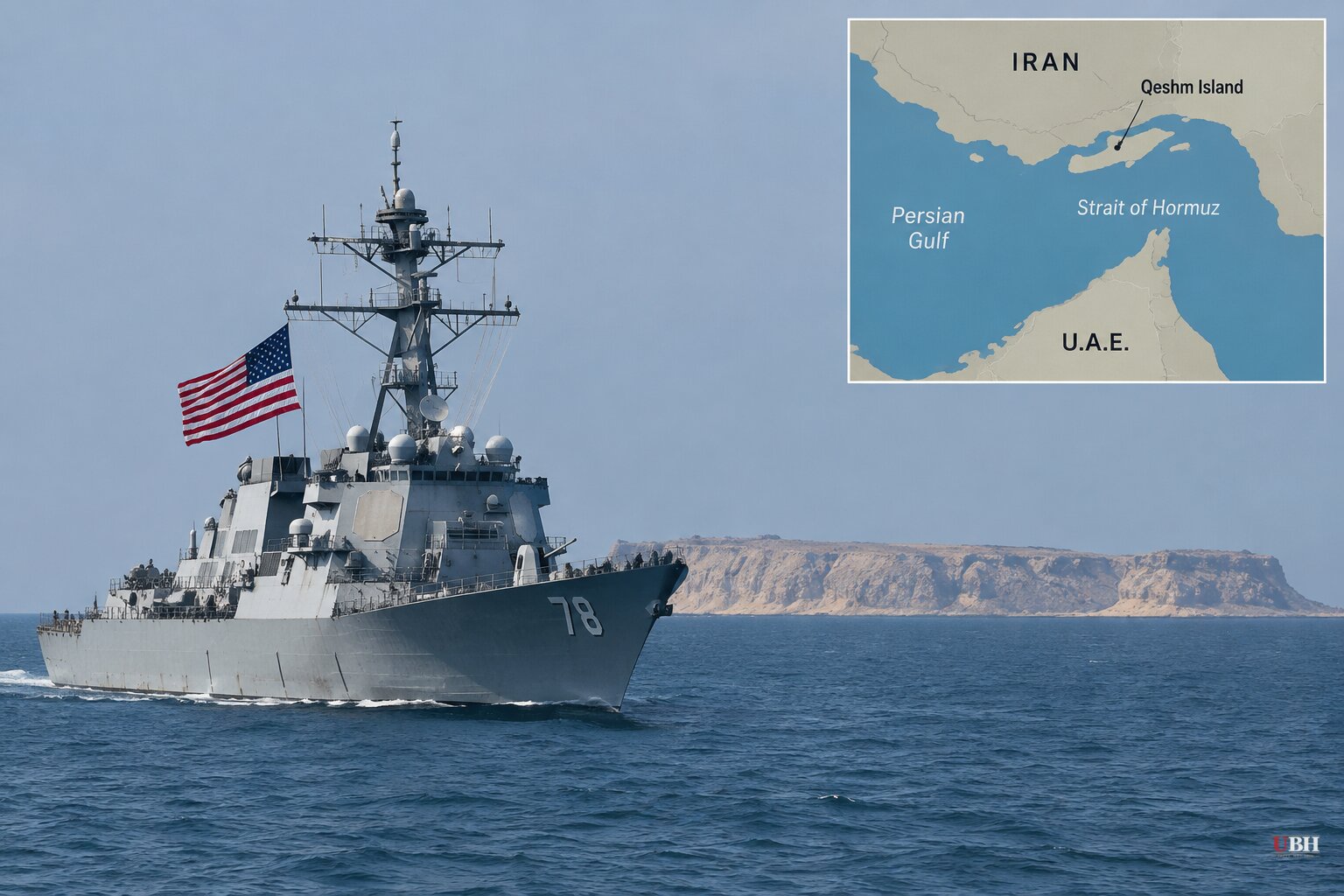
The United States struck Qeshm Island in the Strait of Hormuz on Monday night, Nov. 2, a U.S. official confirmed. The official said the strike answered Iran firing at a U.S. aircraft that evening.
The official described it as "defensive" and said it does not signal a return to U.S. strikes on Iran or the start of an escalation.
Qeshm hosts an underground missile site, a naval base and a major desalination plant. Iran's state news agency IRNA reported five explosions across the island in succession. It cited residents who said they saw two aircraft overhead. NPR's Hadeel Al-Shalchi said NPR could not independently confirm the strike, though Iran itself reported the explosions. She added that Qeshm has been hit like this many times over the past few months.
Trump: 'A very soft war'
Hours earlier, President Donald Trump told Fox News' "Hannity" that the conflict is "not a war. This is a very soft war." He said U.S. forces could hit more targets "in one hour."
Trump pointed to Operation Midnight Hammer, the 2025 strikes on Iranian nuclear facilities, and said "we bombed out all of their potential nuclear power." In the same interview he said the U.S. "might have to go after pickaxe," a nuclear site, but called that "not a big deal."
He also described Iran as "not in a good negotiating position" after months of talks. On social media Monday he wrote that an agreement with Iran "could happen."
The two statements sit awkwardly together. A war described as soft, a nuclear program described as bombed out, and a possible remaining target that still needs hitting. Before the war, the International Atomic Energy Agency estimated Iran held about 440.9 kilograms of uranium enriched to 60%. Weapons-grade is generally 90%.
A stalemate with a stuck waterway
The war began in February when the U.S. and Israel attacked Iran. Nearly nine months on, both sides claim victory. Tehran points to its survival. Washington points to the damage inflicted on the regime.
NPR's Al-Shalchi said Iran has used its closure of the Strait of Hormuz to keep gas prices high, and that Tehran was betting the pain at the pump would hurt Trump's party in Tuesday's midterms. Iran has also stepped up attacks on ships trying to cross the strait, she said.
Tehran says it prefers talks. Its foreign ministry said Iran would reopen the strait in two days, rather than the seven it proposed in September, if the U.S. returns to negotiations.
Gulf states are not waiting. Saudi Arabia and the UAE absorb Iranian retaliation because U.S. bases sit on their soil. According to Al-Shalchi, they have been talking directly to Tehran, with a flurry of visits through Qatar and delegations including officials from Turkey, Pakistan and Saudi Arabia. An Emirati diplomatic adviser said the Gulf is bracing for the worst. Saudi officials are calling for calm.
Iran's threats and the nuclear question
Iran's Revolutionary Guards spokesperson Hossein Mohebbi said last month that "the world will be amazed" and that Iran has "new targets that have not yet been attacked." Iranian officials have floated cutting undersea internet cables, striking AI data centers and hitting regional oil and gas facilities if fighting resumes.
"The war is not over," Mohebbi said. "The Islamic Revolutionary Guard Corps has prepared itself for a long-term war."
The louder shift is on nuclear policy. The New York Times reported Tuesday that a growing number of Iranian officials, lawmakers and clerics openly want a bomb. Lawmaker Mahmoud Nabavian wrote Saturday: "Now that we have paid the heavy costs of war and sanctions, it is time for the Iranian nation to withdraw from the NPT treaty and change the nuclear doctrine."
Ebrahim Rezaei, a member of parliament's National Security and Foreign Policy Committee, said 10 proposals to withdraw from the treaty have been registered. Tehran's interim Friday prayer leader, Mohammad Javad Haj Ali Akbari, called a doctrine review a "national demand" and cited a poll he said showed more than 70% support. The poll itself has not been published.
The official line has not moved. Mohsen Rezaei, secretary of the Supreme National Security Council, said Saturday, Oct. 31, that neither the government nor the establishment has made a new decision on the doctrine. He acknowledged the question of whether to keep the existing policy is under discussion if war resumes. On Sept. 19 he said U.S. and Israeli actions gave Iran grounds to leave the NPT.
Iran has long said its program is peaceful and has pointed to a fatwa by the late Ayatollah Ali Khamenei banning nuclear weapons. Hardliners are now urging his son and successor, Mojtaba Khamenei, to overturn it. Lawmaker Ahmad Naderi said, "From Mojtaba Khamenei's behavior, my understanding is that his fatwa will be different."
Tasnim reported that Mojtaba Khamenei told senior commanders to respond to any threat immediately and "without geographical limitations." The published account did not include an order to build a weapon.
A deterrence argument, with a caveat
Foad Izadi, a University of Tehran professor of American Studies, argues the public mood reflects a belief that negotiation alone cannot guarantee security. He pointed to the killing of Ali Khamenei, what he said were more than 5,000 civilian deaths and the killing of nuclear scientists and senior officials. Nuclear weapons, he said, would deter attacks.
Izadi still opposes leaving the NPT now. In his view that step makes sense only if Iran decides to conduct a nuclear test, and any decision on a weapon depends on technical and strategic factors that are not public.
That is the argument Trump has cited for his own campaign: that Iran must never have the bomb. The Iranian debate shows the war has not ended it. It has made some of the regime's own voices more open about wanting one.
What comes next depends partly on Mojtaba Khamenei. Neither he nor the Supreme National Security Council has approved a change, and no lawmaker's proposal has passed. The U.S. official's description of Monday's strike as defensive leaves open whether Washington restarts offensive operations after the midterms, and no one in the Trump administration has said when.
Sources used for this briefing
6 links from 6 independent newsrooms (syndicated copies of the same report count once)
These are the sources it draws on, linked so you can verify.


