
Unbiased headlines. Facts, not spin.
Unbiased Headlines is an independently owned news organization. We bring you the facts, not opinions, written fresh from 110+ named sources. Sources linked so you can verify it yourself.
 defense
Major Story (8/10)
US Officials Say State Department Is Negotiating Troop Status Agreement With Venezuela
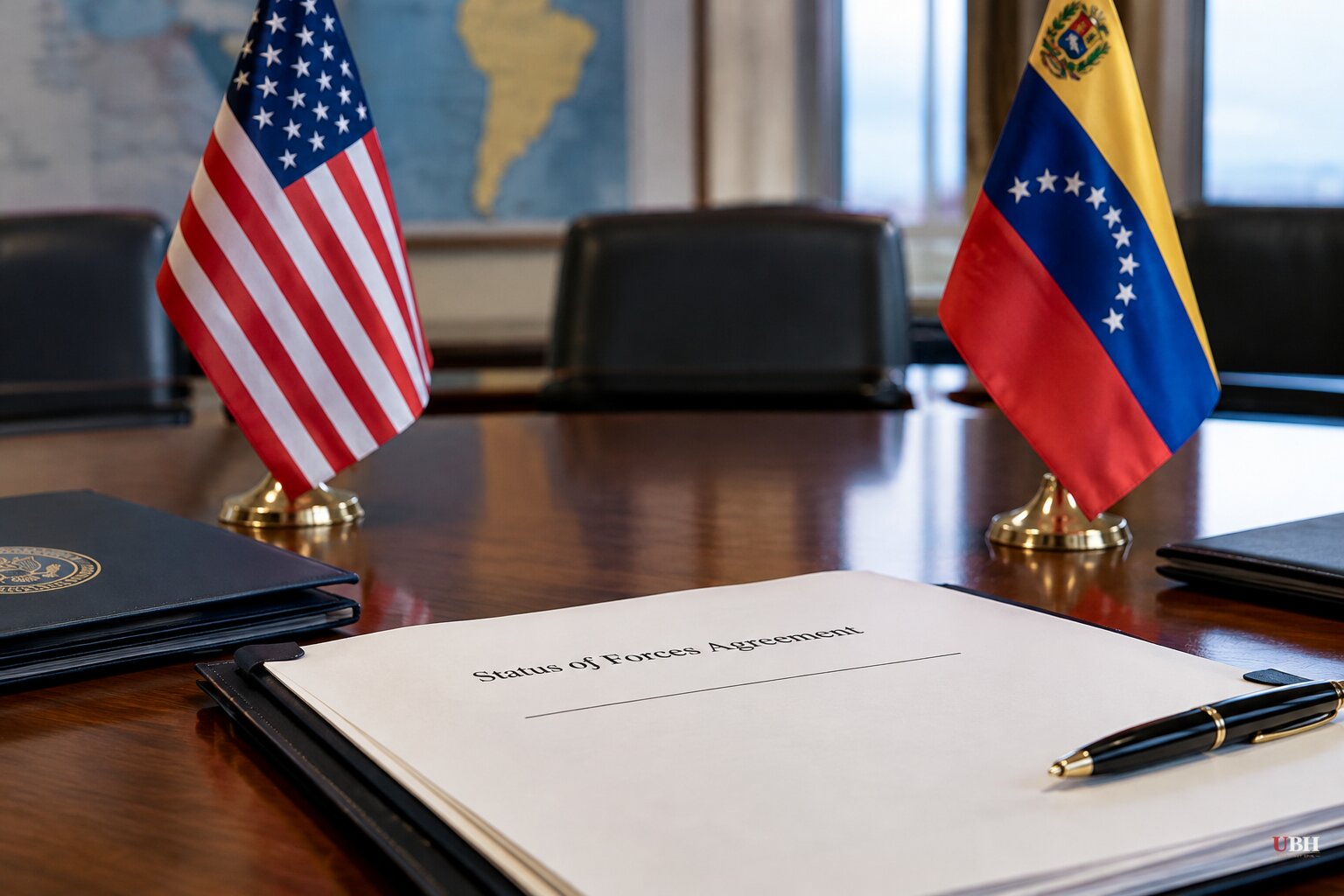
Since a US military operation seized Nicolás Maduro on Jan. 3, Washington's relationship with Caracas has moved from a military strike to sanctions relief to oil contracts. The next step, according to US officials, is a legal framework for American troops.
The Trump administration is negotiating a status of forces agreement, known as a SOFA, with Venezuela, US officials told The New York Times in a report published Tuesday, Nov. 3. The officials spoke on condition of anonymity. The State Department, led by Secretary of State Marco Rubio, is conducting the talks with Venezuelan officials.
What the agreement would cover
A SOFA is the standard document that sets the legal terms for US forces operating on another country's soil. The officials said this one would establish a "legal framework" for US forces to conduct mutually agreed activities. Those include ship visits, training, military exercises and humanitarian assistance.
Details of a potential US military presence, including troop numbers and locations, would be determined through future agreements, according to the report.
A senior State Department official was quoted saying discussions about establishing US military bases in Venezuela are "way, way down the road." The official added that there are no current talks on the issue.
No agreement text has been released, and no terms have been made public. The report stressed that the discussions are preliminary and that no formal agreement has been reached.
How the relationship got here
The US carried out a military operation in Venezuela on Jan. 3, seizing Maduro and his wife, Cilia Flores. Maduro was brought to the United States to face drug trafficking charges and denies the allegations. Trump said his administration would "run" Venezuela and its oil assets during a transition period.
Delcy Rodríguez, then Maduro's vice president, was sworn in as interim president on Jan. 5. She still leads the government.
American forces were already in the country on a limited basis after the June 24 earthquakes, when the US Navy said its forces supported American disaster relief. A long-term presence would go far beyond those temporary relief deployments.
In September, the administration announced a deal giving Washington a stake in about one-fifth of Venezuela's oil resources. It created a joint venture with North American Blue Energy Partners, owned by Venezuelan businessman Alejandro Betancourt. Caracas gave the company 100-year rights over 17 oilfields with proven reserves of 65 billion barrels. The Pentagon will have a 35 percent stake, and the US is guaranteed the right to buy 20 percent of the output at cost.
Bloomberg reported that Washington lifted sanctions in October on Jorge Rodríguez, who heads Venezuela's National Assembly.
In a Washington speech Monday, Nov. 2, Trump referred to "our conquest of Venezuela," according to the Times.
The Times' framing
The Times called the talks a "remarkable and perhaps risky new stage" for two former adversaries attempting to move toward military cooperation. It also placed the negotiations within a broader expansion of US military activity in Latin America, including cooperation with forces in Colombia and Ecuador.
The SOFA talks run alongside other diplomacy. Rubio met Venezuelan Foreign Minister Oliver Blanco on Monday, and the State Department's readout reaffirmed Trump's three-phase plan: stabilization, economic recovery and political reconciliation, then democratic transition. Blanco also met Treasury Secretary Scott Bessent.
Opposition leader María Corina Machado returned to Venezuela last week. She said Rubio has set out a sequence of events that "makes clear the holding of presidential elections in 2027." No election date has been set.
The open questions
Key unanswered questions include host-government consent, jurisdiction over US personnel, permitted missions, legislative oversight and termination provisions. No agreement text is available.
The counterparty is an interim government, and a long-term security arrangement raises a delicate political question: how much lasting security policy should an interim government settle before an elected government takes office?
The next marker is whether the State Department or Caracas confirms the talks and releases terms. Until then, the only account comes from anonymous US officials.
Sources used for this briefing
6 links from 6 independent newsrooms (syndicated copies of the same report count once)
These are the sources it draws on, linked so you can verify.


