
Unbiased headlines. Facts, not spin.
Unbiased Headlines is an independently owned news organization. We bring you the facts, not opinions, written fresh from 110+ named sources. Sources linked so you can verify it yourself.
 defense
Major Story (7/10)
Event date: October 21, 2026 ·
Eight officials say U.S. intelligence sharing has slowed under Trump; Zelensky says Ukraine lost missile warnings for three days
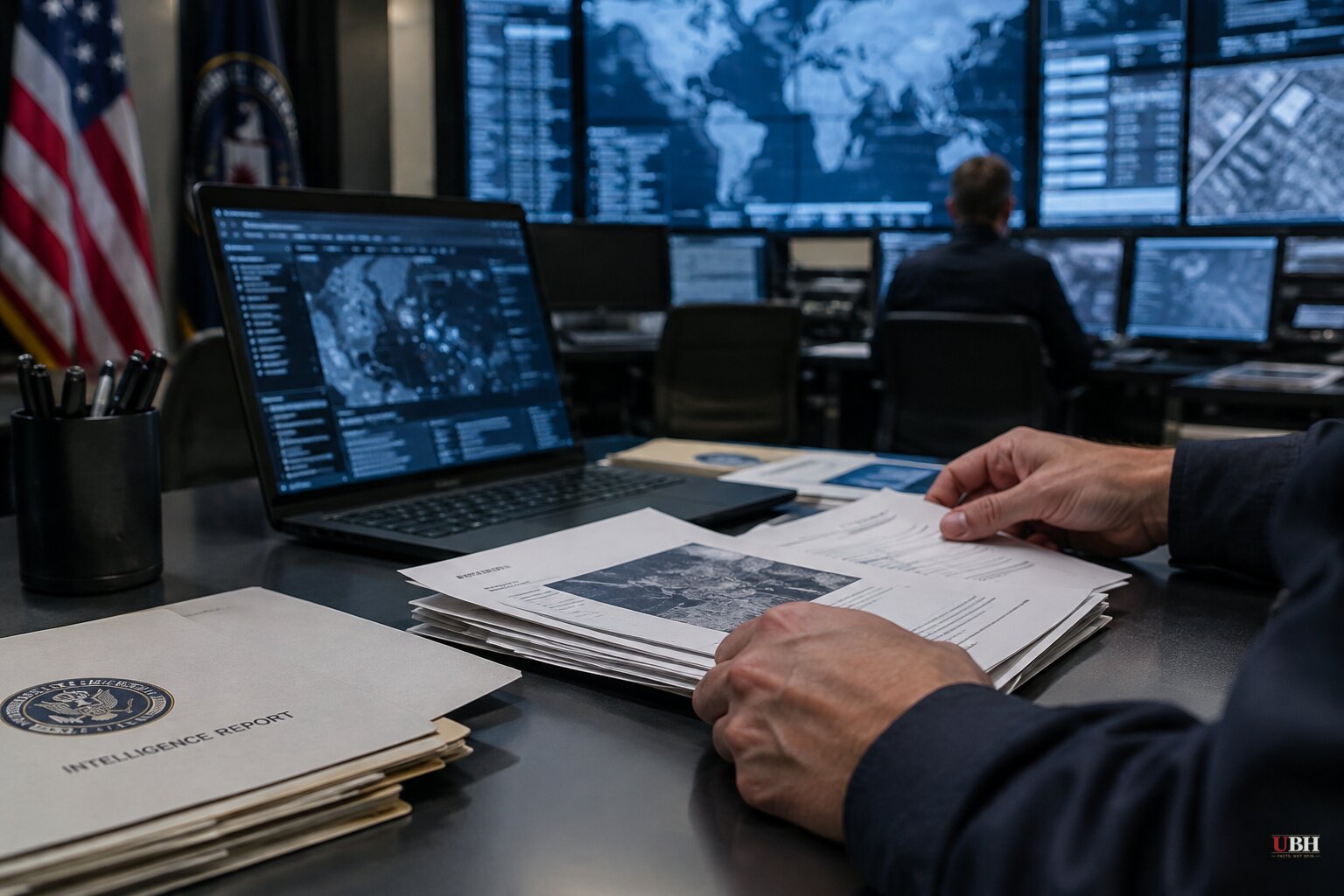
US intelligence sharing on Iran and other threats has slowed, and in some cases temporarily stopped, during President Donald Trump's second term, according to eight current and former officials and people briefed on the matter who spoke to Reuters. The disruption had not been reported before the Reuters exclusive published today, Nov. 3.
The timing matters. The administration is weighing whether to resume strikes on Iran after the midterm elections, which are being held today.
Congress and the agencies
Two people familiar with the matter told Reuters that lawmakers and their staffs briefly stopped receiving intelligence reports from Director of National Intelligence Tulsi Gabbard's office after the June 2025 U.S. military intervention in Iran. It happened again after the January 2026 capture of former Venezuelan President Nicolás Maduro. Gabbard's team had accused lawmakers of leaking to the press, those people said.
Gabbard resigned in June. Two U.S. officials said the tensions between her office and the CIA have subsided since, but problems stemming from the clash persist.
The biggest one: the CIA has stopped co-authoring assessments with the National Intelligence Council, the analytical group inside the Office of the Director of National Intelligence. That means fewer reports pulling together the intelligence community's combined view for decision-makers on subjects like Iran, the officials said.
CIA spokesperson Liz Lyons rejected the picture. She said the CIA "participates fully" in providing intelligence assessments through the Presidential Daily Brief, which ODNI leads, and through the NIC.
Analysts and self-censorship
The trouble began last year amid deep cuts to national security agencies, including ODNI and the CIA, as Trump moved to remove or sideline officials he viewed as disloyal.
Two former officials and one current U.S. official said some remaining analysts now take care not to write assessments at odds with the White House's views, for fear of political retaliation. That is an anonymous claim and the administration has not responded to it in the account.
Beth Sanner, a former deputy director of national intelligence in Trump's first term, put the concern plainly: "All of these things are adding up in a really complex world where policymakers need to have a more sophisticated, nuanced, and integrated view of the world, and they are getting less."
Four former U.S. officials told Reuters that some of their peers are working on a bipartisan basis at Stanford's Hoover Institution on plans to rebuild the intelligence community in the next administration. Former officials and outside experts say the gaps echo the failures exposed after the Sept. 11, 2001, attacks.
The Ukraine pause
The sharing problem is not only domestic. Ukrainian President Volodymyr Zelensky said on NBC's "Meet the Press" on Oct. 18 that Ukraine did not receive "unique" U.S. intelligence warning of ballistic missile attacks for three days. "Now it works," he said. "We are very thankful for this."
He repeated the point on Oct. 20 after talks in Oslo with U.S. special envoy Steve Witkoff. Jared Kushner joined by video, and Norway's Jonas Gahr Støre and Finland's Alexander Stubb hosted. Zelensky said Ukrainian commanders were again getting advance warning on Russian ballistic missiles. "It's very important for our people, for children, adults, civilians, because we can hear when ballistic [missiles] is coming," he said.
No U.S. official quoted in these accounts has explained why the warnings stopped or why they resumed.
Zelensky also called a Starlink restriction that disrupted Ukrainian combat missions a "message" from the American government. He said Ukraine's defense forces got no advance notice and several missions were disrupted. Serhiy Beskrestnov, a Ukrainian adviser, alleged the change was politically motivated but offered no evidence. Polish Foreign Minister Radosław Sikorski publicly asked Elon Musk whether the restrictions were meant to pressure Ukraine. Poland says it pays for Ukraine's Starlink subscription.
The political backdrop
The pause came amid open friction between Washington and Kyiv. Trump has said it is "time for somebody else to negotiate on behalf of Ukraine," has said he would meet Vladimir Putin and Xi Jinping rather than Zelensky to end the war, and has waived U.S. sanctions on Russia. Zelensky answered: "There can be nothing about Ukraine without Ukraine."
Trump has also publicly objected to Ukrainian strikes on Russian refineries. He says they are a major reason diesel costs have risen worldwide. "There are plenty of other targets. Don't hit diesel fuel, because that's hurting the world," he told reporters. AAA put the U.S. diesel average at $6.32 a gallon on Oct. 18, up from $3.63 a year earlier. Trump has not said the intelligence pause was tied to the refinery dispute, and none of the sources links the two.
What comes next
The immediate test is Iran. If the administration decides to strike again after today's vote, it will be working with an intelligence apparatus that current and former officials say is producing fewer joint products. Congress, which gets the briefings, has been on the receiving end of the stoppages.
The Hoover Institution effort is aimed at the next administration. Neither the White House nor ODNI has said whether it will restore the CIA's co-authoring role with the National Intelligence Council before then.
Sources used for this briefing
6 links from 6 independent newsrooms (syndicated copies of the same report count once)
These are the sources it draws on, linked so you can verify.


