
Unbiased headlines. Facts, not spin.
Unbiased Headlines is an independently owned news organization. We bring you the facts, not opinions, written fresh from 110+ named sources. Sources linked so you can verify it yourself.
 defense
Notable (6/10)
Independent inquiry led by Peter Garrett and Adm Chris Barrie urges Australia to terminate $368bn AUKUS submarine deal
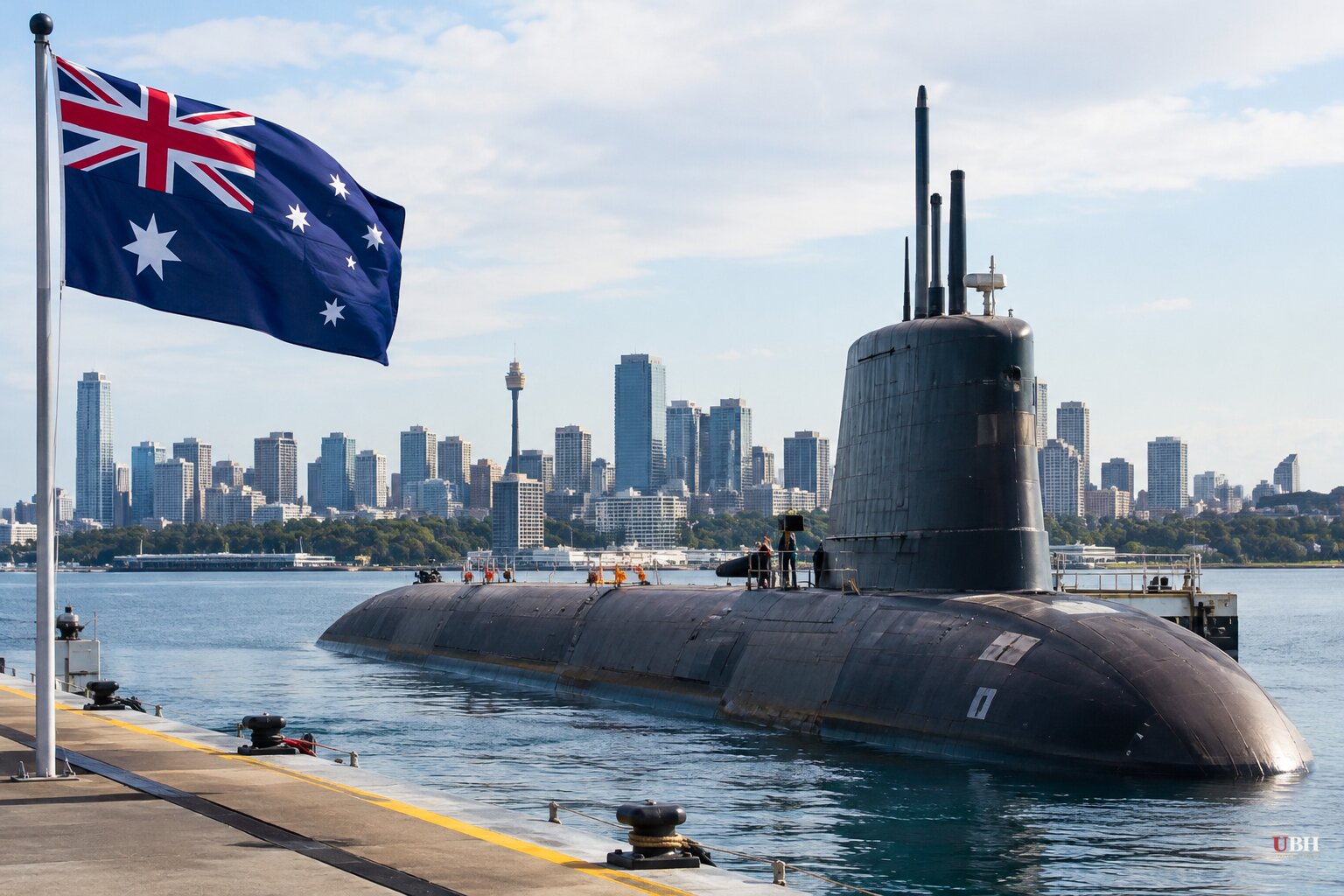
An independent public inquiry into the AUKUS nuclear submarine pact released its final report in Canberra on Wednesday, Nov. 4. Its verdict: scrap it.
The report, titled Surrendering Australia: the Aukus Deception, calls AUKUS "the worst, riskiest and most costly defence decision ever made by an Australian government." It puts the program's price at $368 billion.
Former Labor minister and Midnight Oil frontman Peter Garrett and former Chief of Defence Force Adm Chris Barrie presented it at the National Press Club. They are two of the inquiry's five commissioners.
What the inquiry recommends
The report makes 16 recommendations. The headline items:
- Immediately terminate pillar one, under which Australia would acquire eight nuclear-powered submarines in the 2030s and 2040s. The report says current delivery schedules are "most likely" unachievable.
- Suspend plans for a U.S. naval base near Perth until "critical questions" on nuclear security and health and environmental safety for local residents are examined.
- Hold a royal commission into the agreement, which was signed under the Morrison government.
- Have the auditor general and federal parliament launch independent reviews.
- Rework pillar two, covering technology and capability sharing.
- Recalibrate Australia's relationship with Beijing.
The inquiry took more than 1,000 public submissions and held 10 days of hearings around the country. It was set up after successive federal governments ruled out a major public review of the pact. By its own description and that of the Guardian, it was dominated by critics of the deal.
Sovereignty, war risk and the Perth base
The report argues the presence of powerful nuclear submarines raises the risk of Australia being dragged into a conflict with China. It says the pact undermines sovereignty and cuts against longstanding non-proliferation commitments. "AUKUS jeopardizes our sovereignty, further entangles us with U.S. war planning and actually endangers our security," the report says.
Garrett said the Stirling defence precinct in Perth risks becoming a "de facto US base" hosting as many as 2,000 serving American personnel. He said nearby communities including Rockingham and Fremantle would become targets in a conflict.
"Since coming to power, Labor has failed to conduct a thorough review of this most significant of defence agreements," Garrett said. "Conceived in secret, Aukus has spurned established defence and parliamentary oversight practices."
Barrie was blunt. "The Aukus submarine plan is not tenable," he said. "Scrap the Aukus submarine plan now, and rebuild national security decision-making processes."
Barrie on China
Barrie, who led the Australian Defence Force from 1998 to 2002, also made a broader argument about Beijing. He said China will be "the world's greatest power" by 2050. "I don't see any evidence of global aspirations and global dominance aspirations that we've seen out of the United States," he said.
He said Australia's habit of lecturing Beijing in public had damaged relations. He suggested the embassy in Beijing become Australia's second-largest, if not largest, diplomatic mission.
That is Barrie's assessment, and the report's. It is not a consensus view. The government and the opposition have backed the submarine pact.
The government's position
Albanese's Labor government supports the deal, which was negotiated with then-U.S. President Joe Biden and then-UK Prime Minister Boris Johnson. Albanese told reporters on Tuesday, after meeting British Prime Minister Andy Burnham in the Caribbean, that work on AUKUS is progressing very well. That was a day before the report came out.
In June, Labor Minister Tim Ayres said the agreement enjoys support that transcends individual political leaders. He was responding to the resignation of the UK defence secretary.
The schedule the inquiry calls unachievable is still the official one. Australia is due to start receiving secondhand Virginia-class submarines around 2032, with another vessel arriving every four years. An Australian-built boat is due to be operational in 2042. Delays and cost blowouts in U.S. Navy submarine production have fed doubts that Australia will get the in-service boats.
Waste, weapons and the Western Australia footprint
Several concerns the inquiry raises overlap with recent statements from Australia's own Defence Department. On Oct. 29, Defence confirmed no permanent disposal site has been identified for radioactive waste from the submarines. Australia will store waste from visiting U.S. and UK boats, with no agreed contribution from either country toward the facility.
The inquiry estimates an additional $180 billion will be needed to manage the nuclear waste. That figure is the inquiry's own and has not been confirmed by government.
On Oct. 30, Defence said treaty obligations prevent Australia from hosting nuclear weapons but do not prohibit visits by U.S. nuclear-capable ships and submarines.
Defence Minister Richard Marles said in September that U.S. personnel were already stationed in Western Australia, preparing the base for the Submarine Rotational Force-West. The USS Colorado (SSN 788) has been named as the first vessel assigned to it at HMAS Stirling.
What comes next
The inquiry has no legal power to change anything. A royal commission, an audit or a parliamentary review would each need a decision from government or parliament. Albanese's stated position as of Tuesday is that the program is on track.
The USS Colorado's rotational deployment to HMAS Stirling is scheduled to begin in late 2027. That is the first hard test of whether Canberra proceeds on the current timeline despite the report's call to suspend the Perth base plans.
Sources used for this briefing
7 links from 7 independent newsrooms (syndicated copies of the same report count once)
These are the sources it draws on, linked so you can verify.


