
Unbiased headlines. Facts, not spin.
Unbiased Headlines is an independently owned news organization. We bring you the facts, not opinions, written fresh from 110+ named sources. Sources linked so you can verify it yourself.
 defense
Major Story (8/10)
Komyshuvakha Strike Toll Rises to 33 With More Than 50 Still Missing, UN Mission Says Attack Appears to Violate Humanitarian Law
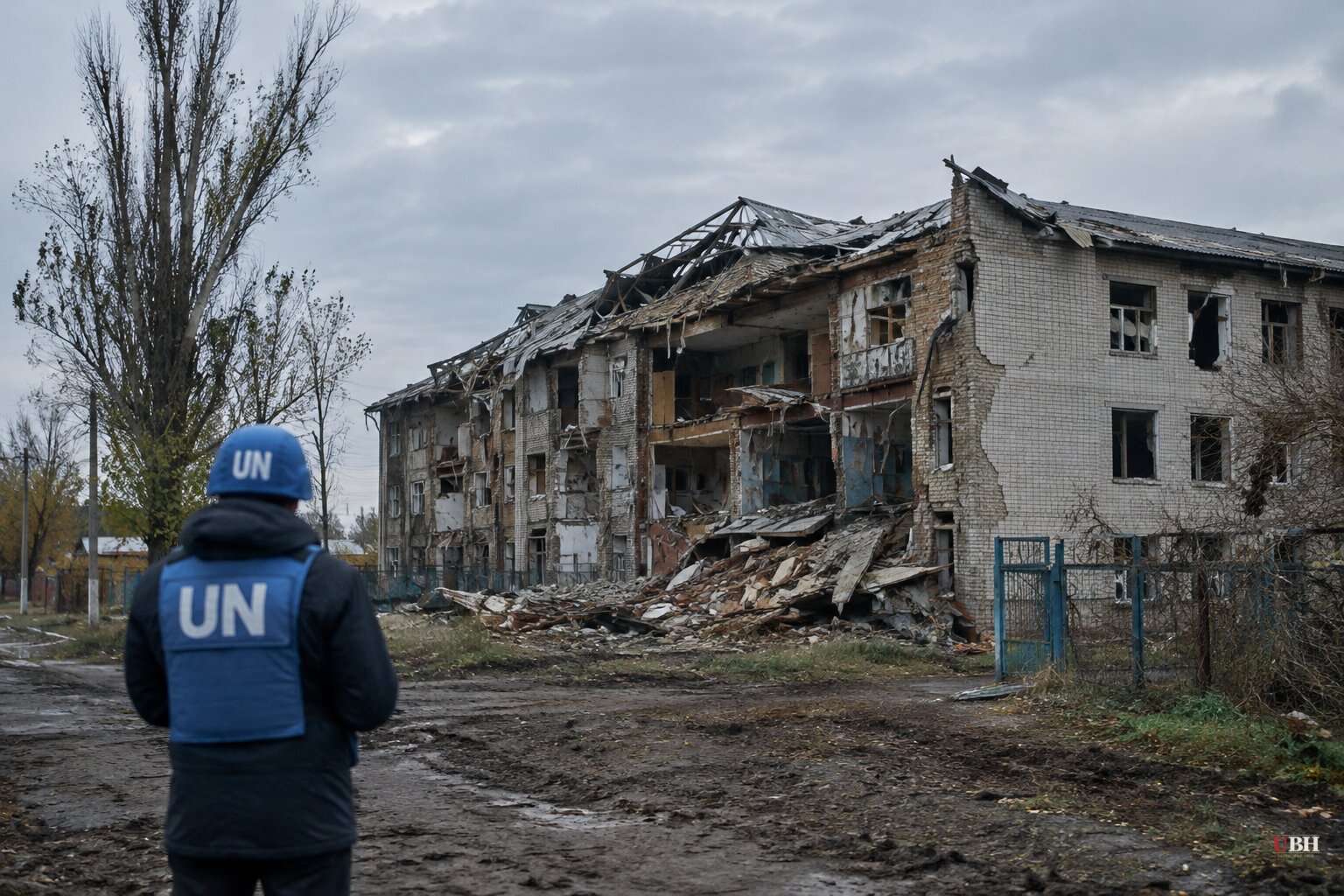
Since Russian aircraft bombed the Komyshuvakha aid site and shelter in Zaporizhzhia region on Monday, Nov. 2, the confirmed death toll has risen to 33, up from the 31 reported Tuesday, and President Volodymyr Zelensky says more than 50 people may still be trapped.
Zelensky gave the updated figure on Nov. 3 at a press conference in Berlin alongside German Chancellor Friedrich Merz. He said five people have been pulled out alive. Regional authorities earlier on Tuesday had counted 29 dead and 48 missing.
The UN mission weighs in
The UN Human Rights Monitoring Mission in Ukraine issued a statement Tuesday on the strike. Mission head Danielle Bell said the timing and location of the aid distribution were "well publicized."
"Either the Russian armed forces knew that there was a humanitarian distribution taking place, or they failed to take the most basic steps to find out what was happening in this village they were planning to attack," Bell said. "In either case, this attack seems to have violated the most fundamental principles of international humanitarian law."
That is a UN monitoring mission's assessment, not a court ruling. The Russian military did not comment publicly on the strike on Nov. 2. The toll and the attribution come from Ukrainian officials.
What the bombs did
Mykhailo Semikin, acting head of the Zaporizhzhia regional military administration, said Russia dropped at least nine bombs. He told Ukrainian national television the weapons included 500-kilogram-class bombs and FAB-3000s. The FAB-3000 weighs about three tonnes and carries nearly 1.5 tonnes of explosive. It is built to destroy bunkers and heavily reinforced structures.
The target was a school building with an EU-funded reinforced basement, built last year so classes could continue in wartime. Semikin said the basement was designed to withstand most strikes. The force of the blasts collapsed the concrete, and a fire broke out.
Many civilians had left the village as fighting closed in, and the building was no longer used as a school. Local authorities were running it as an administrative office and humanitarian hub, with a resilience centre offering food, social support and medical help.
Rescuers hit in a follow-up strike
Ukrainian authorities say a second strike hit as police, rescuers and volunteers arrived. Police said the officers had been helping residents get into the underground space when the follow-up attack trapped people trying to escape.
The dead include rescue workers Denys Konovalenko and Oleksiy Sushchevsky, both 44, and four police officers: Mykhailo Buzhenko, Mykola Balanda, Mykhailo Romanov and Dmytro Besedin. Olga Tverdenko, head of the Administrative Services Centre in the Komyshuvakha community, was also killed.
The search is in its second day. Russian drones keep disrupting the work, and ukrmedia.news reports the danger is keeping crews from using heavy machinery, so much of the debris is being cleared by hand.
At a Zaporizhzhia hospital, doctors treated four survivors for burns, fractures and shrapnel wounds. They include a 22-year-old woman with burns over about 81% of her body and a 28-year-old rescuer who suffered a broken jaw and arm injuries. Zaporizhzhia has declared three days of mourning.
The wider barrage
The bombing was followed overnight into Nov. 3 by another Russian assault aimed largely at the power grid. Ukraine's energy ministry counted 20 strikes across 10 regions. Deputy Energy Minister Artem Nekrasov said more than 180,000 customers in Zhytomyr region lost power. DTEK said three of its power plants halted operations after heavy damage.
Energy Minister Denys Shmyhal said three drones were aimed at a substation that is critical to the Khmelnytskyi Nuclear Power Plant. He said Ukraine has notified the IAEA and that such attacks threaten nuclear safety across Europe.
Zelensky linked the timing to the U.S. midterm elections. "The Russians think America won't notice this signal of theirs," he said. He did not offer evidence of intent, and Moscow has not addressed the claim.
The barrage came despite repeated calls from President Donald Trump for an energy ceasefire, and those calls have not stopped the strikes. The attacks also land just before a new round of U.S.-brokered negotiations scheduled for next week.
What remains open
The confirmed count has gone from 18 to 24 to 26 to 29 to 31 to 33 in about two days. With more than 50 reported missing and rescuers working by hand under drone threat, it is likely to rise again. Whether any of the missing are found alive is the question the next days will answer.
Sources used for this briefing
7 links from 7 independent newsrooms (syndicated copies of the same report count once)
These are the sources it draws on, linked so you can verify.


