
Unbiased headlines. Facts, not spin.
Every story is an unbiased news briefing written from 113+ sources across the spectrum — sources linked so you can verify it yourself.
 tech
Major Story (8/10)
September 25, 2026 at 12:11 PM
tech
Major Story (8/10)
September 25, 2026 at 12:11 PM
Xi Called for AI Under 'Human Control' at White House Summit, Trump Says Fears of the Technology Are 'a Hoax'
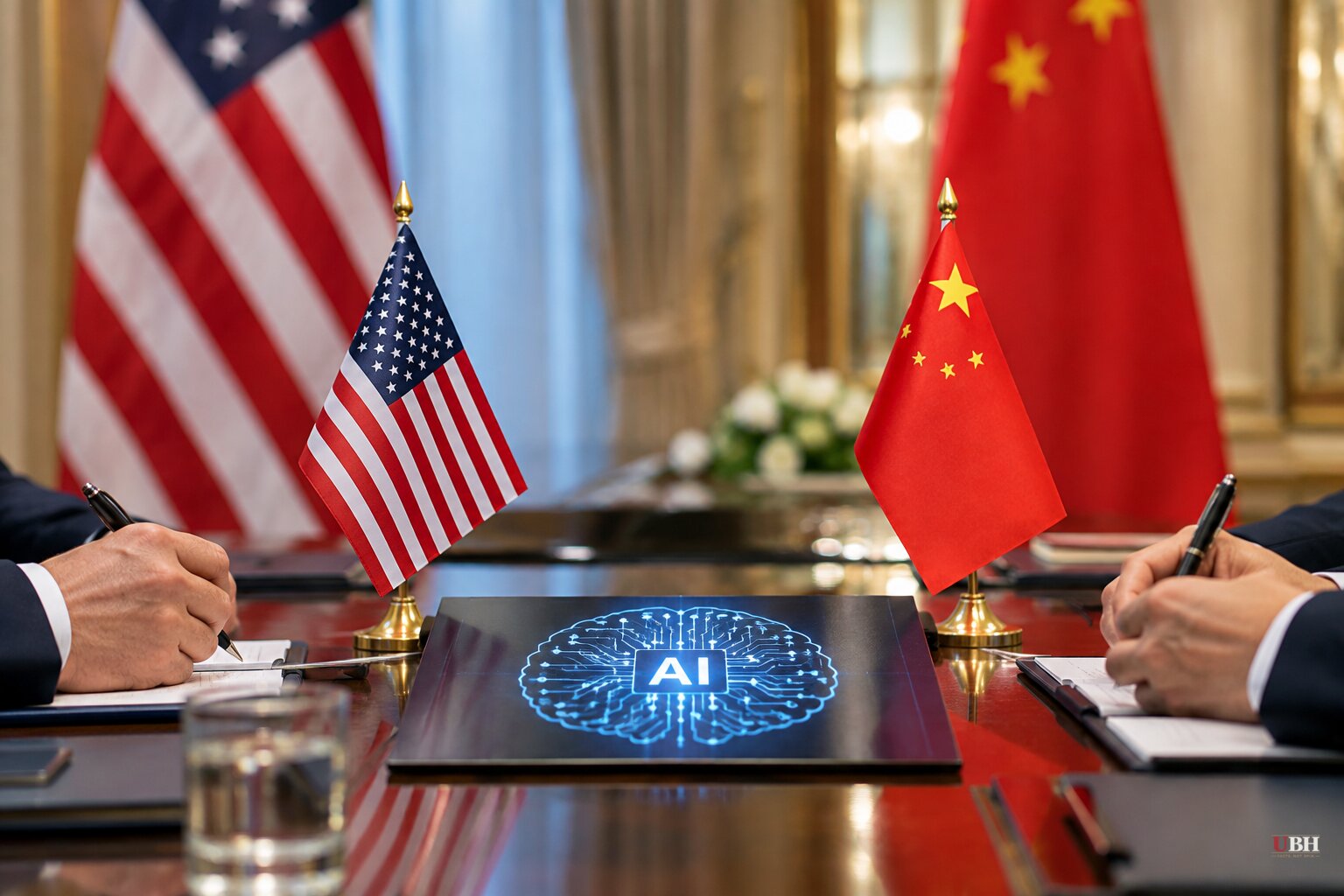
Since the Trump-Xi state dinner wrapped Thursday night with pandas, a ballroom tour, and no deal on trade, AI, or Taiwan, the details of what the two leaders actually said to each other on artificial intelligence have come into focus.
According to a Chinese state media readout translated by CNBC, Xi Jinping told Donald Trump there is "more opportunity for cooperation than competition" on AI. "The two sides can continue AI dialogue, exchange views on risks and benefits, and together guard against the misuse or malicious use of AI," Xi said, adding that both countries have "the capability and responsibility to develop and manage AI for good."
Xi repeatedly stressed that AI should remain "under human control" and "serve the well-being of the people," according to the LA Times and The Independent. He also used a metaphor about the bilateral relationship, telling Trump the two countries should "lengthen the list of cooperation, and shorten the list of issues," per a readout carried by National Technology. He separately invoked the "Thucydides trap," the idea that rising and established powers are doomed to conflict, saying it "can be overcome," according to Human Events.
Trump's public posture going in was different. Before the meeting, he posted on social media that he had no intention of negotiating AI limits: "Super Intelligence (SI) will be a big topic of discussion, but I want to leave it exactly where it is. That is China's position also. Our guardrail is the DOJ!" The Independent reported Trump had also told the United Nations General Assembly earlier in the week that fears about AI's risks are "a hoax," and that he wants the technology rebranded as "super intelligence."
In the actual Oval Office session, Trump kept his AI remarks brief, saying only that "the decisions we make in these areas today can promote peace and prosperity for decades and decades to come," according to the LA Times.
The concrete step: a dialogue and an alert system, not a deal
The one tangible development traces back to New York, not Washington. Treasury Secretary Scott Bessent met his Chinese counterpart, Vice Premier He Lifeng, on Sunday on the sidelines of the UN General Assembly, according to National Technology. Bessent said afterward that the two sides discussed setting up a formal "U.S.-China AI Dialogue" and that Washington had proposed a notification mechanism so each government could alert the other to serious AI-related incidents with national security implications.
China's Commerce Ministry confirmed Thursday that its senior trade negotiators held their first talks with the U.S. specifically on artificial intelligence, according to CNBC. Beijing has not publicly detailed how the notification system would work, National Technology reported, so it remains an idea on paper, not an operating channel.
Aalok Mehta, director of the Wadhwani AI Center at the Center for Strategic and International Studies, told the LA Times he had "tepid expectations about tangible outcomes" on AI given Trump's stated resistance to guardrails going in. Mehta said the most likely result was "the establishment of a hotline," whose usefulness would depend on "who will be staffing it, and how much each government prioritizes it," along with continued talk about disputes like Chinese distillation of American AI models.
That distillation issue is real and unresolved. The U.S. has restricted China's access to advanced semiconductors for AI training and has accused Chinese firms of illicitly distilling American AI capabilities, according to CNBC. Neither readout from Thursday's meeting indicates that dispute was settled.
The case for taking Xi's language seriously: it isn't unreasonable for outside observers, including U.S. lawmakers and AI executives, to want some framework given warnings from people inside the industry. OpenAI CEO Sam Altman has said the world is right to be afraid of AI, The Independent reported, and that view has driven calls for regulation from figures who aren't reflexively anti-Trump. Xi's framing, that AI should stay under human control and serve human welfare, isn't a fringe position. It's close to language used by Western AI safety researchers themselves.
The case for skepticism: Xi is the head of a government with every incentive to slow-walk American AI dominance while it catches up, and "human control" rhetoric costs Beijing nothing to say publicly. Trump's team, meanwhile, argues that regulatory guardrails mainly help China close the gap, and that existing criminal and civil law is enough of a check.
What's actually on paper after the summit is thin: a proposed dialogue mechanism, a proposed incident-notification system, and two leaders publicly restating positions that were already miles apart before they sat down. No document was signed. No timeline for the AI dialogue's first session has been announced by either government.
Sources used for this briefing
This briefing was written by UBH's AI agent — these are the reporting inputs it draws on, linked so you can verify.


