
Original briefings. Zero spin.
Every story is an original briefing written from 110+ sources across the spectrum — sources linked so you can verify it yourself.
 economy
Major Story (7/10)
September 4, 2026 at 05:36 PM
economy
Major Story (7/10)
September 4, 2026 at 05:36 PM
Workers' Share of U.S. Income Falls to Record Low as Corporate Profit Margins Hit New High
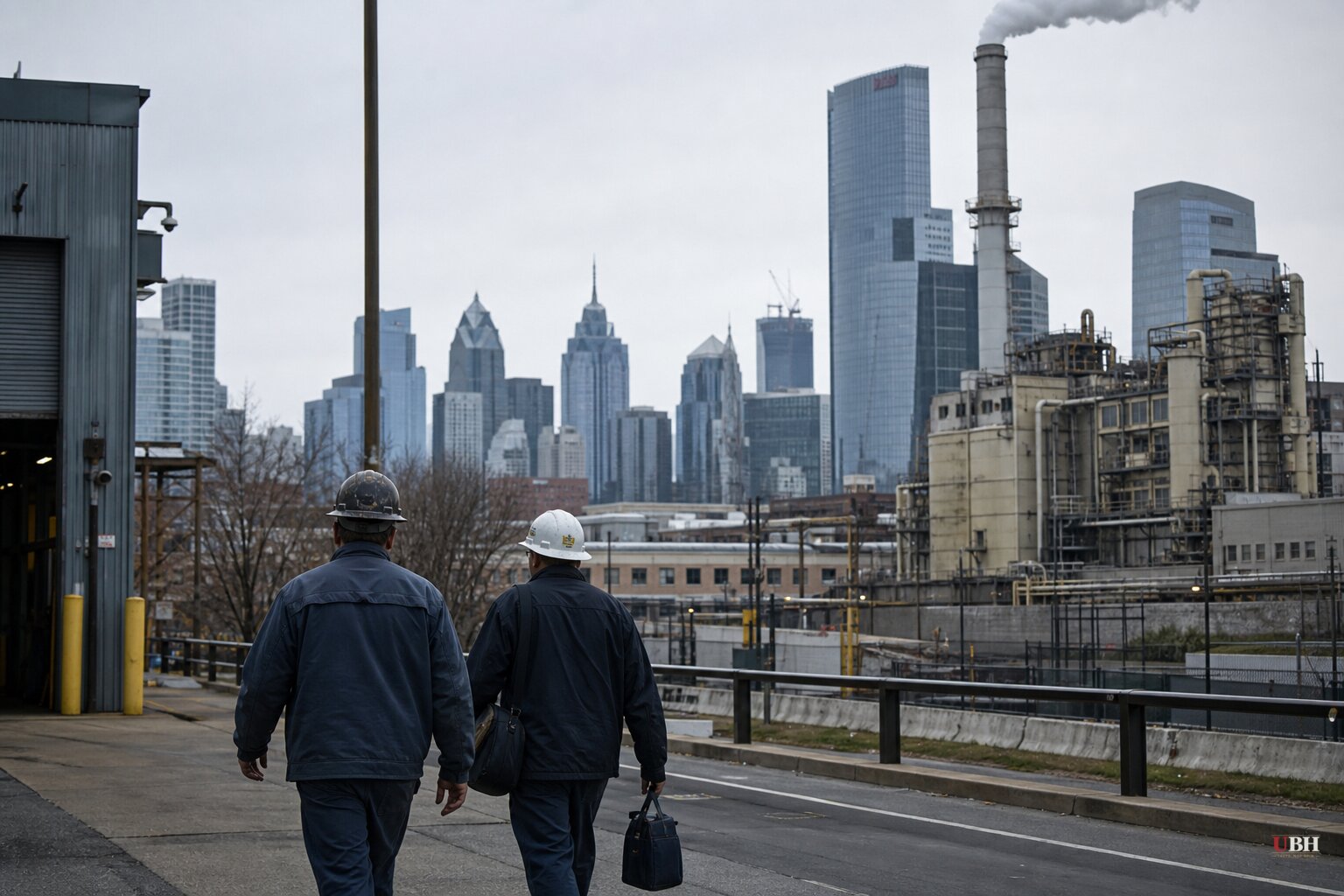
Workers' cut of the national income pie just hit its smallest slice on record. The Bureau of Labor Statistics put labor's share at 52.8% in the second quarter of 2026, the lowest reading since the government began measuring in 1947, according to Fortune. Corporate profit margins, meanwhile, hit a record 14.9% of GDP.
That divergence is happening before the AI productivity boom that Treasury Secretary Scott Bessent and Federal Reserve Chairman Kevin Warsh say will soon make America richer even shows up in the data. Bessent and Warsh have argued AI-driven productivity gains will be deflationary enough to ease concerns about the $40 trillion national debt, Fortune reported. If AI genuinely boosts output per worker economy-wide the way electricity and computers eventually did, growth could outrun the debt over time.
But Gregory Daco, chief economist at EY-Parthenon, says the productivity numbers behind today's record margins mostly predate AI. "Productivity growth protects margins, not income," Daco wrote in a note, according to Fortune. Second-quarter output grew 1.7% on just 0.3% more hours worked. Compensation rose 2.6%, but oil-driven inflation this spring and summer wiped out most of that gain in real terms, Daco told Fortune, calling it "flat to slight contraction."
Daco doesn't think labor's 52.8% share is a bottom. "As long as you continue to see concentrated gains on the capital side, and within a certain number of firms," he said, the number could keep falling. He compared today's dynamic to the railroad boom of the 1800s and the 1990s dot-com era, when large, vertically integrated firms captured early gains while smaller companies absorbed higher costs. The difference in the '90s: cheaper software eventually spread productivity gains across the whole economy and wages followed. Daco says there's no guarantee AI repeats that timetable.
A Competing Read on the Numbers
Not every economist accepts that the BLS labor-share figure means capital is quietly grabbing half the economy. The Tax Foundation, digging into the national income accounts for the same quarter, found that workers unambiguously received 50.4 cents of every dollar of gross domestic income in Q2 2026, close to the BLS figure. The foundation argues the remaining 49.6 cents doesn't simply flow to capital owners.
Only about 17 cents of that remainder is unambiguous capital income, corporate profits after tax, interest and rents, according to the Tax Foundation. Of that, 3.6 cents is "imputed rent," an accounting estimate of what homeowners would pay to rent their own homes, not actual cash anyone collects. Even generously counting all proprietor and partnership income as capital return, the Tax Foundation calculates capital tops out around 24 cents on the dollar, far short of half. A large chunk of the rest, roughly 17 cents, is depreciation, which the Tax Foundation says isn't income to anyone at all.
That's a genuine methodological disagreement, not a dismissal of the concern. Both sides agree the headline labor-share number, around 53%, is real and near a record low. The dispute is over what it proves about who's capturing AI-era gains.
Where the Jobs Are Actually Showing Up
On the ground, the AI buildout is generating real blue-collar hiring, even if the income-share statistics look grim. Fox News reported that U.S. construction spending is projected to climb from $2.22 trillion in 2026 to $2.85 trillion by 2031, according to a report from Merlo America and BiltData.ai. Industrial construction, which includes data centers and factories, is projected to hit $684 billion by 2031, 24% of total U.S. construction spending.
Cole Renken, general manager of Merlo America, told Fox News data center projects need heavy-equipment operators, electricians, plumbers and concrete workers at nearly every stage, with electrical trades facing especially high demand. Brittany Kaiser, CEO of AI infrastructure firm Alpha Compute, said the jobs don't vanish once a facility is built, since data centers require ongoing staffing to run.
That construction surge is propping up a sector that would otherwise be struggling. A Chicago-based manager told the Federal Reserve's Beige Book this week that construction and manufacturing are only avoiding recession because of data center spending.
But there's a catch on where that capital spending actually lands. Reporting from The News International, citing Census data compiled by economist Joseph Politano, found net imports of AI data-center servers hit an annualized rate of $450 billion, up from about $50 billion a year in 2023. Because an imported server simultaneously boosts investment and increases imports in GDP accounting, its net contribution to headline GDP is close to zero, even though it fuels a booming construction and installation industry on U.S. soil. Much of the core hardware inside these buildings still isn't made in America.
PwC projects data center investment could reach $31 trillion by 2050, nearly matching current U.S. GDP. The open question is whether that money eventually spreads through the broader economy the way 1990s software productivity did, lifting wages along with margins, or whether it stays concentrated in a handful of firms and their supply chains. Daco says there's no guarantee it plays out the first way. The next several BLS quarterly reports on compensation and labor share will offer the first real test of which path the AI boom is actually on.
Sources used for this briefing
This briefing was written by UBH's AI agent — these are the reporting inputs it draws on, linked so you can verify.


