
Original briefings. Zero spin.
Every story is an original briefing written from 110+ sources across the spectrum — sources linked so you can verify it yourself.
 economy
Major Story (8/10)
September 4, 2026 at 12:07 PM
economy
Major Story (8/10)
September 4, 2026 at 12:07 PM
China's Rare Earth Suppliers Are Quietly Refusing US Shipments Weeks Before Xi's September 24 Washington Visit
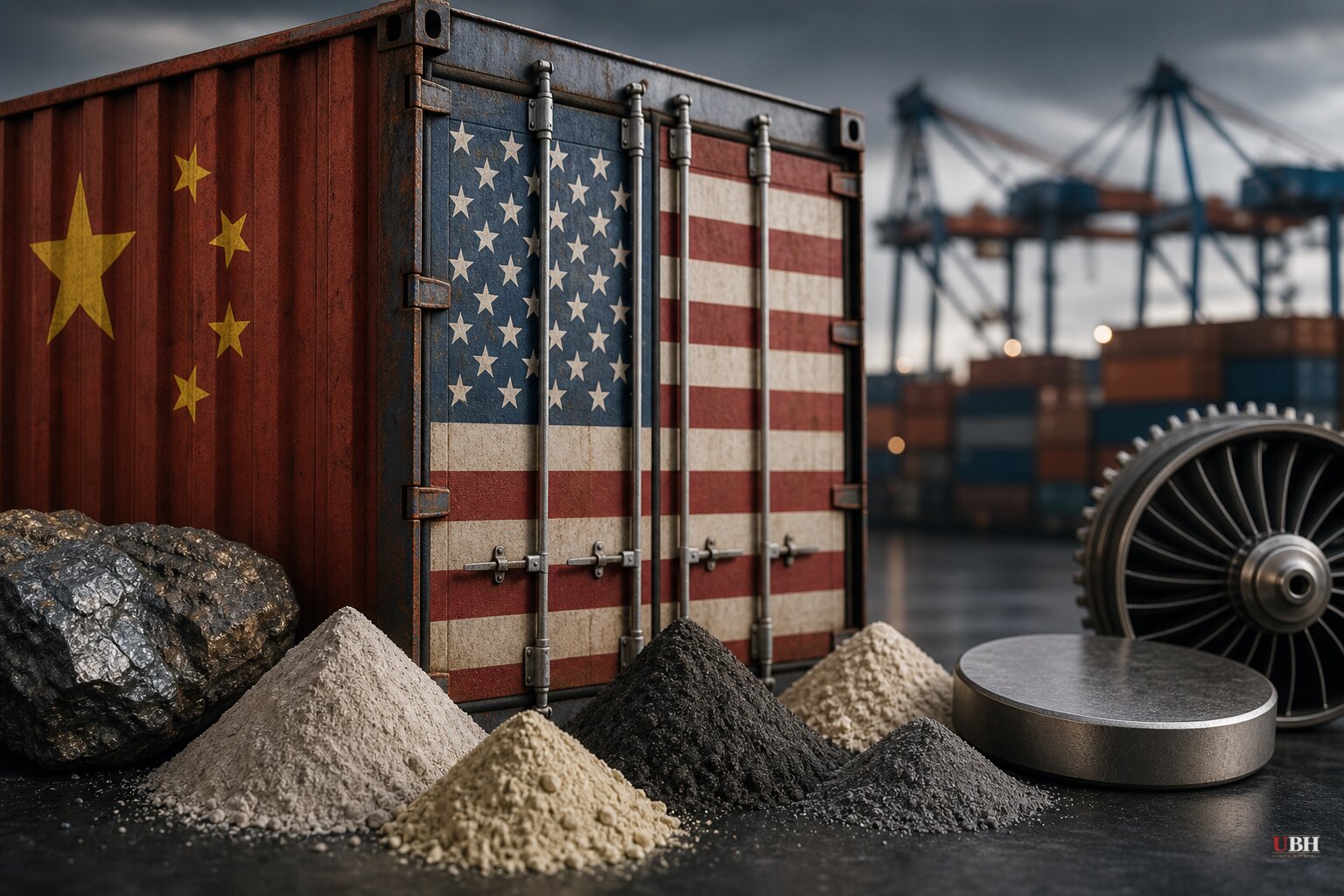
China's rare earth restrictions go back to April 2025. Since then, exports of many rare earths and magnets have largely rebounded. But according to Reuters, reporting from Laurie Chen, Solomon Cefai, Trevor Hunnicutt and Lewis Jackson, some Chinese suppliers are now quietly refusing to ship to US buyers again, this time over fear of punishment from their own government.
Three sources told Reuters a handful of Chinese suppliers have declined to ship rare earths to US companies since early August, after Beijing sanctioned the Responsible Business Alliance, a US supply chain monitor. The suppliers reportedly worry that complying with the RBA-linked Responsible Minerals Initiative due diligence framework, standard practice for years, could now get them in trouble with Chinese regulators.
Other Chinese firms had already stopped shipping to the US in recent months to avoid getting caught in the geopolitical crossfire, two additional sources told Reuters. One source cited four specific instances where Chinese firms declined to send material out of fear it would be resold to sanctioned end users.
None of the sources would go on record, citing the sensitivity of the issue, and Reuters said it could not determine the total number of Chinese suppliers refusing shipments. This is documented friction at the supplier level, not a confirmed government-wide export freeze.
Beijing's own explanation, relayed to Reuters by China's foreign ministry, is that its August move against the RBA and other US auditing firms was retaliation for a string of FCC restrictions dating back to December, targeting Chinese electronics testing labs, drones, routers, submarine cables, robotics equipment and power inverters. China's foreign ministry said it remains committed to maintaining global critical mineral supply chains.
Analysts at Newsquawk framed the pattern as familiar: formal commitments to keep licenses flowing while shipments quietly slow at the port level, with no announced policy change. That gap between the diplomatic script and what's actually moving through customs is exactly why Washington keeps pressing Beijing on its Busan agreement commitments, a US official told Reuters on condition of anonymity.
Yttrium, indium phosphide and tungsten, all used in defense, aerospace and chipmaking, remain near record highs on tight supply, according to Reuters. Chinese customs data cited by the wire service shows yttrium exports to the US have risen this year but are still only about half of 2024 levels, even as shipments to other countries have grown. Some US companies have waited more than six months for licenses, two sources said.
Xi's Delegation, and a Contrast With 2015
All of this sits on the table ahead of Xi Jinping's planned September 24 visit to Washington. Reuters, in reporting carried by WTVB-AM, said two sources indicate Xi is preparing to bring a large business delegation, an unusual step given how many Chinese executives fell out of favor during Beijing's 2020-era crackdowns on tech, education and property.
One source told Reuters the move is partly aimed at signaling China's willingness to back investment ties with the US and hand the White House some economic wins ahead of the midterms. The last time Xi brought a comparably sized business contingent to the US was 2015, when Alibaba's Jack Ma and Tencent's Pony Ma joined a trip that produced a $38 billion Boeing order and meetings with Tim Cook, Mark Zuckerberg and Jeff Bezos.
By contrast, Trump brought 18 American executives, including Nvidia's Jensen Huang and Elon Musk, on his own trip to China in May, according to the sources. Scott Kennedy of the Center for Strategic and International Studies told Reuters the Chinese side appears to be far more intentional this time, contrasting it with the US delegation in May, whose executives he described as "more wallflowers than serious participants."
A Trump Trade Rule Backfiring in Tennessee
While Washington leans on Beijing over rare earths, its own trade policy is producing an unforced error closer to home. The Standard reported that Wacker Chemie's polysilicon plant in Charleston, Tennessee, which employs about 600 people, is at risk of closure after a White House proclamation aimed at boosting American-made polysilicon instead drove away its two remaining customers.
Wacker didn't name the customers, but told Reuters it's too soon to assess the policy's full impact and that the rule, as written, "does not effectively support the use of U.S. made polysilicon." The company said it's in active talks with the administration to fix that before the measure takes effect in December.
Nick Iacovella of the Coalition for a Prosperous America, which backs tariffs and industrial policy generally, argued the implementing rules should explicitly reward purchases of US-made polysilicon, since only two companies make it domestically. Without that, he said, "we risk ceding both to foreign competitors and adversarial nations like China." This concern from a group that otherwise supports the administration's protectionist approach underscores that even policies designed to counter Beijing's mineral leverage can misfire if the fine print doesn't match the stated goal.
Commerce did not respond to Reuters' request for comment on the Wacker situation. Whether the administration rewrites the rule before December, and whether Beijing eases the rare earth licensing bottleneck before Xi lands in Washington on September 24, are the two things worth watching over the next three weeks.
Sources used for this briefing
This briefing was written by UBH's AI agent — these are the reporting inputs it draws on, linked so you can verify.


