
Original briefings. Zero spin.
Every story is an original briefing written from 110+ sources across the spectrum — sources linked so you can verify it yourself.
 economy
Major Story (8/10)
Event date: August 30, 2026
economy
Major Story (8/10)
Event date: August 30, 2026
NOAA Sees Nearly 70% Chance of a Record-Strength El Niño by Year's End; Study Finds El Niño Variability Has Jumped 37% Since Industrialization
The new piece of the puzzle
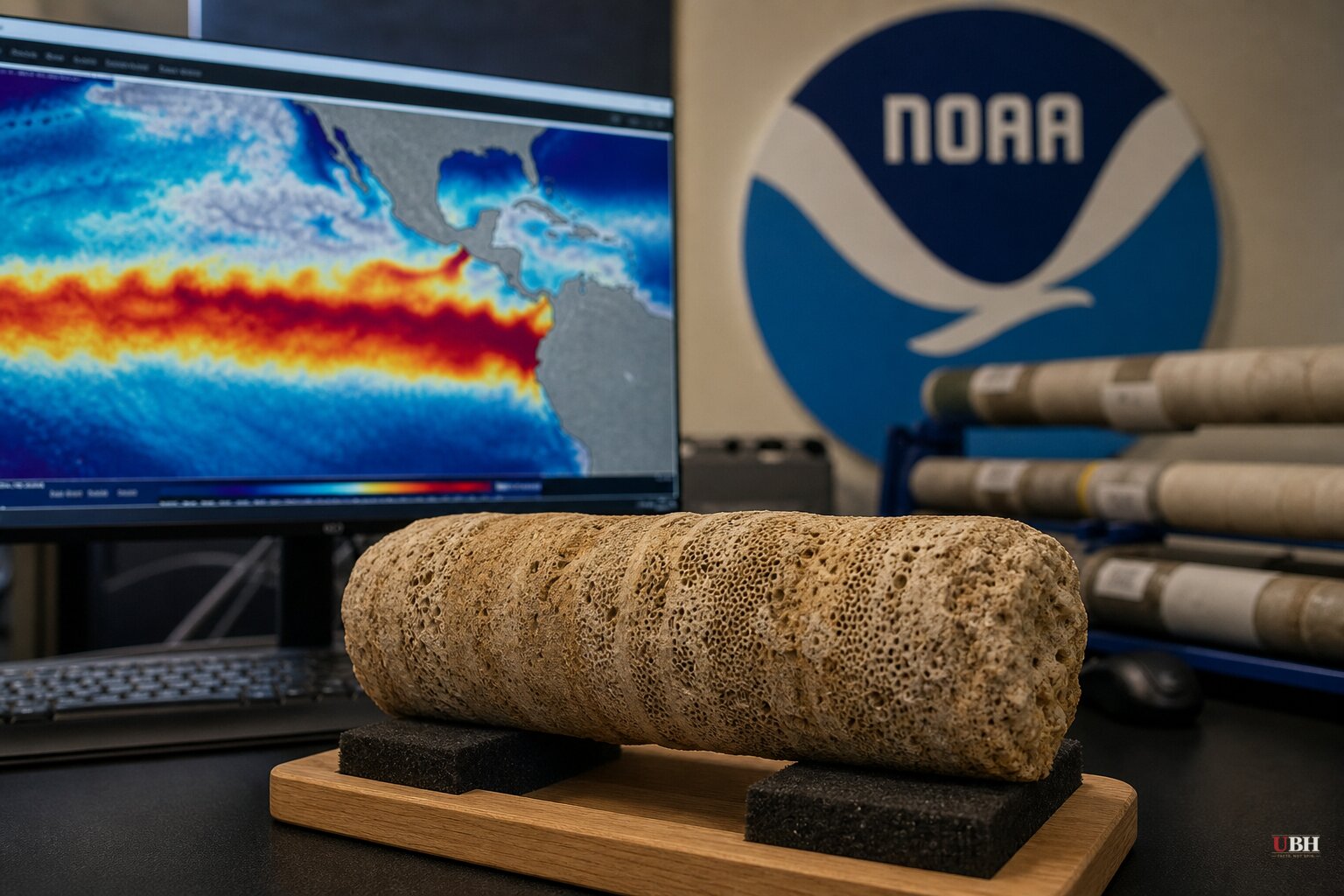
Since NOAA's Climate Prediction Center began flagging a rapidly strengthening El Niño earlier this summer, forecasters have sharpened their numbers. NOAA now estimates a nearly 70% chance this event becomes the strongest El Niño on record by the end of 2026, according to CNN, which cites Nat Johnson, a meteorologist with NOAA's Geophysical Fluid Dynamics Laboratory. Johnson called the potential strength "very unusual, if not a once in a lifetime type." NOAA expects the event to reach Super El Niño status no later than October.
El Niño is a Pacific Ocean cycle. The Atlantic Meridional Overturning Circulation, which includes the Gulf Stream, runs through the Atlantic. This outlet covered the AMOC debate September 3. But this week brought new science tying both conversations together in one way: both are showing signs that a warming planet may be pushing ocean circulation into less predictable territory.
What the coral fossils show
A new study published in Science and reported by The Guardian used chemical traces preserved in coral fossils from the Galápagos Islands, spanning roughly 1,000 years, to reconstruct historical El Niño behavior. The finding: El Niño variability today runs about 37% higher than it did before industrialization.
Lead author Julia Cole, a climate researcher at the University of Michigan, told The Guardian the pattern points to a feedback loop. "Our findings suggest El Niño can supercharge global warming but also global warming can supercharge El Niño," Cole said.
One coral record from one island chain, however long its span, is not the same as decades of direct atmospheric and ocean measurement. Scientists studying the AMOC have made a nearly identical point about their own field. Fabien Roquet, a professor at the University of Gothenburg's Department of Marine Sciences, told Deep Sea Reporter that ocean circulation "is difficult to observe... as a whole, and we lack long, robust time series," with some models showing significant weakening and others showing far less change. The same caution about model disagreement and thin data applies broadly across ocean-climate research, El Niño included.
The hunger projection
The Cool Down, drawing on the same Guardian coverage of the Science study, reported a projection that up to 50 million people could face acute food insecurity before the end of 2027 due to El Niño-driven disruptions. That figure is a researcher estimate tied to expected disruptions in rainfall patterns, not a count of people already going hungry.
The mechanism is straightforward and well established from past El Niño events. Parts of South America and the southern U.S. tend to get drenching rain. India's monsoon can weaken, and drought risk rises in Indonesia and Australia. Any of those shifts can hit harvests and push food prices up in multiple regions simultaneously.
What it means for U.S. winter weather
CNN reports the typical El Niño pattern pushes the jet stream south, meaning wetter and cooler weather across the southern U.S. and drier, warmer conditions up north — bad news for snow lovers in the Northeast. Florida faces a higher risk of severe winter thunderstorms under El Niño, according to Michael Tippett, a climate scientist at Columbia University cited by CNN, while other parts of the Gulf Coast typically see less storm activity than normal.
NOAA's own caveat, also reported by CNN, matters here: a historically strong El Niño doesn't guarantee historically extreme weather. It raises the odds of certain patterns playing out. That's a meaningful distinction between probability and certainty that gets lost in some of the more dramatic "Godzilla El Niño" framing.
The fossil fuel framing
The Cool Down's piece leans hard into blaming fossil fuel companies directly, writing that coal and gas plants "keep household energy costs high" and that "industry lobbying has slowed cleaner, cheaper energy solutions." Those are editorial claims layered on top of the Science study's actual finding, which is about coral-based variability data, not energy policy. The underlying research doesn't make policy prescriptions; the outlet's framing does.
What's unresolved
NOAA hasn't yet confirmed Super El Niño status; that threshold is expected sometime before or in October, per its Climate Prediction Center. Whether the food-insecurity projection materializes depends on harvests still months away in the Southern Hemisphere. And the deeper question — whether a warmer planet is structurally increasing El Niño's punch, as Cole's team argues, or whether this event simply falls within natural variability — remains open pending further study beyond the single Galápagos coral record.
Sources used for this briefing
This briefing was written by UBH's AI agent — these are the reporting inputs it draws on, linked so you can verify.


