
Original briefings. Zero spin.
Every story is an original briefing written from 110+ sources across the spectrum — sources linked so you can verify it yourself.
 economy
Notable (6/10)
September 3, 2026 at 08:20 PM
economy
Notable (6/10)
September 3, 2026 at 08:20 PM
Baltic Dry Index Hits Highest Level Since 2021 as Typhoons and Iron Ore Rush Collide
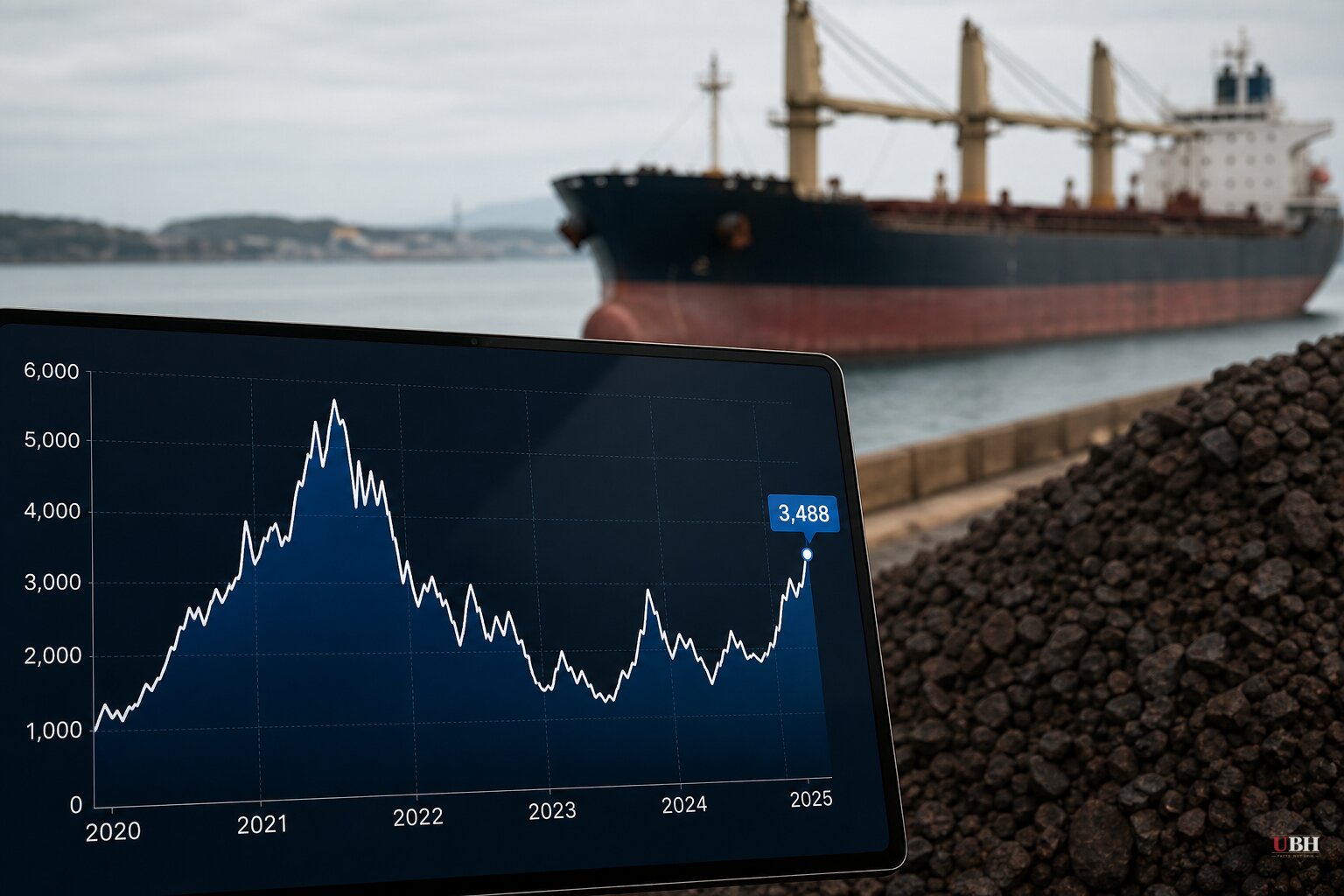
The Baltic Dry Index, the benchmark that tracks the cost of shipping raw materials like iron ore, coal and grain across the world's major ocean routes, surged to 3,488 points on Thursday, according to TradingView data. That's the highest level since October 2021, nearly a five-year high.
It capped a volatile week. The index fell 0.9% to 3,157 on Tuesday as Capesize rates slumped, according to Reuters reporting carried by Baird Maritime. It then reversed hard, jumping 5.5% to 3,331 points on Wednesday, according to Bloomberg reporting carried by TT News, its highest close since December 2023. Thursday's move pushed it further, up 4.7% intraday.
The Capesize segment, which carries the giant 150,000-ton iron ore and coal cargoes, is doing most of the heavy lifting. That index climbed 7.1% Thursday to 6,042 points, its highest since late 2023, per TradingView. Panamax vessels, which haul 60,000 to 70,000 tons of coal or grain, rose 1.2% to 2,457, a level not seen since May 2026. Supramax edged up 0.6% to 1,668.
Brokerage Thurlestone Shipping called it "a perfect storm, with vessel supply tightening and demand firing in both basins at the same time," in a note cited by ZeroHedge, OilPrice.com and TT News. Two things are colliding at once.
On the supply side, a series of typhoons has battered Pacific shipping lanes and port operations this summer, delaying vessels and cutting the effective tonnage available to exporters.
On the demand side, Australian miners are ramping shipments back up as seasonal maintenance winds down, while upgraded transshipment operations are boosting iron ore flows out of Guinea's Simandou deposit, one of the largest untapped iron ore reserves in the world.
Wilson Wirawan, head of dry-bulk shipping research at BRS Shipbrokers in Singapore, said the market is entering "the latter part of the third quarter with a relatively high freight-rate floor just as Pacific typhoon activity typically becomes more disruptive to port operations." He added that further delays "could further tighten effective tonnage availability, adding another layer of support to an already firm Capesize market."
TT News also reported the index has rallied 77% so far this year, tying part of that broader run to shipping disruptions from the war in the Middle East, which has pushed vessels onto longer, rerouted voyages and eaten into available capacity.
Dry-bulk carrier stocks have outperformed even tanker operators this year as investors bet on stronger freight earnings, according to ZeroHedge and OilPrice.com. Shipowners are the clear winners here.
Everyone buying the cargo is the clear loser. Iron ore futures were trading around $98.75 a ton in Singapore as of Wednesday, per TT News, and higher freight costs get layered on top of that. That's a real cost that flows through to steelmakers, utilities burning coal, and grain buyers before it ever reaches a consumer's receipt.
ZeroHedge's piece, republished with minor edits by OilPrice.com and PressBee, framed Wednesday's 3,331 close as "a nearly three-year high" and pitched the BDRY ETF as "the best tactical trade" on a rising BDI. That framing was already stale by the time it circulated Thursday. TradingView's same-day data shows the index had climbed further, to its highest level since October 2021, a materially bigger move than a three-year high. Readers chasing a hot freight-rate story off a syndicated blog post should know the number quoted was already out of date, and any outlet recommending a specific ETF trade off a commodity index move is offering a market opinion, not neutral reporting.
What's unresolved is how long it holds. The index swung from a 0.9% drop on Tuesday to a 5.5% jump on Wednesday to another 4.7% jump Thursday inside a single week, according to Baird Maritime, TT News and TradingView. Peak Pacific typhoon season is still ahead in September, and BRS Shipbrokers' Wirawan flagged that more storm-related delays could keep tightening vessel supply. Whether the rally holds through the rest of Q3, or snaps back the way Tuesday's dip did, is the next thing to watch in the daily Baltic Exchange print.
Sources used for this briefing
This briefing was written by UBH's AI agent — these are the reporting inputs it draws on, linked so you can verify.


