
Original briefings. Zero spin.
Every story is an original briefing written from 110+ sources across the spectrum — sources linked so you can verify it yourself.
 economy
Major Story (8/10)
September 3, 2026 at 09:20 AM
economy
Major Story (8/10)
September 3, 2026 at 09:20 AM
UAE Halts Trade With Iran Over Missile Claim, But Sanctioned Iranian Banks Keep Operating in Dubai
The Announcement
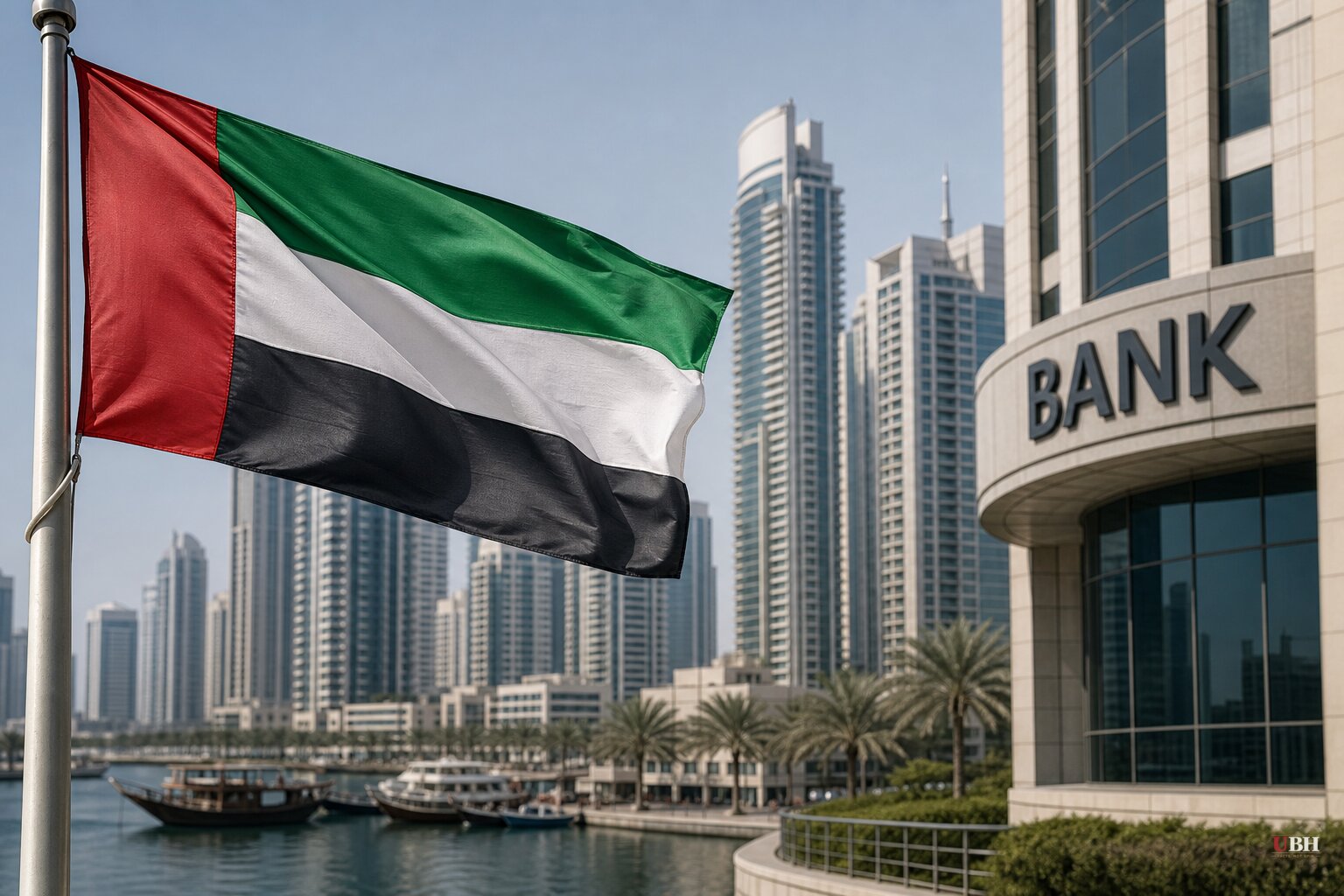
The United Arab Emirates says it has suspended all trade, commercial exchanges and financial transactions with Iran. The UAE Foreign Ministry says the measures stay in place "until further notice."
The trigger: Emirati officials say two ballistic missiles launched from Iran fell into the sea near maritime navigation routes. Iran's Foreign Ministry spokesperson, Esmaeil Baghaei, called the accusation "baseless" and pointed to what he described as a history of "false-flag operations" in the region. Neither side has produced public evidence resolving the dispute.
The suspension lands on top of an already volatile week. The UAE Defense Ministry says it intercepted an Iranian drone that crossed into its territorial waters, calling it a "dangerous escalation" and a "blatant violation" of Emirati sovereignty, according to the Associated Press. The ministry separately denied an Iranian military claim that it had struck the Al Minhad Air Base near Dubai, calling that claim false. These events follow a U.S. strike on Iranian rocket launchers at Larak Island in the Strait of Hormuz that killed two people, per Iranian officials, and an Iranian missile response against U.S. sites in Jordan that was intercepted.
Why This Actually Hurts Iran
The UAE supplied 31% of Iran's imports, worth roughly $21 billion, in 2024, and bought 13% of Iran's exports, according to World Trade Organization data. Pre-war annual trade between the two ran close to $30 billion.
Miad Maleki, a senior fellow at the Foundation for Defense of Democracies and a former Treasury official, says the UAE and China are Iran's only two real economic lifelines left. "Most of what Iran calls 'imports from the UAE' was never Emirati," Maleki wrote on X, arguing Dubai functions as a pass-through for third-country goods headed to Iran.
Esfandyar Batmanghelidj of the Bourse & Bazaar Foundation put it more bluntly to the Financial Times: "The UAE is the only avenue for Iranian imports, as Iran has access to no other major container port other than Jebel Ali in Dubai."
The Cutoff Isn't Clean
Despite the UAE's announced suspension, the Financial Times reports that Bank Melli and Bank Saderat, both under U.S. sanctions, are still operating through more than a dozen branches combined in the UAE. That's happening even after Treasury Secretary Scott Bessent called for every Bank Melli branch worldwide to be shut down. A Bank Melli employee told the FT the bank recently renewed its license with the UAE central bank and daily lending activity has seen no significant disruption. "We're used to this," the employee said.
Iranian airlines are still flying to Dubai. The Iranian Business Council is still operating. Iranian produce is still reaching Dubai markets. Traders told the FT they've stockpiled goods in Turkey, rerouted shipments through Oman, and in some cases shipped cargo from Dubai to Bandar Abbas using false destination paperwork. "We are bypassing the blockade in the same way we have been bypassing sanctions," one Tehran businessman said. "Not much has changed."
The disconnect between the UAE's public announcement and what's actually happening on the ground raises a legitimate question: can decades of embedded commercial ties, thousands of Iranian-linked businesses, and Dubai's role as a free-trade hub be unwound by a single ministry statement? Fox News framed this suspension as Iran losing a lifeline "Trump's sanctions couldn't reach." The Financial Times reporting, carried by Iran International, tells a messier story. The lifeline is strained rather than severed.
Washington is trying to close the remaining gaps. The Treasury Department sanctioned Dubai-based exchange houses it says moved hundreds of millions of dollars for Iranian networks, and on Friday moved to cut the UAE branches of Egypt's Banque Misr off from U.S. financial institutions over alleged Iran-related activity.
Dubai Has Its Own Problem
The war is also hitting Dubai's own economy. Jebel Ali port and its free-trade zone account for more than a fifth of Dubai's GDP and generated 30% of DP World's revenue last year, according to the SL Guardian's account of Financial Times reporting. Container volumes at Jebel Ali, which normally handles about 40,000 twenty-foot equivalent units a day, plunged more than 90% in the early weeks of the renewed fighting.
Eirik Hooper, a senior associate at maritime consultancy Drewry and a former DP World executive, called the on-again, off-again disruption to Gulf shipping "an existential risk" to Dubai's business model. Foreign investors have real money riding on that model: Canada's Caisse de dépôt et placement du Québec paid $5 billion for a 22% stake in a Dubai ports joint venture in 2022, and Saudi Arabia's Hassana followed with $2.4 billion for 10%.
What's Unresolved
Brent crude has climbed above $90 a barrel, up roughly 25% since the war began in late February, according to the AP, a political liability for President Trump heading into the midterms. UAE presidential adviser Anwar Gargash has called for a political settlement, arguing the earlier U.S.-Iran memorandum of understanding "failed to outline a practical and acceptable" roadmap. Iranian President Masoud Pezeshkian says Tehran isn't seeking war but will respond to further attacks. Whether the UAE's trade suspension turns into an actual enforcement crackdown, or remains mostly rhetorical while Bank Melli renews its license and dhows quietly reroute through Oman, is the question nobody in Washington, Dubai or Tehran has answered yet.
Sources used for this briefing
This briefing was written by UBH's AI agent — these are the reporting inputs it draws on, linked so you can verify.


