
Original briefings. Zero spin.
Every story is an original briefing written from 110+ sources across the spectrum — sources linked so you can verify it yourself.
 economy
Major Story (7/10)
Event date: September 2, 2026
economy
Major Story (7/10)
Event date: September 2, 2026
Senegal Reaches $2.2 Billion IMF Deal After Hiding Over $11 Billion in Debt
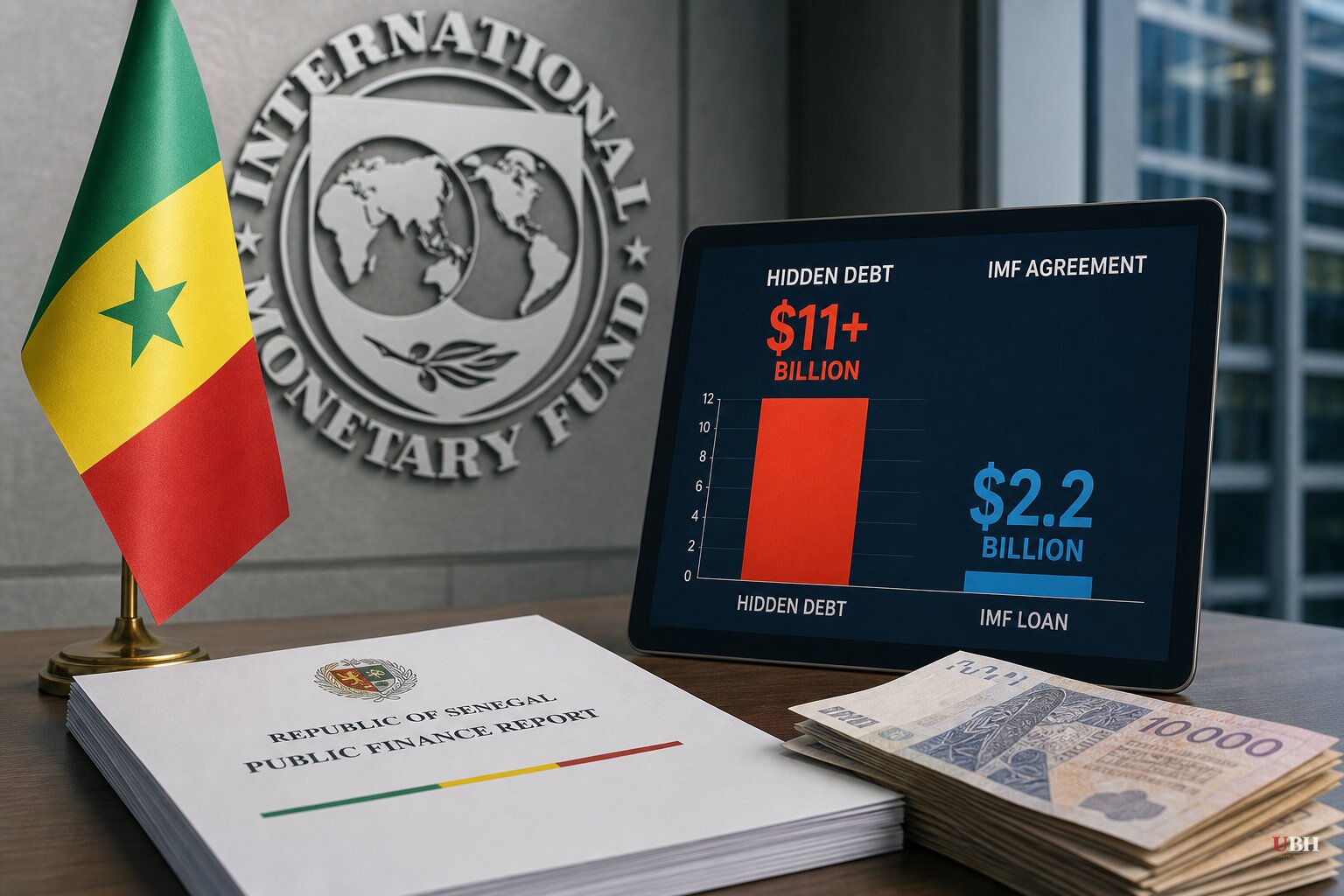
Senegal's government has signed a staff-level agreement with the International Monetary Fund for a $2.2 billion, three-year loan package, according to a statement from the IMF reported by Reuters and Africanews. The deal comes as Dakar prepares to restructure its debt through what it calls an "enhanced common framework," tied to a September 13 international bond payment the country now says it will not make in full.
This didn't come out of nowhere. In September 2024, Senegal's newly elected government, led by President Bassirou Diomaye Faye, accused the previous administration of ex-president Macky Sall of concealing the true scale of the country's debt. The IMF now puts that hidden debt at more than $11 billion; some analysts, per Reuters, put it closer to $13 billion. Africanews reports the IMF found Senegal's actual 2023 budget deficit was 12.3% of GDP, not the 4.9% the Sall government had reported. That's more than double.
For comparison, Mozambique's infamous "tuna bond" scandal, one of the most notorious sovereign debt frauds of the last decade, involved roughly $3 billion, according to businessfront. Senegal's hidden debt is more than three times that.
The Numbers
By the end of 2024, Senegal's government debt, excluding state-owned enterprise borrowing, stood at 23.67 trillion CFA francs, or $42.10 billion, equal to 119% of GDP, according to government data cited by Reuters. Add in state-related liabilities and arrears, and the IMF puts the real figure closer to 131-132% of GDP, making Senegal one of the most indebted countries in sub-Saharan Africa.
About a third of that debt sits in local and regional CFA-denominated bonds, and the government has signaled it will not touch that portion. That means the pain of any restructuring falls more heavily on the remaining creditors: roughly half of external debt is owed to multilateral lenders and other governments on concessional terms, while the other half is held by commercial creditors, banks, pension funds, and hedge funds, including more than $7 billion in international bonds.
Finance Minister Cheikh Diba disclosed in March that Senegal also used total return swaps, a derivative instrument, to fund operations at a roughly 7% yield versus 11-12% in Eurobond markets. Reuters notes it's still unclear how those swaps will be treated in the restructuring.
Markets React
Bonds are getting hammered. Businessfront reports Senegal's bonds fell to record lows after Tuesday's announcement, with every bond trading below 50 cents on the dollar or euro. Briefs.co reported the euro bond maturing in 2028 took the worst hit, dropping more than 8 cents at one point with roughly $13.1 million changing hands, the heaviest trading in two weeks. The 2048 dollar bond also sold off as anxiety mounted over the September 13 coupon.
Carlo Morelli, a senior portfolio manager at Azimut Investments SA, told Briefs.co that bondholders had previously been betting Senegal would keep paying through a scheduled March payment. "Now the chances are the G20 framework will rework all eurobonds before March 27." Morelli added that bond prices realigned to reflect expected recovery values rather than face value.
Moody's added to the pressure last week, downgrading Senegal's long-term foreign-currency debt rating to Caa2 from Caa1 in the middle of the IMF negotiations, according to Africanews.
A Political Fight, Too
This isn't just a numbers problem. President Faye fired his prime minister, Ousmane Sonko, in May over disagreements that included how to handle the IMF program, according to Africanews. Sonko was then elected speaker of Senegal's National Assembly, a post that could let him slow down or complicate any reforms the IMF requires.
Sonko's objection deserves a fair hearing. He called an IMF-led restructuring "a disgrace" for Senegal last November, according to businessfront, reflecting a broader concern that outside financial institutions dictating terms to a sovereign African nation amounts to a loss of control over the country's own fiscal destiny, and that austerity measures tied to IMF programs often land hardest on ordinary citizens who had nothing to do with the debt being hidden in the first place. Faye, by contrast, has taken the more conciliatory route, betting that restructuring now is less damaging than a disorderly default later.
IMF Managing Director Kristalina Georgieva told Reuters on the sidelines of a G20 finance meeting in Asheville, North Carolina, that Senegal had maintained a "fairly good macroeconomic framework" before the undisclosed debt came to light. "They slipped into this undisclosed debt situation. We can work now with the commitment of the government," she said.
Mercedes Vera Martin, the IMF's mission chief, said reforms need to focus on better debt management and fiscal transparency, and that a revised budget aimed at "rationalizing" spending would not affect public services in the short term, per businessfront.
What's Left Unresolved
Growth is taking a hit regardless of how the restructuring shakes out. Senegal's finance ministry told Reuters that growth is projected to fall to 2.7% this year from 6.7% in 2025, with the ministry citing the Iran war's effect on investment and energy costs as a factor. On the brighter side, Africanews reports the fiscal deficit narrowed from 13.4% of GDP in 2024 to 6.4% in 2025, driven mostly by spending cuts.
The staff-level agreement still needs approval from the IMF's executive board. The September 13 bond payment is the immediate test of whether Senegal can hold the line without a disorderly default, and whether Sonko's National Assembly can or will slow-walk the reforms Faye's government has committed to making.
Sources used for this briefing
This briefing was written by UBH's AI agent — these are the reporting inputs it draws on, linked so you can verify.


