
Original briefings. Zero spin.
Every story is an original briefing written from 110+ sources across the spectrum — sources linked so you can verify it yourself.
 economy
Major Story (8/10)
Event date: August 23, 2026
economy
Major Story (8/10)
Event date: August 23, 2026
GOP Lawmakers Back Trump, Blame Canada as Retaliatory Tariffs Set to Hit September 8
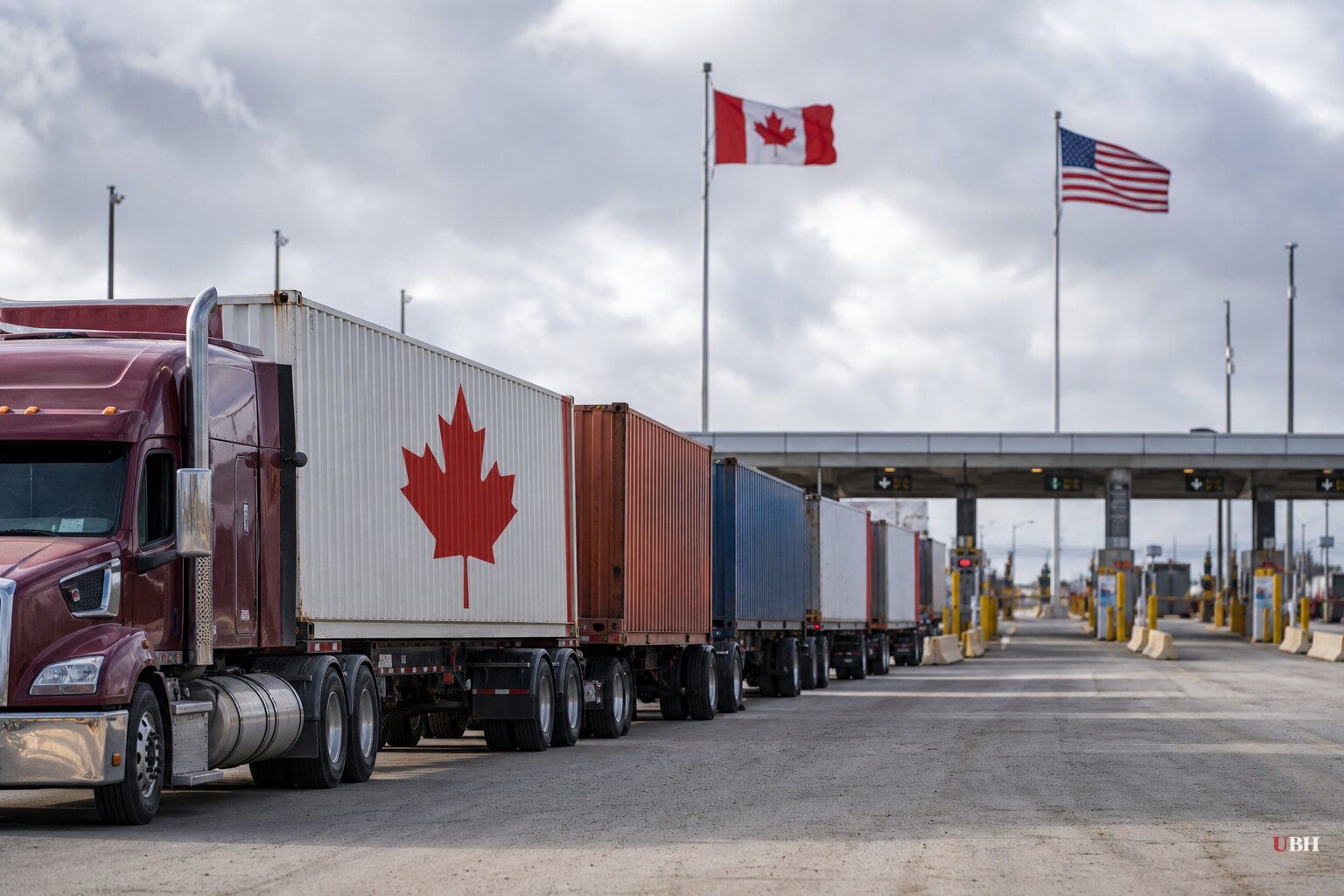
Since trade talks between Washington and Ottawa fell apart on August 21, both governments have been layering tariffs on each other with no new negotiations scheduled. This week the fight picked up a new front: congressional Republicans publicly took Trump's side and blamed Canada for the breakdown.
On Wednesday, dozens of House Republicans met behind closed doors on Capitol Hill with U.S. Trade Representative Jamieson Greer, according to CBC News. Afterward, GOP members who spoke to CBC largely backed the administration's approach. Texas Republican August Pfluger called it "a war that is perpetuated by Canada" and said "the Canadians need to get reasonable." Florida Republican Brian Mast said Canada "were given the best possible deal, more generous than anybody else across the globe, and it's something that they turned their back on." Greer himself declined to answer reporters' questions about the state of negotiations as he left the meeting, per CBC.
CBC also reported that some Republicans are privately uneasy the tariff fight could hurt their re-election chances in border states ahead of the November midterms, even as they back the president publicly.
How It Got Here
The collapse traces to August 21, when Prime Minister Mark Carney recalled Canadian negotiators from Washington after President Trump had already delayed 50% tariffs on roughly $20 billion in Canadian goods for three days to allow more talks, according to CNN. The U.S. imposed the tariffs anyway once talks broke down. Canada responded with duties on more than 700 American products worth CAD $27.6 billion, according to BigGo Finance, with those measures scheduled to take effect September 8.
Carney has pointed to four specific sticking points, laid out in detail in an episode of the finance podcast The Plain Bagel and echoed in his own public remarks: a last-minute intervention by U.S. Commerce Secretary Howard Lutnik that excluded medium and heavy-duty trucks from an agreed tariff reduction, U.S. demands for effective veto power over Canada's other trade deals, American objections to Quebec's French-language labeling rules and Canadian content requirements, and what Carney called a lack of durable, trustworthy commitments from Washington.
"As we drilled down, what we discovered was that what our understanding of what had been agreed to was quite different from what was showing up in the documents," Carney's envoy to the U.S., Mark Wiseman, said, according to Breitbart News. Carney himself put it more bluntly at a Saturday press conference in Ottawa: "We were attacked. You're at war when you get attacked. We got attacked," he said, per Breitbart. Carney told reporters the U.S. "proposed new terms that were uneconomic, unfair, and undermined the net benefits for Canada" and "asked too much, and they offered too little," according to CNN.
Greer disputes that framing. In a post on X cited by CNN, Greer said the U.S. offer included "significant tariff reductions on steel, aluminum, autos, and lumber" plus "a historic economic and national security partnership," and that Canada backed out with "new demands and walk backs of other commitments." Trump weighed in on Truth Social, writing "Canada wants the benefits of being a State, without being one!!!" and claiming Canada had "charged American farmers massive amounts" in tariffs for years, according to CNN.
The Domestic Critique Republicans Aren't Making
Not every critical voice is American. The Canadian podcast Tap the Maple argued that after roughly 18 months of negotiations under a prime minister who was elected largely on his credentials as a crisis manager for the Trump relationship, Canada still walked away without the comprehensive deal it wanted, and now faces new U.S. tariffs, its own retaliatory tariffs, and more uncertainty for Canadian businesses. The show's framing was pointed: Canadians can oppose Trump's tariffs and still ask what, specifically, Carney's government secured in return for the concessions it was willing to make, including dropping some retaliatory tariffs on U.S. steel and aluminum and reopening Canadian shelves to American alcohol.
That's a fair question to ask of any government heading into a fight it didn't fully win. But it doesn't resolve who actually broke the deal. Both governments agree the two sides were close to an agreement in the days before the collapse. They disagree, on the record, about which side changed the terms first.
What's Actually at Stake
BigGo Finance notes that roughly 90% of Canadian goods still enter the U.S. tariff-free under the existing USMCA framework, meaning the immediate economic damage is concentrated in specific sectors: autos, steel, aluminum, dairy, and lumber, rather than across the whole trading relationship. Canada's retaliatory list, effective September 8, also appears to be aimed at specific U.S. states and industries, which BigGo Finance describes as part of a strategy to influence the 2026 midterms.
Greer told Fox News' "Fox & Friends" that "we don't have new talks planned with the Canadians" and that the U.S. is "moving forward with measures that respond to Canadian retaliation," without giving specifics, according to CNN. With no talks scheduled and Canada's countermeasures locked in for September 8, the open question is whether either government blinks before the midterms give both sides a political reason to hold firm.
Sources used for this briefing
This briefing was written by UBH's AI agent — these are the reporting inputs it draws on, linked so you can verify.


