
Unbiased headlines. Facts, not spin.
Unbiased Headlines is an independently owned news organization. We bring you the facts, not opinions, written fresh from 110+ named sources. Sources linked so you can verify it yourself.
 economy
Major Story (7/10)
Event date: October 29, 2026 ·
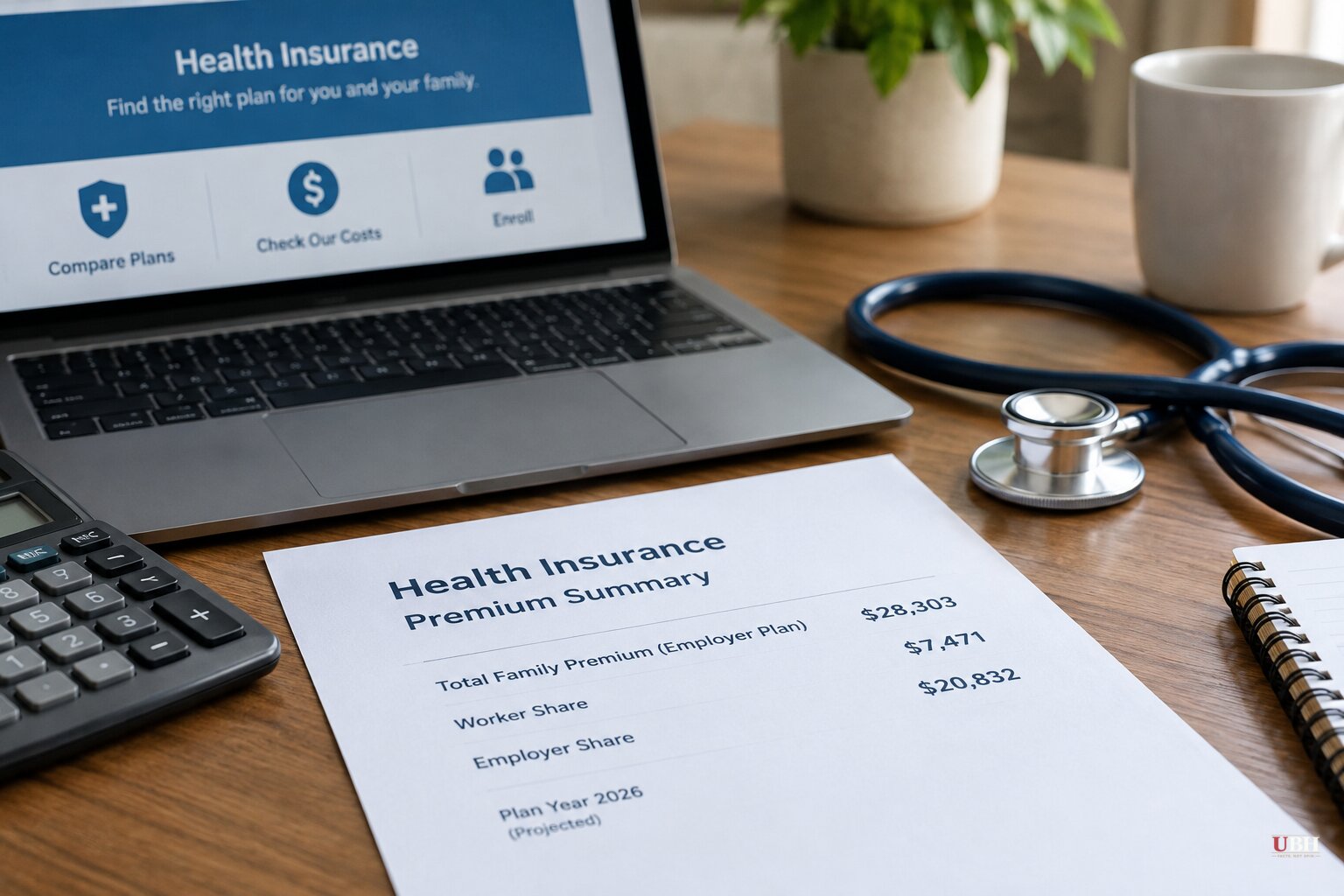
Workers' Share of Family Health Premiums Rose 9% to $7,471 in 2026 While Wages Grew 3.7%
Health coverage costs rose again this year, and workers are covering a bigger slice of them.
KFF's 2026 Employer Health Benefits Survey, published Oct. 22, found the average annual premium for employer-sponsored family coverage hit $28,303, up 5% from 2025. Single coverage averages $9,804. The survey drew on 1,937 interviews with non-federal public and private firms.
Workers' own contribution to family coverage rose faster: $7,471 a year, up $621 or 9%. Wages grew 3.7% over the same stretch, according to the American Action Forum's Michael Baker.
"The fact that workers' share of premiums went up almost three times faster than inflation in 2026 helps explain why" health costs rank among voters' top cost-of-living worries, KFF President and CEO Drew Altman told The New York Times.
Deductibles and retirement accounts
The average deductible for single coverage reached $1,955, up $69 from $1,886 a year earlier. Small firms are worse off: $2,624 on average, against $1,772 at large companies.
The squeeze is reaching savings. LIMRA's 2026 Benefits and Employee Attitude Tracker, which surveyed 4,052 employees in January, found more than three-quarters of workers on employer plans saw premiums rise this year. For 17%, the increase topped 10%.
One in eight workers responded by cutting retirement contributions. "Even small reductions in retirement contributions can have significant long-term effects," said Kimberly Landry, LIMRA's research director of workplace benefits.
The pain is expected to continue. Marsh projects employer health benefit costs per worker will climb 8.2% in 2027, even after planned cost-control measures.
The ACA marketplace
People buying their own coverage face a steeper climb. A Washington Post analysis of finalized and proposed 2027 rates found marketplace premiums will typically jump around 15%. That would be a second straight year of double-digit increases.
Insurers cite labor shortages and the growing use of GLP-1 drugs, according to the Post's review of their filings.
Enrollment is already shrinking. Nearly 3 million people left the marketplace during the year that ended in early 2026, according to federal enrollment data. KFF counted about 20.5 million enrollees by June. The Post reports roughly another 5 million could lose coverage by the end of 2026.
The enhanced federal subsidies expired at the start of this year under a Republican-majority Congress. They were a central issue in last year's extended government shutdown. Democrats have talked about restoring them and expanding Medicare if they win back Congress, the Post reports.
In Florida, Miami-Dade resident Cat Jaramillo said her monthly premium went from a little over $180 to more than $1,000, and she went uninsured this year. Florida lost 450,000 ACA enrollees in 2026, according to data cited by WLRN.
Consumer advocates say state regulatory filings show average 2027 increases of 10% for individual plans and nearly 13% for small group plans. Sophia Tripoli of Families USA said her group has asked federal candidates: "What will you do to hold healthcare corporations accountable for high costs?"
Insurer profits and the cost of care
Americans for Limited Government, in sponsored content, points to UnitedHealth Group. It says the company reported third-quarter net profit of $4.11 billion, up from $2.35 billion a year earlier, and about $12 billion in profit for 2025. The group argues that families face higher bills while the industry's biggest player rebounds.
The same piece says UnitedHealth has cut Medicare Advantage membership by 935,000 since the end of 2025 and trimmed benefits as it focuses on margins. These figures come from the advocacy group. UnitedHealth's own response is not in the material gathered here.
The American Action Forum frames the problem differently. Baker argues that proposals shifting who pays, whether employers, workers, insurers or taxpayers, "do little to contain the pressures driving premiums higher." If the cost of care keeps rising, he writes, lowering one party's share leaves another with a larger bill.
He cites a Health Affairs study of Blue Cross Blue Shield of Massachusetts. Commercial spending per member grew 11.8% in the fiscal year ending June 2025. Inflation-adjusted prices rose just 1.3%, utilization rose 4.8%, and retail prescription drug spending rose 21.7%, partly from GLP-1 use. That study covers one insurer, not the nation.
A Phoenix Center analysis of five large insurers found a 1% rise in claims was associated with roughly a 1% rise in premium revenue over time. The analysis does not isolate utilization or explain any individual plan's premium.
Both arguments rest on real numbers. Subsidies move the bill between payers. Insurer profits are one line in a system where claims drive premiums. The data cited here does not settle which matters more to a family's costs.
What comes next
ACA open enrollment begins Sunday, Nov. 1. Florida's window runs through Jan. 15, 2027. Voters go to the polls Tuesday, Nov. 3. Whether the expired subsidies come back depends on who controls Congress afterward. Employers will see the 2027 renewals arrive first.
Sources used for this briefing
7 links from 7 independent newsrooms (syndicated copies of the same report count once)
These are the sources it draws on, linked so you can verify.


