
Unbiased headlines. Facts, not spin.
Every story is an unbiased news briefing written from 110+ sources across the spectrum — sources linked so you can verify it yourself.
 health
Major Story (7/10)
Event date: June 2, 2026
health
Major Story (7/10)
Event date: June 2, 2026
'Wolverine' Peptide Backed by RFK Jr. Sees Confirmed Use Rise 33-Fold Since 2020, Study Finds
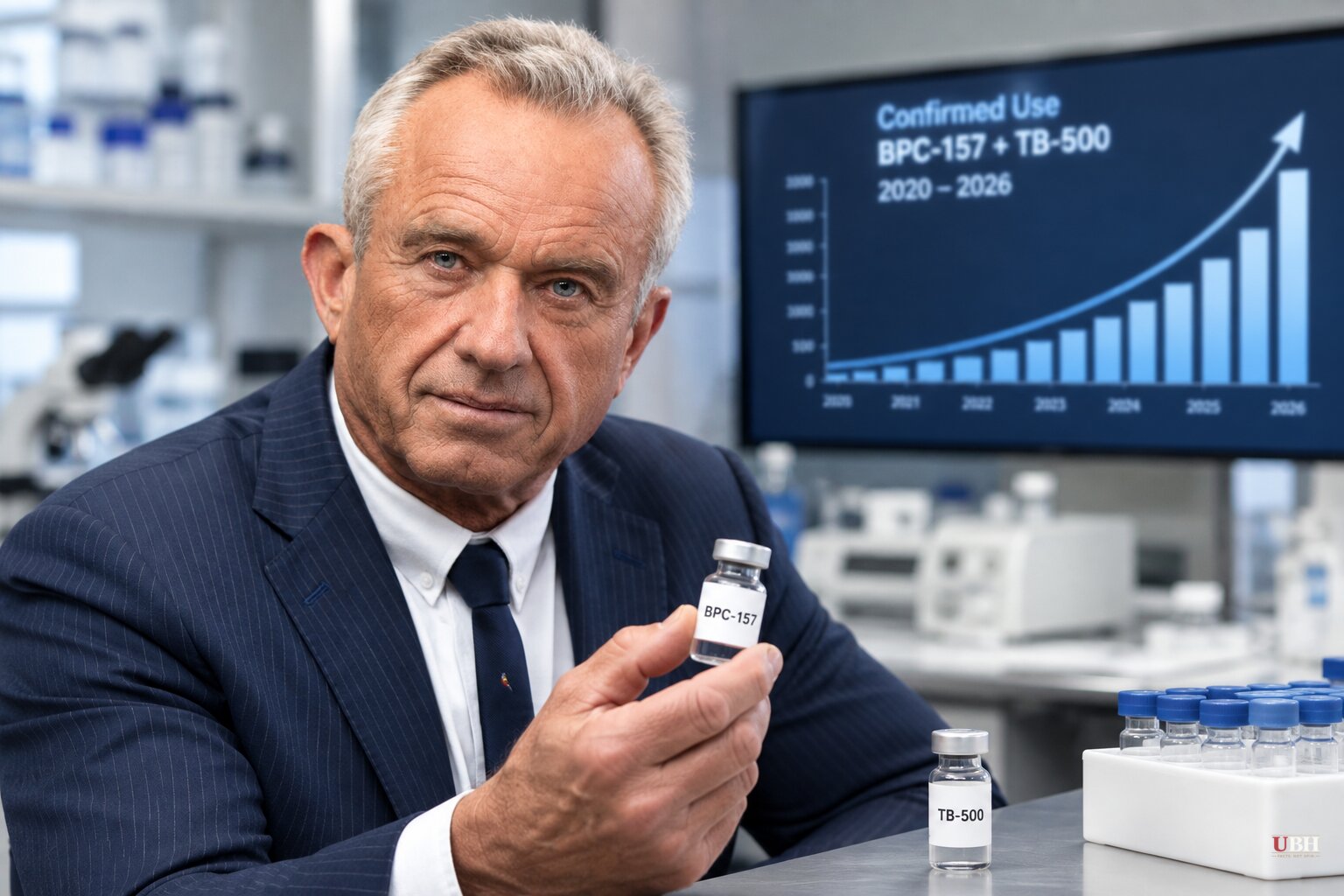
A peptide with no FDA approval, no National Drug Code, and thin human safety data is spreading fast through American medicine cabinets, and the man running the country's health agency is one of its biggest boosters.
A new analysis from data analytics firm nference, led by researcher Venky Soundararajan, reviewed more than 15 million medical records and found 1,039 patients whose doctors had manually documented use of BPC-157. The number of newly confirmed users rose 33-fold between 2020 and 2026, according to the study, first reported by Reuters and covered by CTV News.
BPC-157 is often stacked with a second peptide, TB-500, in a combination fans online call the "Wolverine stack," a nod to the Marvel character's rapid healing power. It is marketed for pain relief, injury recovery, and performance enhancement, fueled heavily by social media claims that are not backed by controlled human trials.
Health Secretary Robert F. Kennedy Jr. has publicly backed the compound. In July, an FDA advisory panel voted to allow pharmacy compounding of BPC-157, a move Kennedy encouraged, according to CTV News. The FDA has not yet issued a final decision. The agency had previously restricted compounding of the peptide specifically because of what it called significant safety risks and insufficient human data.
The money at stake is real. Analysts cited by CTV News estimate BPC-157 and related peptides could become a $2 billion to $3 billion market if the FDA legitimizes compounding.
Who's actually taking it, and why
Of the 644 patients whose reasons for use were documented, people took BPC-157 for everything from sports injuries and chronic pain to gastrointestinal disorders. It was most often started to manage pain or GI symptoms, and most commonly obtained from a compounding pharmacy or a gray-market peptide vendor, not a standard pharmacy with FDA oversight.
The user profile is shifting too. The share of new users who were male rose from 57% in 2020 to 70% in 2026, while the average age dropped from 55 to 49 over the same period. Among the 972 users with race recorded, 96% were white.
Response to treatment was documented for only a third of patients. Some physician notes described symptom improvement, but the study authors said the gap in data underscores how little is actually known about whether BPC-157 works or is safe. When patients stopped taking it, the most common reason was that their doctor told them to. Others cited adverse effects, including neuropsychiatric, dermatologic, and gastrointestinal symptoms, according to CTV News' reporting on the analysis.
Soundararajan was blunt about the blind spot in the data: "Most likely, very few doctors are even asking their patients, 'Are you taking BPC-157?'" That means the true scale of use is almost certainly higher than what shows up in medical records.
The case for leaving people alone, and why the FDA isn't there yet
There's a fair argument on the other side of this. People in chronic pain who feel let down by conventional medicine, or who can't afford or tolerate approved treatments, have a legitimate interest in trying alternatives on their own dime. Kennedy's broader push at HHS has framed loosening restrictions on compounds like this as giving Americans more control over their own health decisions, consistent with a philosophy that adults should be free to make informed choices about their own bodies.
But "informed" is the key question, and that's where the logic breaks down. The FDA's own prior restriction on BPC-157 compounding wasn't bureaucratic foot-dragging. It was a response to insufficient human safety data. That hasn't changed. A University of Utah researcher, Flynn McGuire, noted the new study itself lacks standardized data and said randomized controlled trials are still needed to determine whether BPC-157 produces any clinically meaningful benefit at all.
Nobody, including the researchers documenting its rapid spread, can currently say with confidence that BPC-157 works or that it's safe at scale. The FDA's Adverse Event Reporting System has already logged reports linked to the compound.
The FDA's decision on whether to formally allow pharmacy compounding of BPC-157 is still pending. Until it rules, gray-market vendors and compounding pharmacies will keep selling a substance the government's own health secretary is promoting, without the clinical trials that would tell doctors and patients whether it actually does what the internet says it does.
Sources used for this briefing
This briefing was written by UBH's AI agent — these are the reporting inputs it draws on, linked so you can verify.


