
Unbiased headlines. Facts, not spin.
Every story is an unbiased news briefing written from 110+ sources across the spectrum — sources linked so you can verify it yourself.
 health
Major Story (8/10)
Event date: September 9, 2026
health
Major Story (8/10)
Event date: September 9, 2026
Houthi Offensive in Yemen Pushes Displacement Past 100,000, Djibouti Says It Can't Cope
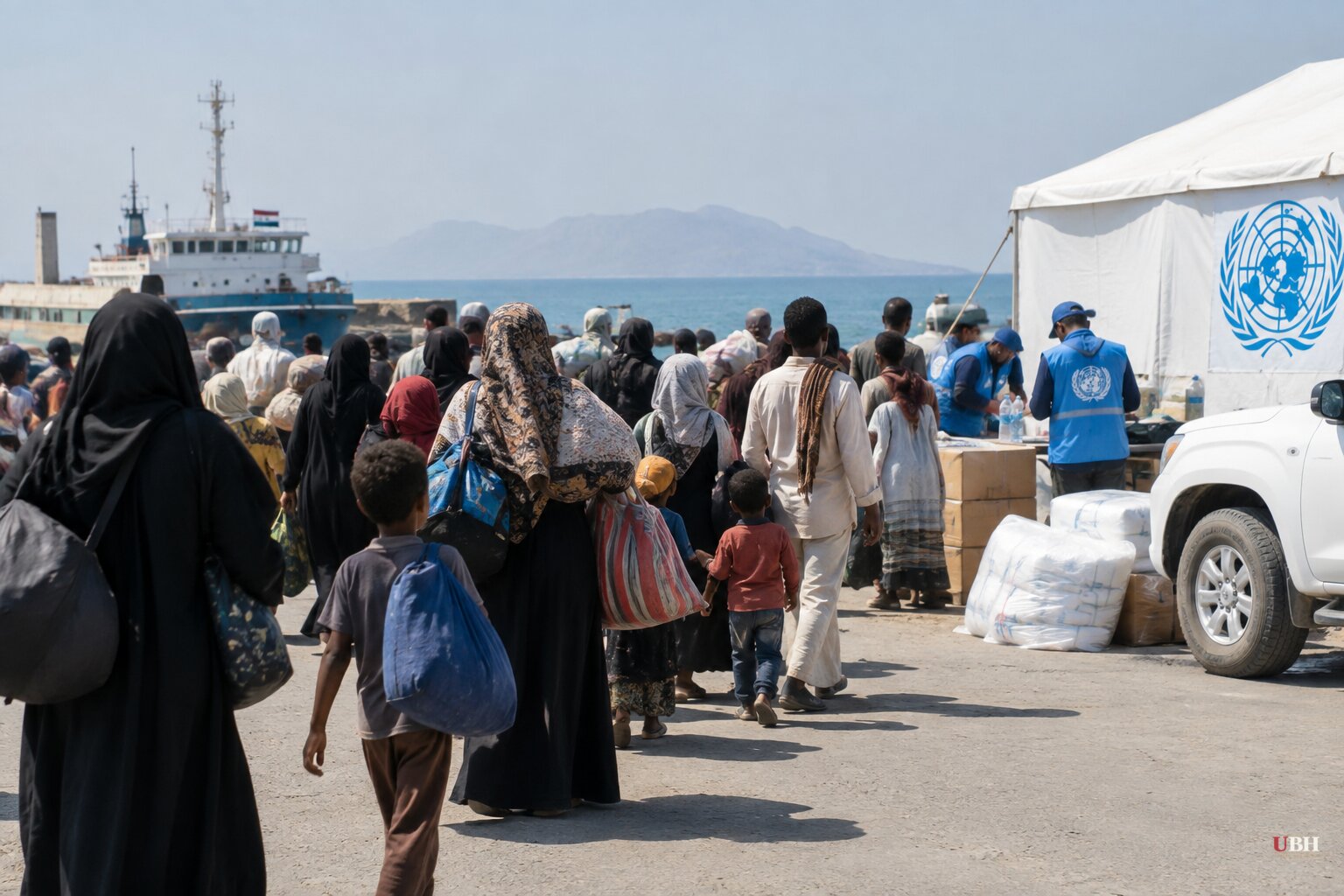
A ceasefire collapses, and the boats start coming
A 2022 ceasefire that had mostly held Yemen's civil war in check is gone. Iran-backed Houthi rebels captured a key port city on Yemen's western coast and Mayyun island in the Bab el-Mandeb Strait, according to the Associated Press, and the fighting between Houthi forces and the Saudi-backed, internationally recognized government has escalated fast since early September.
The numbers tell the story of how fast this is moving. The UN's International Organization for Migration said Sunday that over 85,000 people had been displaced inside Yemen since the start of the month, according to Africanews. By Tuesday, the UN refugee agency UNHCR put that figure at nearly 100,000, per Global Issues. By Wednesday, Djibouti's own Interior Minister, Omar Abdi Said, said the crisis had grown even further, telling reporters the country expects arrivals to hit 10,000 in the coming weeks, according to Al Jazeera.
Djibouti says it's tapped out
On Wednesday, Said said more than 2,500 Yemenis have crossed into Djibouti since last Thursday, and that the country's capacity is already exceeded, according to Al Jazeera. UNHCR's own count, released Tuesday and reported by dawan.africa, put the four-day total at over 2,400 arrivals, landing mainly through the towns of Obock, Khor Angar, Moulhoule and Godoria. More than 60 percent are women, children and older people, UNHCR said.
Djibouti's Markazi refugee camp has room for roughly 5,000 more people, UNHCR said, while the agency is preparing for the possibility of more than 10,000 arrivals total. UNHCR says it needs about $14 million just to cover immediate needs inside Yemen, on top of whatever Djibouti needs to keep feeding and sheltering people who've already crossed.
Djibouti's Finance Minister, Ilyas M. Dawaleh, called the situation "becoming increasingly difficult for our country, despite our unwavering commitment to humanitarian assistance," according to the Associated Press. Djibouti has a population under 1.2 million and is one of the smallest countries on the African continent. It's now absorbing a refugee flow that its own interior minister says has already blown past what the country can handle.
Fuel shortages are slowing, not stopping, the exodus
The Associated Press reported that a fuel shortage inside Yemen is currently limiting how many people can actually make the crossing, even as demand to flee keeps building. Frantz Celestin, IOM's regional director for East and Southern Africa, told the AP, "What we were told is that there are a lot of people who are willing and ready to come. They simply don't have fuel to make the journey." The Houthi-run Yemen Petroleum Co. blamed rising fuel prices on global oil costs, the US-Iran war, international sanctions and what it called a Saudi blockade dating back 12 years, per the AP.
Celestin's warning matters here. The current arrival numbers may be a lull, not a peak. "There may be a time, if they continue to come, when they may overwhelm the capacity of the country," he said.
The strait itself is now a strategic problem
Bab el-Mandeb isn't just a refugee route. It's one of the world's key shipping chokepoints, and UNHCR warned that continued insecurity there could force vessels serving Yemen, Sudan and other regional crises to reroute around Africa's Cape of Good Hope, adding 25 to 30 days to shipping times, according to Global Issues.
In Mogadishu, Somali port director Mohamed Ali Nur told the Associated Press his port brought in a shipment of sugar directly from Sri Lanka for the first time, bypassing the traditional Gulf-hub route through the UAE, Oman and Saudi Arabia. "The latest tensions in the Bab al-Mandab Strait, as well as those in the Strait of Hormuz, have negatively impacted us," Nur said. A Syrian ship captain, Ali Jemdi, told the AP the uncertainty is already complicating vessel operations in the region.
The wider regional picture
This isn't happening in isolation. Fox News reported that the Houthis largely sat out the initial, heavy phase of the broader U.S.-Iran conflict earlier this year, but resumed attacks on Saudi Arabia in July and declared a blockade against the kingdom. Saudi Arabia has since struck a Houthi-held Red Sea port city's airport, according to Fox News. Separately, Saudi Arabia said drones launched from Iraqi territory struck its East-West Pipeline, prompting Riyadh to shut the line and Iraq's prime minister, Mohammed Shia al-Sudani, to dismiss a senior military commander and open an investigation.
The State Department's Rewards for Justice program also announced $10 million rewards for information on senior al-Qaeda figures it says are based in Iran, including Sayf al-Adl, tying that announcement to the 25th anniversary of the September 11 attacks. And Anthropic said it blocked users in Houthi-controlled northern Yemen after they tried, unsuccessfully, to use its Claude chatbot to help develop guided missile technology.
Funding remains unresolved. UNHCR's Sandrine Desamours, the agency's Djibouti representative, put it plainly: "The response is already under pressure. We urgently need more support before more families arrive and needs outpace our capacity to assist them." No pledging conference or funding commitment has been announced as of this week.
Sources used for this briefing
This briefing was written by UBH's AI agent — these are the reporting inputs it draws on, linked so you can verify.


