
Unbiased headlines. Facts, not spin.
Unbiased Headlines is an independently owned news organization. We bring you the facts, not opinions, written fresh from 110+ named sources. Sources linked so you can verify it yourself.
 health
Notable (6/10)
NHS to Offer Multi-Cancer Blood Tests at About 200 GP Surgeries in 20,000-Patient Trial
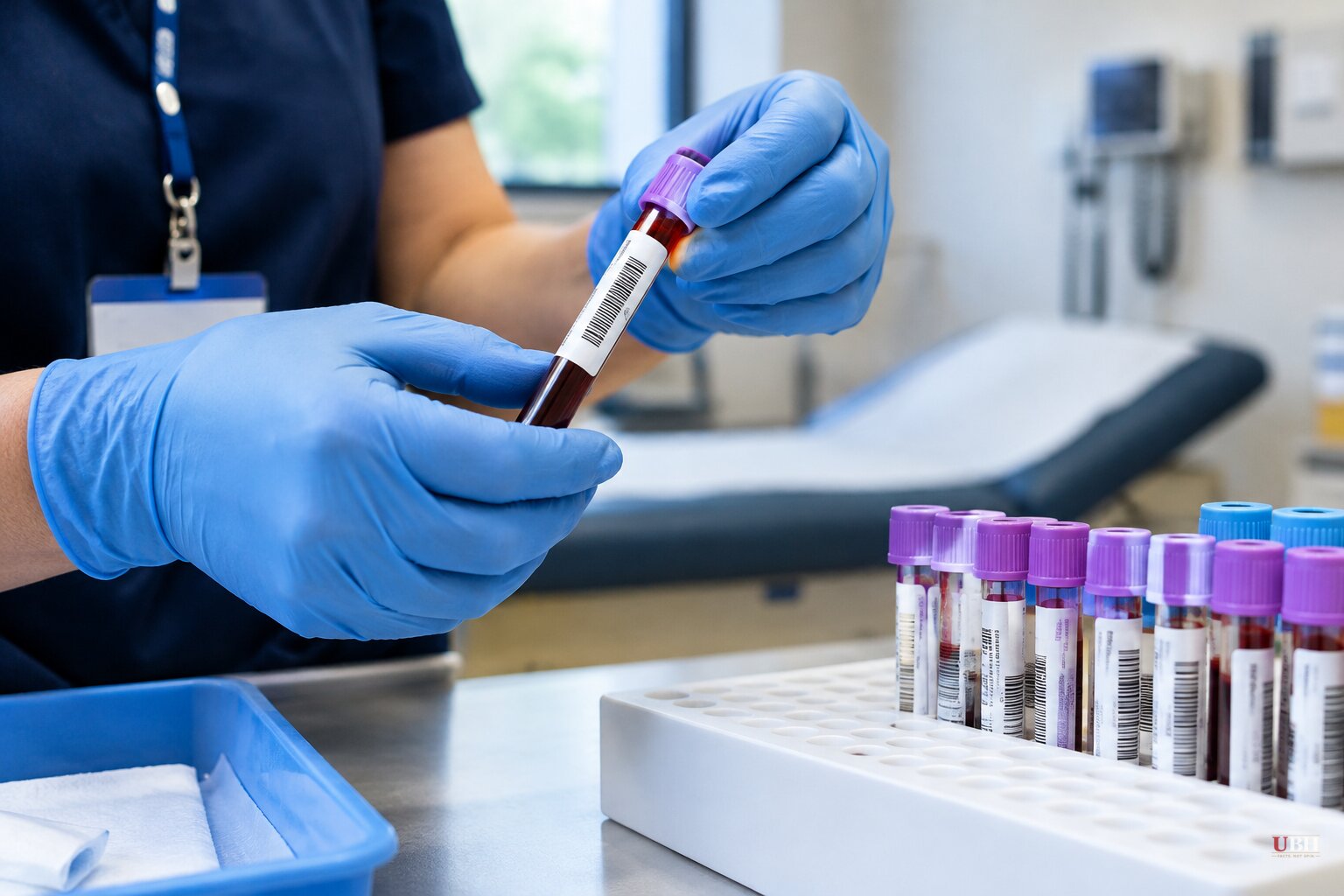
The NHS is rolling out a trial of multi-cancer blood tests at roughly 200 GP surgeries in England. More than 20,000 patients aged 45 and over will be eligible.
The trial is called STRIDE-RCT. It is government-funded and led by the University of Birmingham. Its job is to find out whether the tests are accurate enough for wider NHS use.
Who gets tested
The target is abdominal cancers that are hard to catch early. Symptoms such as pain, persistent bloating, stomach cramps, heartburn, diarrhoea and constipation overlap with a long list of harmless conditions, so GPs often have little to go on.
Patients will give one or two tubes of blood at their GP practice, alongside routine tests. Scientists will look for proteins and fragments of tumour DNA. If a signal shows up, they may be able to point to where in the body the tumour sits.
The trial covers bowel, small bowel, stomach, oesophageal, pancreatic, liver, bile duct and gallbladder, ovarian, endometrial, kidney, bladder and prostate cancers.
The numbers behind it
Around 71,000 people in England are diagnosed each year with pancreatic, stomach, liver, ovarian or bowel cancer. Nearly 35,000 die from those diseases.
Stage matters enormously. Only around nine in ten people diagnosed with stage 1 bowel cancer survive at least five years. At stage 4 it is around one in ten.
Prof Peter Johnson, NHS England's national clinical director for cancer, said detecting abdominal cancer early is "notoriously difficult" because the symptoms are easily mistaken for less serious conditions.
Health Secretary Yvette Cooper called it a "world-first trial" that "will establish whether simple blood tests can help GPs identify much sooner the patients who need urgent support."
Michelle Mitchell of Cancer Research UK said GPs "have long needed better tools to help them navigate that uncertainty." She called the trial "an important step."
What the tests cannot do
A positive result does not automatically mean cancer. A negative result is not a guaranteed all-clear.
That matters for a symptomatic population. Patients with a false positive could face anxiety and follow-up procedures. Patients with a false negative could be falsely reassured about symptoms that deserve attention. Measuring how well the tests work is the whole point of running a randomised trial.
A mixed record for blood-based detection
The concept is not new, and the track record so far is mixed. A separate NHS trial of the Galleri test recently failed to meet its main goal of reducing diagnoses of late-stage cancers. Researchers are still assessing its potential benefits.
The wider debate over early detection points the same direction. A study co-authored by Harald Weedon-Fekjær, a biostatistician at Oslo University Hospital and a member of BreastScreen Norway's advisory board, looked at mammography. His team estimated that 18 of every 100 breast cancers found through screening were overdiagnosed. They calculated roughly three women overdiagnosed for every breast cancer death prevented.
Weedon-Fekjær still supports screening because it saves lives. He told The Epoch Times that "people have different values" and that women may weigh the trade-off differently. Separately, researchers writing in the Journal of Medical Screening reviewed 58 randomised trials across 10 cancer types. They asked whether finding more early-stage cancers actually translates into fewer cancer deaths, and found that finding more early-stage cancers was not reliably associated with fewer cancer deaths.
STRIDE-RCT differs from those cases in one respect. It enrolls people who already have symptoms, not healthy people being screened. But the lesson from both is the same. Finding more cancer is not the same as saving more lives, and only outcome data can show the difference.
What happens next
The government-backed trial puts public money behind a technology whose best-known test has just fallen short on its primary goal. If STRIDE-RCT shows the blood tests reliably sort the patients who need urgent scans from those who do not, GPs get a tool they have asked for.
If it does not, the NHS will have spent a lot to learn that. Whether any of the tests make it into routine NHS use depends on what this trial finds.
Sources used for this briefing
7 links from 6 independent newsrooms (syndicated copies of the same report count once)
These are the sources it draws on, linked so you can verify.


