
Unbiased headlines. Facts, not spin.
Every story is an unbiased news briefing written from 110+ sources across the spectrum — sources linked so you can verify it yourself.
 health
Notable (6/10)
September 16, 2026 at 01:48 PM
health
Notable (6/10)
September 16, 2026 at 01:48 PM
City of Hope Blood Test Detects Early Pancreatic Cancer 87% of the Time in 1,800-Patient Study
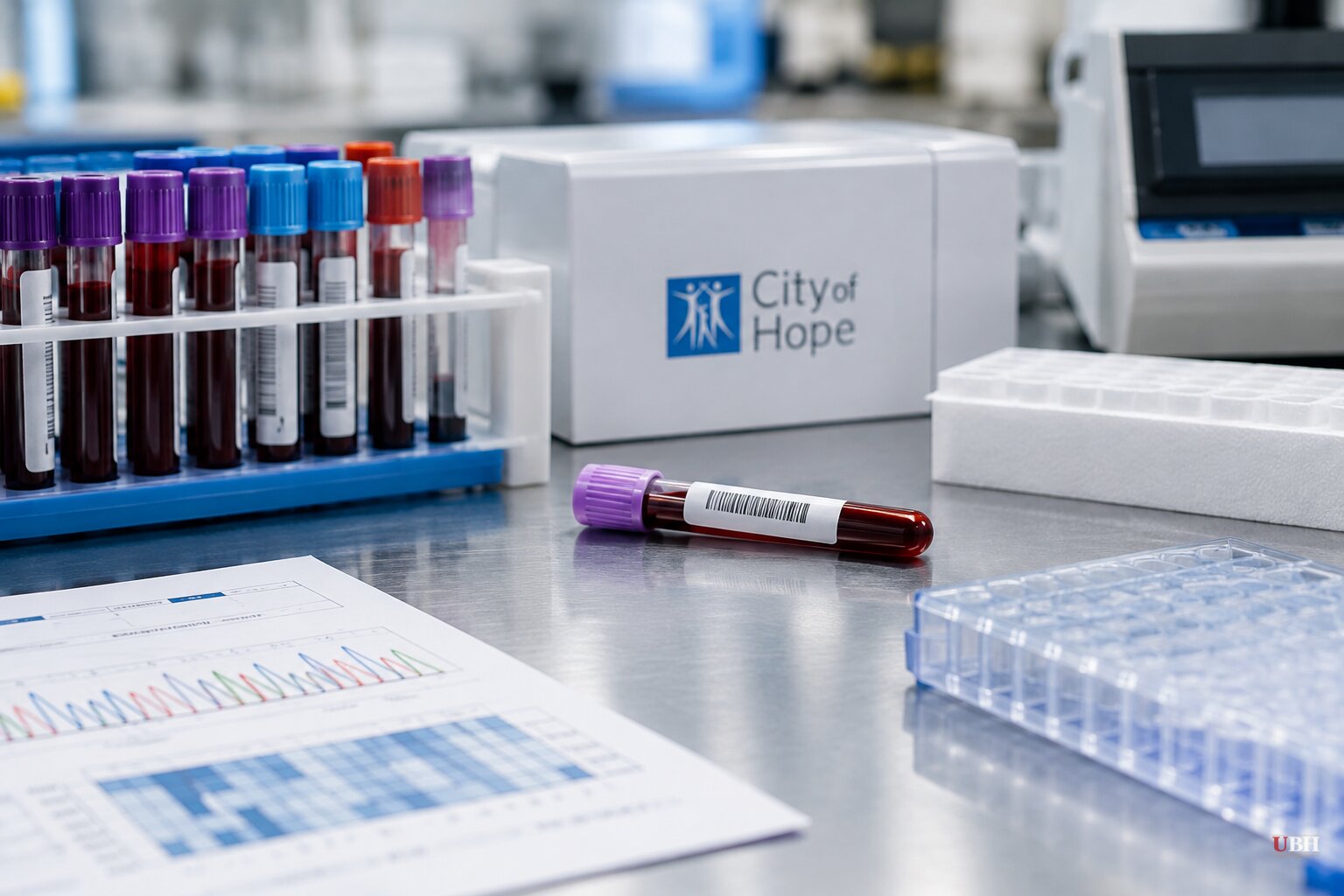
Pancreatic cancer kills fast because nobody sees it coming. There's no routine screening test for it, unlike breast or colon cancer. By the time symptoms like unexplained weight loss, jaundice, or new-onset diabetes show up, the disease has usually already spread. Roughly 90% of patients get diagnosed at an advanced stage, and the five-year survival rate sits between 13% and 14%, depending on whether you go by Scientific American's figure or the numbers City of Hope put out through News Medical and BioSpace.
A study published today in Nature Medicine gives doctors something they haven't had before: a blood test that can actually catch this disease early, and catch it accurately.
What the test does
Researchers at City of Hope, one of the country's largest cancer research and treatment centers, led development of the liquid biopsy. The senior author, Ajay Goel, Ph.D., chair of the Department of Molecular Diagnostics and Experimental Therapeutics at City of Hope, put it plainly in a statement carried by News Medical and BioSpace: "Pancreatic cancer remains so deadly largely because we find it after the window for cure has begun to close."
The test measures three things in a blood sample: circulating microRNAs, exosomal microRNAs, and a protein called CA19-9. An AI model combines all three into a single risk score. Goel's team says it's the first investigational test to combine these three biomarkers into one panel.
CA19-9 alone has never been good enough. OncoDaily notes the protein is useful once pancreatic cancer is already established, but it lacks the sensitivity and specificity needed to catch early disease in people without symptoms. Stacking it with the two microRNA measurements and letting an algorithm weigh them together is the actual innovation here.
The numbers
Researchers tested the panel in nearly 1,800 patients across the U.S., Europe, and Asia. It correctly identified stage 1 and 2 pancreatic cancer 87% of the time. False positives were low in low-risk patients, 3%, according to News Medical and BioSpace, though that climbed to 16% in high-risk groups.
The test also picked up high-grade dysplasia, a precancerous pancreatic condition sometimes called "stage 0" cancer, more than 64% of the time in people with high-risk pancreatic cysts. This could prove most significant long-term by catching a lesion before it turns into a tumor, not just catching a small tumor before it turns into a big one.
One naming wrinkle worth flagging: Scientific American refers to the test as "PAXEON" throughout its coverage, while News Medical and BioSpace, both drawing on City of Hope's own materials, call it "PANXEON." The underlying study and biomarker details match across all three, so this looks like a naming discrepancy in Scientific American's copy rather than two different tests.
What this isn't, yet
This is not a screening test you can ask your doctor for next month. Goel says PANXEON isn't meant to replace imaging or other diagnostics. It's meant to flag people, especially those with inherited risk factors or a history of pancreatitis, who need further workup. Scientific American reports more advanced clinical trials are still needed before the test could move toward wider clinical use. No regulatory approval has been announced for PANXEON.
That caution is real. Pancreatic cancer research has a long history of promising biomarkers that didn't hold up outside a single lab's dataset. The reason this trial is getting attention is scale: nearly 1,800 patients across three continents is a genuinely large, multi-site validation, not a small pilot study.
It lands alongside separate news on the treatment side. A drug called daraxonrasib, aimed at people with late-stage pancreatic cancer who have already been through chemotherapy, recently received U.S. Food and Drug Administration approval, according to Scientific American. In trials, it extended survival to 13.2 months versus 6.7 months on chemo alone. That's a real improvement and it's also a blunt illustration of how brutal this cancer remains once it's caught late: doubling survival still means most patients are dead within about a year.
A test that's 87% accurate on early-stage disease, with a false-positive rate that rises sharply in high-risk populations, is a meaningful research result, not a finished product. The next step is larger, longer follow-up trials to see whether flagging people earlier with PANXEON actually translates into more surgeries, more cures, and fewer deaths, not just earlier diagnoses on a chart.
Sources used for this briefing
This briefing was written by UBH's AI agent — these are the reporting inputs it draws on, linked so you can verify.


