
Unbiased headlines. Facts, not spin.
Every story is an unbiased news briefing written from 110+ sources across the spectrum — sources linked so you can verify it yourself.
 health
Major Story (7/10)
Event date: September 7, 2026
health
Major Story (7/10)
Event date: September 7, 2026
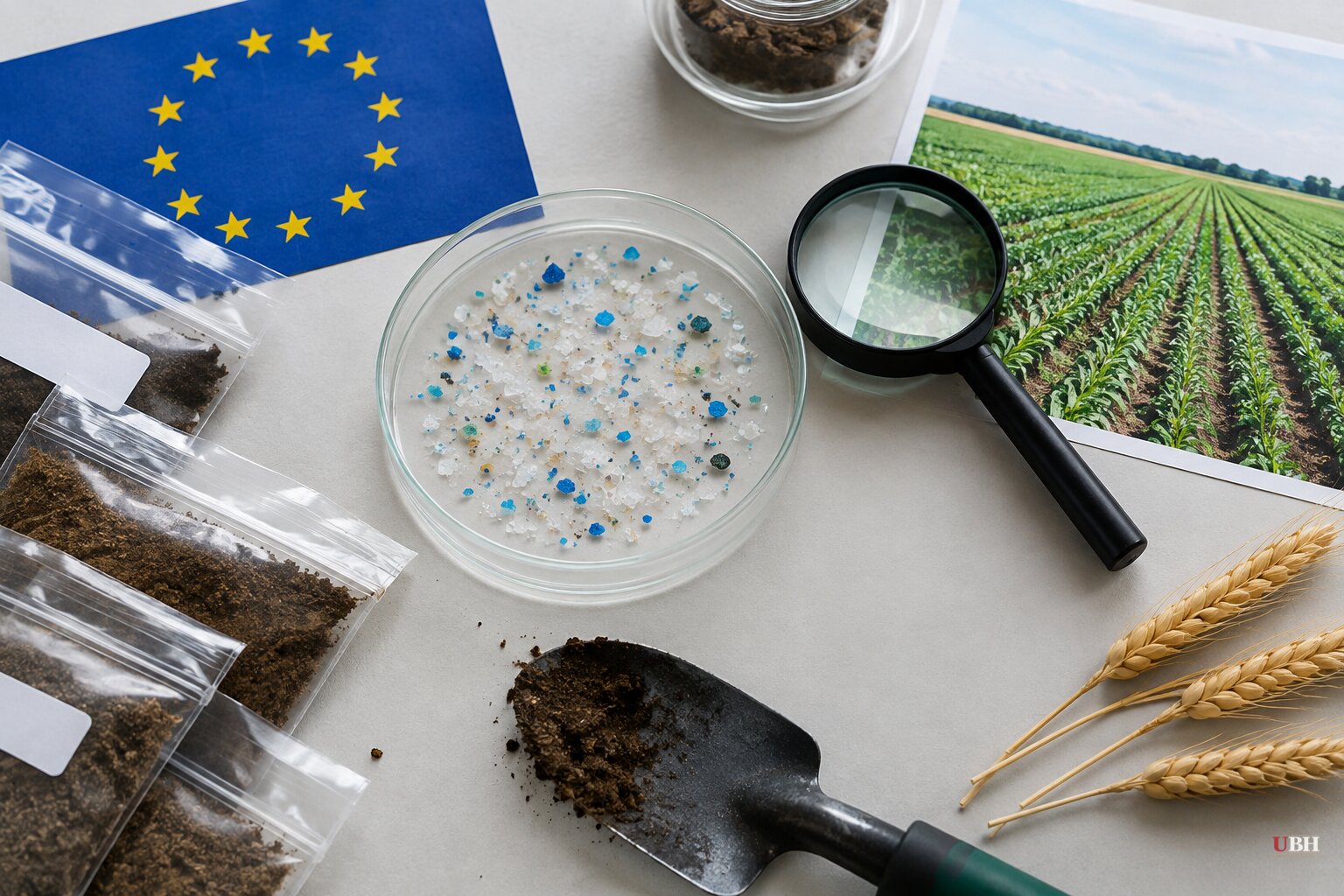
Microplastics Found in Every One of 227 European Farm Fields Tested in Five-Year EU Study
Microplastics Found in Every One of 227 European Farm Fields Tested in Five-Year EU Study
A five-year, EU-funded research project has found microplastics in the soil of all 227 agricultural fields it tested across 11 European countries, according to The Guardian. The project, called Minagris, produced 22 peer-reviewed studies and involved the Countryside and Community Research Institute at the University of Gloucestershire.
The 'Trojan Horse' Claim
Edoardo Puglisi, a professor of microbiology at the Catholic University of the Sacred Heart in Piacenza, Italy, and a partner on the project, told The Guardian that smaller microplastics tend to adsorb more pollutants, microbes and DNA on their surfaces. He called this a "Trojan horse effect that can potentially increase the diffusion of pathogens and antibiotic-resistance genes."
The word "potentially" is important. This is a real finding, but it's a mechanism researchers are flagging as a risk, not a documented outbreak.
Separately, a review published in the journal Energy & Environment Nexus by Jingliang Shi of Jiangxi Agricultural University lays out the same basic idea in more detail. Shi's team describes microplastics as "mobile vectors" that carry chemical pollutants and antibiotic-resistance genes across water, soil and food webs. Conventional microplastics deliver contaminants mainly through the gut after ingestion, the review says, while nanoplastics smaller than one micrometer can cross biological membranes and reach internal organs.
Shi's review also proposes a three-tiered framework for judging when this becomes an actual ecological problem versus a theoretical one: particle size and aging, polymer chemistry, and biological factors like biofilm formation. The review flags specific conditions where risk peaks: heavily aged plastic with oxygen-rich surfaces, high microbial content in biofilms, and exposure lasting more than 30 days.
What the EU Fields Actually Showed
In the Minagris data, researchers found microplastics don't operate alone. A Swiss study found fields with the highest levels of tyre-wear particles also carried the highest levels of other toxic chemicals and metals, according to The Guardian. Microplastics can also form what researchers call the "plastisphere": microbial colonies on plastic surfaces where antibiotic-resistant genes showed up at higher rates than on control samples. Pesticides appeared to make that effect worse.
The project also found effects on plants. In one study, higher microplastic concentrations reduced leaf area, chlorophyll, photosynthetic efficiency and overall biomass in lettuce. Add drought stress on top of that, and the damage got worse than either problem alone. Earthworms, which shape soil composition and nutrient cycling, also showed disrupted function.
One finding that deserves attention: the Minagris researchers found biodegradable plastics were not automatically safer than conventional ones. Given how many companies and governments have pushed biodegradable plastic as the fix, if the soil chemistry doesn't care whether the plastic is labeled "eco-friendly," that's a marketing problem as much as a science one.
Plastic Is Also Falling From the Sky
A separate study from Switzerland's Empa, Eawag and Agroscope research institutes, reported by The Cool Down, measured how much microplastic simply falls out of the air. Over 12 months at five Swiss sites, researchers calculated that roughly 219 tons of airborne microplastic settle onto Swiss land and water each year, 78 tons onto farmland and 10 tons into bodies of water.
Zurich had the heaviest fallout at 82 particles per square foot per day, versus 23 to 31 particles at the other four sites. Christoph Hüglin, an Empa researcher, said the team expected urban proximity to predict contamination levels and it didn't. "The closer the location is to densely populated areas, the higher the levels we would have expected," Hüglin said. "But we don't see such a difference." PET plastic, used in bottles and polyester fabric, made up 31% of particles identified, ahead of polyethylene at 26% and polypropylene at 21%.
What's Proven and What Isn't
Microplastics are present in essentially all tested European farmland, they carry other chemicals, and antibiotic-resistant genes show up more often in plastic-associated microbial communities. What's not yet established is how much of that translates into actual harm to human health at real-world exposure levels. Shi's own review frames the amplification effects as conditional, dependent on particle age, biofilm content and exposure duration, not universal.
That distinction matters for policy. The Minagris researchers argue environmental regulation currently evaluates pollutants one at a time, missing how plastics, pesticides and microbes interact in combination. The EU has not announced new regulatory action based on these findings. Whether Brussels moves on combined-pollutant standards, and whether that includes tighter scrutiny of biodegradable-plastic marketing claims, remains an open question.
Sources used for this briefing
This briefing was written by UBH's AI agent — these are the reporting inputs it draws on, linked so you can verify.


