
Unbiased headlines. Facts, not spin.
Unbiased Headlines is an independently owned news organization. We bring you the facts, not opinions, written fresh from 110+ named sources. Sources linked so you can verify it yourself.
 energy
Notable (6/10)
Event date: November 13, 2026 ·
Wildfire Fallout Threatens US Drinking Water for Years, Studies Find
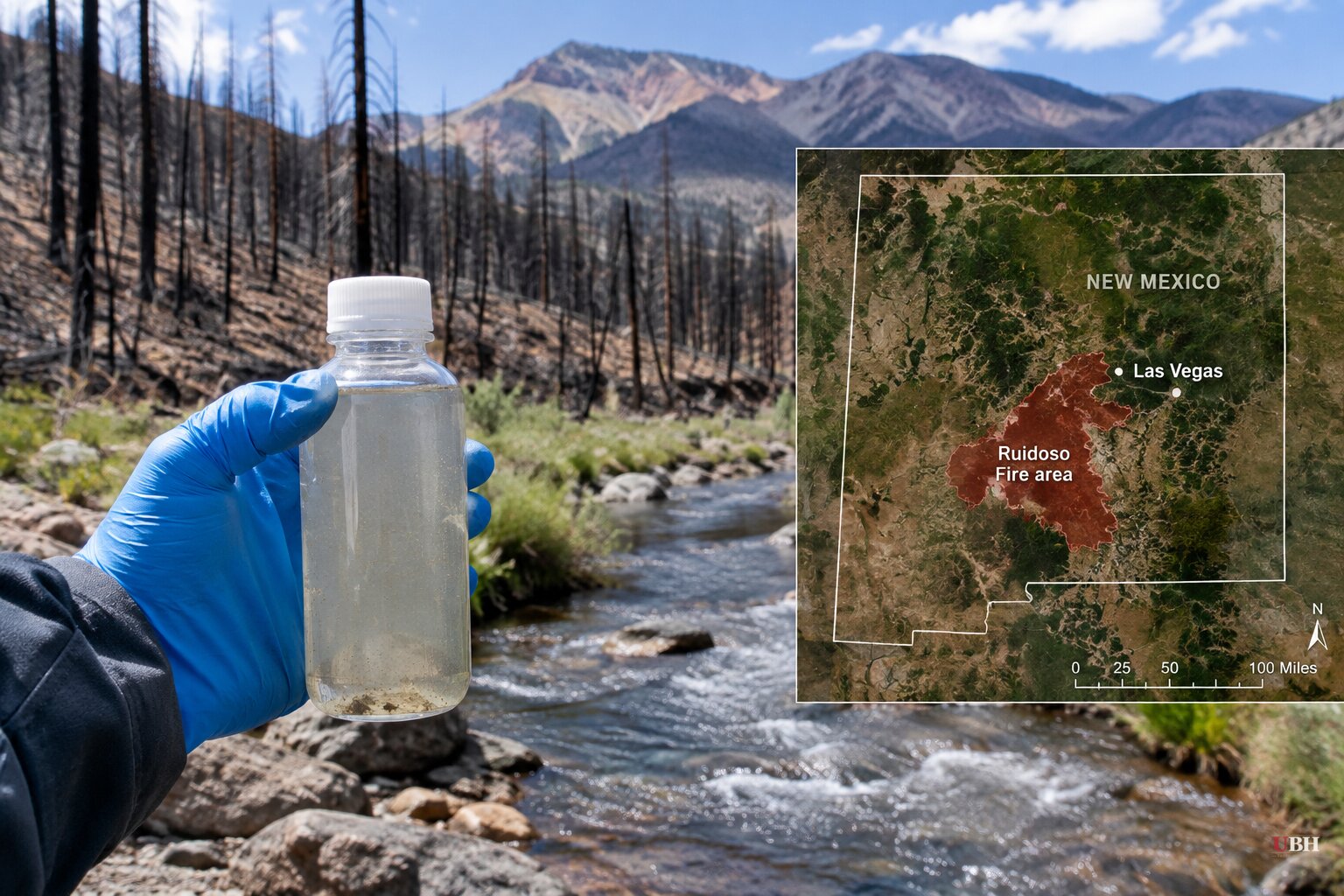
Wildfire damage doesn't end when the flames die. In the watersheds that feed American water systems, it can last for years.
New studies find that contamination from burned landscapes can linger in drinking water supplies for more than a decade. So far in 2026, the U.S. has seen 68,179 wildfires burning more than 14,000 square miles, roughly 9.5 million acres.
How a fire reaches the tap
After a fire sweeps through hillsides and forests, rain carries ash and organic matter into the streams that feed water treatment plants. Towns and cities both depend on those streams.
Carli Brucker, lead author of a University of Colorado Boulder study, said forested watersheds supply water to nearly two-thirds of U.S. municipalities. Her team looked at water quality in hundreds of burned basins and compared them with unburned ones. They found the impacts can last up to eight years.
Brucker said treatment plants that draw from streams and rivers typically handle high-quality water. Trees and soil act as a natural filter. Fires disrupt that, and she said they cause spikes in heavy metals.
Amanda Hohner, an assistant professor at Montana State University who studies wildfires and water quality, said wildfires are a natural part of forest ecosystems. What has changed, she said, is severity. More severe burns leave watersheds, the areas that capture, filter and regulate water flow, more vulnerable.
Garrett McKay, a Texas A&M civil and environmental engineering professor, said utilities are extremely concerned. They are calling experts like him for help finding different water sources or learning how to treat the organic matter now arriving at their plants.
Las Vegas, New Mexico: four years and counting
The clearest example is in San Miguel County. The Hermit's Peak/Calf Canyon fire contaminated the Gallinas River in 2022, and the City of Las Vegas, New Mexico, went without usable water for months.
In the four years since, the city has handed out bottled water and trucked in tanks from nearby towns. Meanwhile it has been collecting funds to build a new treatment plant.
Karen Pettine has owned the Hillcrest Restaurant for 50 years. She said the water problems forced her to close, sometimes for a week at a time.
"It's hard to run a restaurant without good water," Pettine said. "We used some paper plates at times. They brought in semi-truckloads of bottled water. You could pick up four cases at a time. The water situation is ongoing because when it rains, it floods and it brings dirty water down the stream."
The problem is not a single event. Every storm over burned ground can send a fresh load of sediment downstream.
Mayor David Romero said climate change has made things that used to be reliable less predictable. "It's a scary situation that we're all going to encounter," he said.
What is driving the fires
The 2026 reporting ties bigger and more frequent fires to climate change and increasingly strong El Niño events that intensify drought. Romero makes the climate argument directly. Hohner's research focus is the link between fire severity and watershed vulnerability.
The numbers on the ground are harder to dispute than the causes. Tens of thousands of fires in a single year, and millions of acres burned, mean more watersheds with scorched soil and more utilities facing water they were never built to treat.
Who pays
The bill lands locally. Small and mid-sized towns have to find different water sources or add treatment capacity, and they often do it while taking hits to local business. Las Vegas, New Mexico, is the example: four years in, it is still raising money for a plant.
The city has not said when that plant will be finished. Until it is, residents there are dependent on stopgaps, and each heavy rain over the burn scar can bring dirty water back down the Gallinas.
Sources used for this briefing
6 links from 6 independent newsrooms (syndicated copies of the same report count once)
These are the sources it draws on, linked so you can verify.


