
Unbiased headlines. Facts, not spin.
Unbiased Headlines is an independently owned news organization. We bring you the facts, not opinions, written fresh from 110+ named sources. Sources linked so you can verify it yourself.
 energy
Low Interest (3/10)
Event date: November 12, 2026 ·
West Virginia Supreme Court Rules 1902 Deed Reserved One-Sixteenth of Oil and Gas, Not One-Half
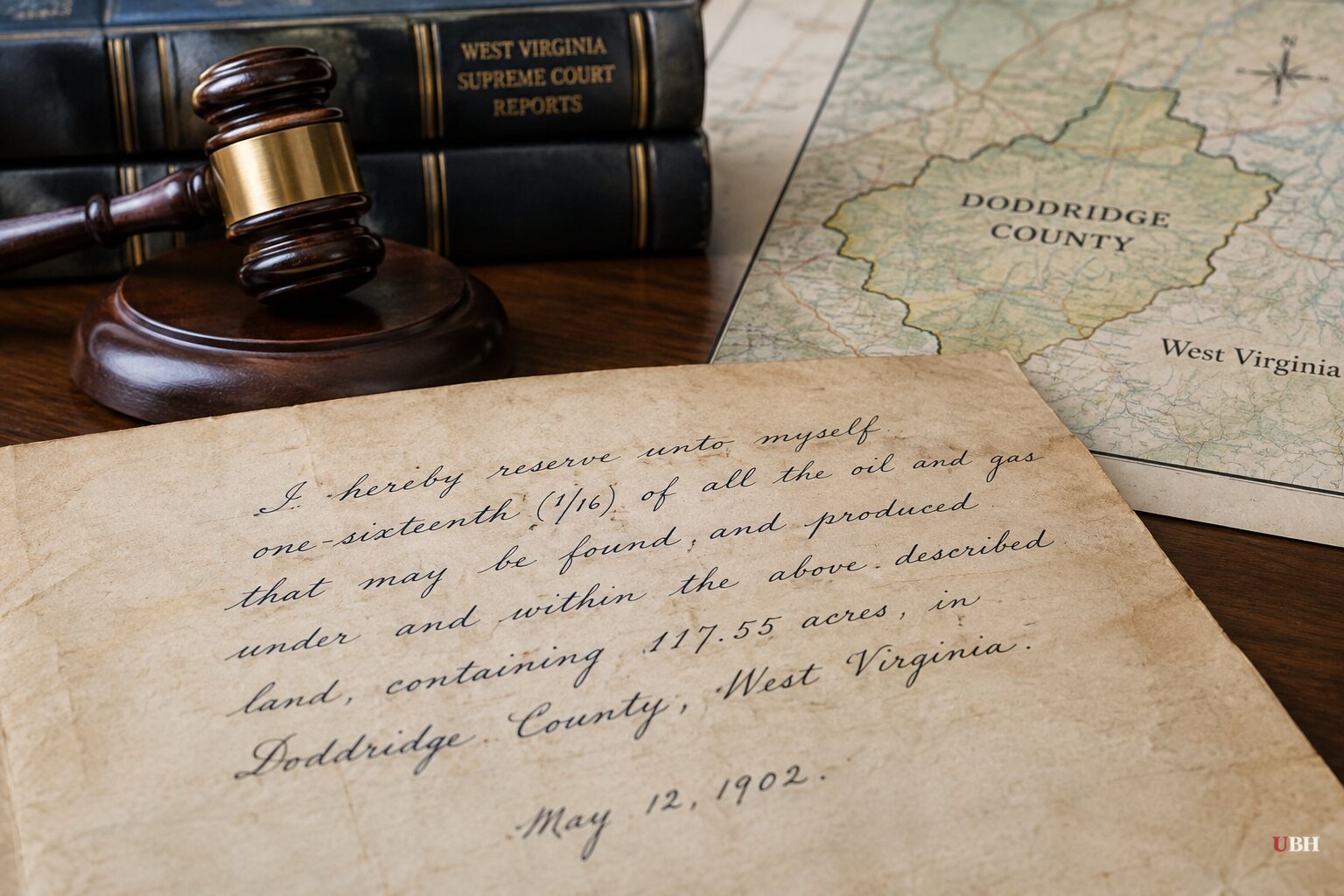
A clerk's handwriting from April 1, 1902, just decided who gets paid for oil and gas under 117.55 acres of West Virginia.
The Supreme Court of Appeals of West Virginia issued its decision on Nov. 12, 2026, in Severin POA Group, LLC v. Nicholson. It upheld an earlier appellate ruling that read the original deed according to its exact words. The claimants wanted one-half of the oil and gas. The court gave the reserved interest one-sixteenth.
The 1902 deed
F.W. Severin wrote the deed on April 1, 1902. At the time he owned the surface, oil, gas and mineral rights across a 224-acre property in Doddridge County.
He transferred 117.55 acres to L.D. Nicholson and kept part of the mineral rights for himself. The key language is a handwritten reservation. Severin retained "the one sixteenth of all the oil and gas in and under said land."
Those words sat in the county record for more than a century. They became the center of a lawsuit only after gas and oil production began beneath the tract.
From lease to lawsuit
The property's oil and gas rights were leased to Rockwell Petroleum Company in 1977. The lease was later assigned to Antero Resources Corporation.
In 1999, Nicholson's successors transferred the property to Earl J. Nicholson and Joyce A. Nicholson. When Antero began producing and selling oil and gas from beneath the tract, the question of who owned what share of it moved from a historical footnote to a matter of royalty money.
The case carries the name of the Severin POA Group, LLC. The families on both sides trace back to the two men who signed the deed more than 120 years ago.
What the court decided
The state's top court sided with the plain text. The deed says one-sixteenth. The court did not accept a reading that would have turned that reservation into a one-half share.
The ruling came 124 years after the deed was written. It affirms the decision of the lower appellate court rather than overturning it.
The arithmetic is simple. One-half is eight times one-sixteenth. For a tract where wells are producing and the gas is being sold, that gap decides who collects the larger share of the income.
Why old deeds keep landing in court
Mineral ownership in states with long drilling histories often rests on documents written by hand a century or more ago. Many of them use short, informal phrases. Those phrases are now being tested against modern horizontal drilling and large production volumes.
A 1902 landowner could not have pictured the economics of a modern gas well. But the court's approach, as described in the ruling, is that the words on the page control, whatever the parties might have meant or later wished they had written.
For landowners and the families who inherit mineral interests, the practical lesson is old and unglamorous: read the deed, and read it carefully, before production starts.
What remains open
The decision settles the one-sixteenth reading of the reservation. What it means in dollars depends on how much oil and gas Antero has produced and sold from beneath the 117.55 acres, and on how the royalties are divided among the successors to the two families. Those figures were not part of the court's announced holding.
Sources used for this briefing
1 link from 1 independent newsroom (syndicated copies of the same report count once)
These are the sources it draws on, linked so you can verify.


