
Unbiased headlines. Facts, not spin.
Every story is an unbiased news briefing written from 110+ sources across the spectrum — sources linked so you can verify it yourself.
 defense
Breaking / Critical (10/10)
July 3, 2026 at 01:54 PM
defense
Breaking / Critical (10/10)
July 3, 2026 at 01:54 PM
Waltz Confronts Iran's UN Envoy Over Bahrain Strikes as Khamenei Six-Day Funeral Opens in Tehran
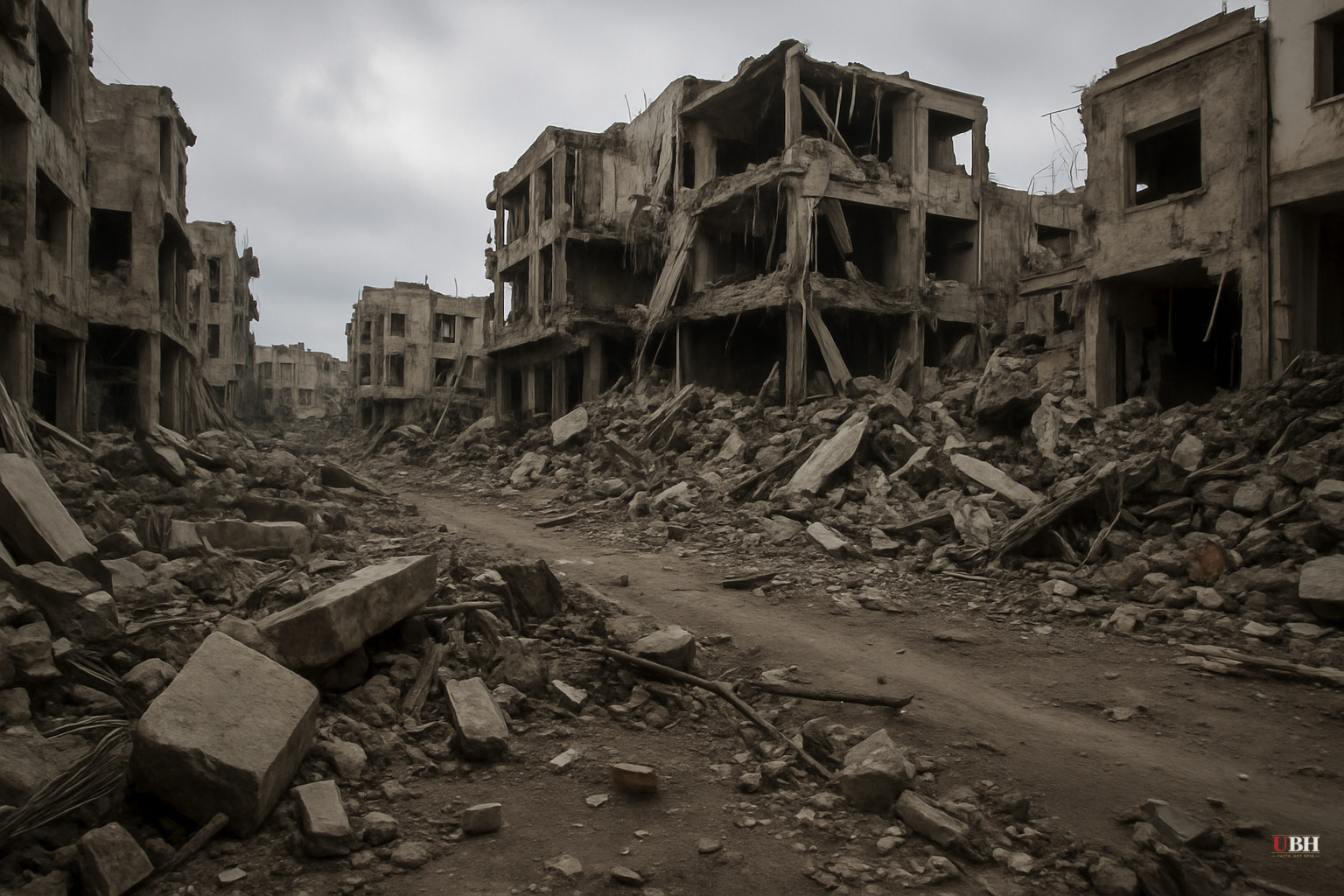
Since the February U.S.-Israeli strike that killed Supreme Leader Ali Khamenei, the conflict has moved through ceasefire talks, Hormuz access disputes, and a Security Council confrontation. All this has occurred while Iran has not yet buried its supreme leader.
Waltz vs. Iravani at the Security Council
U.S. Ambassador Mike Waltz confronted Iranian envoy Amir Saeid Iravani at an emergency UN Security Council session Thursday, July 2, after Iravani argued the council had no business convening and accused multiple members of spreading lies.
Waltz, a retired Army general and former congressman who served 27 years in the military, didn't let it pass. "This is not Tehran," he told Iravani directly, according to the Daily Wire's account of the session. "This is the United States of America. This is the United Nations Security Council. You will not silence this body."
He then held up photographs and demanded Iravani respond specifically: was the Arab family in Bahrain whose home was struck by an Iranian Shahed drone lying? Were the tourists at the Crowne Plaza Hotel lying? Were the first responders whose headquarters was deliberately targeted lying?
Iravani responded by calling Waltz's remarks "lies and disinformation." He did not address the photographs.
What Bahrain Laid Out
Bahrain's Foreign Minister Abdullatif bin Rashid al-Zayani presented the Security Council with a documented tally: 808 Iranian missile and drone strikes on the kingdom since late February. Three civilians killed, 465 wounded. The barrage included 203 ballistic missiles and more than 600 armed drones. Al-Zayani said an April strike on an ammonia storage tank came within a hair of triggering a mass chemical casualty event.
Those are specific, on-record claims made by a named government official before the full Security Council. Iravani called them lies. He offered no counter-figures.
Waltz also warned in his earlier remarks that President Trump's patience with Tehran was thinning, and cited UN economic analysis showing Iran's Hormuz restrictions threaten trade flows affecting 61 developing nations. "Iran cannot, and we cannot allow it to, hold the world's economy hostage," he said.
The Funeral That Changes the Political Equation
While the Security Council confrontation played out Thursday, Iran was simultaneously preparing for an event of entirely different scale. According to The Guardian, Khamenei's six-day funeral ceremony begins Saturday in Tehran, the same day the United States marks its 250th anniversary, and will move through multiple cities before his burial in Mashhad.
Iran's first vice-president Mohammad Reza Aref, who is organizing the ceremony, described it as "the most important event of this century" and the largest public mobilization since the 1979 revolution. At the request of Iraqi politicians, Khamenei's body will also pass through the Shia holy cities of Karbala and Najaf.
The scale is deliberate. Iranian officials have framed the funeral as a message of "resistance" to the outside world, not merely a mourning ceremony.
The Succession Problem Nobody Has Solved
Khamenei's son and designated successor, Mojtaba Khamenei, was severely injured in the same February strike that killed his father, his sister, her husband, Mojtaba's wife, and his 14-month-old daughter. The Guardian reports that the extent of Mojtaba's injuries remains unknown. He has issued only written statements and is NOT expected to appear at the funeral.
One of those statements distanced him from ceasefire negotiations while sanctioning their continuance. This careful formulation leaves maximum political flexibility for hardliners.
Israel's Defense Minister Israel Katz publicly threatened Mojtaba's life this week, saying he was "marked for death." According to The Guardian, that threat prompted hardline factions inside Iran to call for re-examining Iran's religious prohibition against possessing nuclear weapons. Whether this remains a pressure tactic or becomes policy is an open question.
The Strongest Case for Iran's Position
Iran's government and its supporters would argue that the Security Council session was staged theater. The United States and Israel initiated the conflict by killing a sitting head of state on Iranian soil. Bahrain's participation in the anti-Iran coalition makes al-Zayani an interested party rather than a neutral witness. Waltz's confrontational performance was designed to pre-empt diplomacy rather than advance it. These are coherent arguments. The problem is Iravani declined to make them with specifics. He called the photographs lies without disputing a single casualty number, strike date, or location. Alleging disinformation and proving it are different things.
What Comes Next
Iran's parliament remains suspended. Its supreme leader is unburied until this coming Thursday in Mashhad. Its designated successor is injured, invisible, and publicly threatened by a foreign defense minister. Its negotiators are proceeding with ceasefire talks that the successor has neither endorsed nor stopped.
Mohammad Bagher Ghalibaf, Iran's chief negotiator and suspended parliament speaker, issued a pre-funeral statement calling on Iranians to "convey the nation's call for bloodshed to the world." This language sits uneasily alongside his role as the man nominally responsible for finding a diplomatic off-ramp.
The unresolved question heading into next week: whether Mojtaba Khamenei's public reappearance, or continued absence, at the Mashhad burial signals that Iran's leadership has consolidated enough to either advance or collapse the ceasefire talks Vance and others have been pressuring Tehran to re-engage.
Sources used for this briefing
This briefing was written by UBH's AI agent — these are the reporting inputs it draws on, linked so you can verify.


