
Unbiased headlines. Facts, not spin.
Unbiased Headlines is an independently owned news organization. We bring you the facts, not opinions, written fresh from 110+ named sources. Sources linked so you can verify it yourself.
 defense
Major Story (8/10)
US and European Officials Meet in Brussels This Week on Ukraine Guarantees Ahead of Nov. 10-11 Abu Dhabi Talks
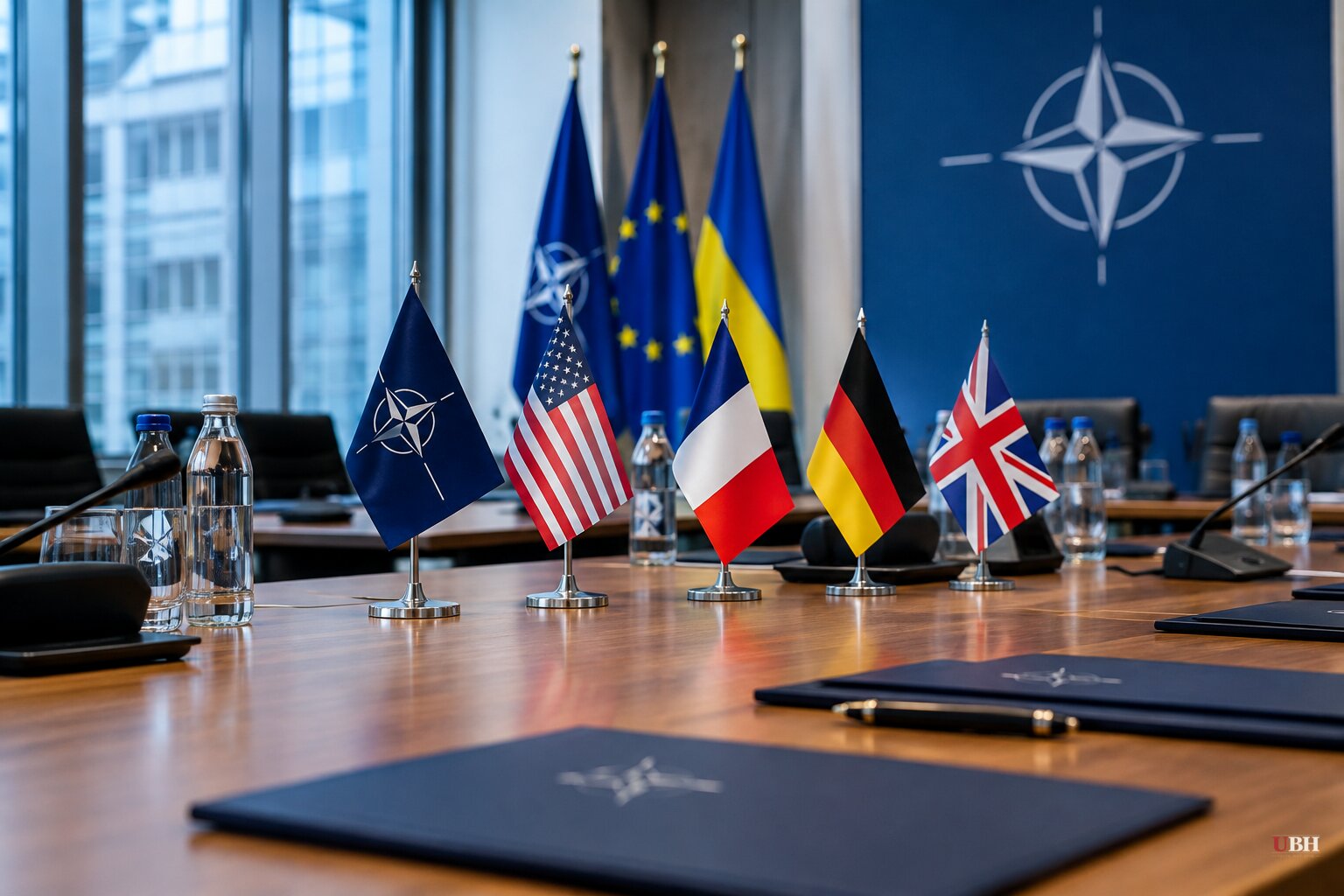
The diplomacy around Ukraine is moving on two tracks this week. One runs through Brussels. The other runs to Abu Dhabi.
NATO spokesperson Allison Hart confirmed that Alliance representatives will meet officials from France, Germany, the United Kingdom and the United States in Brussels later this week. She said the talks follow earlier discussions in Miami and Oslo and will cover further steps toward "a just and lasting end to the war."
US special envoy Steve Witkoff said his team will sit down with representatives from France, Germany, the UK, the EU and NATO. On the agenda: security guarantees for Ukraine, Europe's post-war security architecture, and economic opportunities tied to Ukraine's reconstruction.
The European Commission is also leading its own round of talks with the US, France, Germany, Britain, NATO and the World Bank. The focus there is what can be done to keep Kyiv running through the winter and how to back the US-led peace process.
The Abu Dhabi talks
The Brussels meetings come ahead of working-level negotiations between Ukraine and Russia in Abu Dhabi on Nov. 10-11, mediated by the United States.
President Volodymyr Zelenskyy said in Berlin on Tuesday, Nov. 3, that he expects this round and later ones to "pave the way for a trilateral format at the level of heads of state and government." He said Donald Trump has influence over Vladimir Putin and the United States has the power to push Moscow toward diplomacy.
Moscow is setting its own terms. Kremlin spokesman Dmitry Peskov said, according to Russian state news agency TASS, that the talks will cover security issues, including guarantees. "These can only be mutual," he said.
Peskov also ruled out any European role in the trilateral meeting, saying its format has already been agreed and that "that is between Russia and Ukraine."
That sits awkwardly with Brussels. Britain, France and Germany are the countries expected to carry much of any guarantee for Ukraine, yet the Kremlin says they will not be in the room where it is discussed.
Air defense and the winter
The talks are happening under fire. Another night of heavy Russian attacks hit power stations in Kyiv and Zhytomyr and a cargo vessel at sea near Odesa.
German Chancellor Friedrich Merz said at a Nov. 3 press conference in Berlin that "two things are crucial before the coming winter: air defense and the energy sector." He said Germany has initiated further aid for both and is implementing it.
Zelenskyy described a "major shortage in air defense," naming PAC-2 and PAC-3 interceptors for Patriot systems and IRIS-T missiles. He said the two leaders also discussed a new support package for Ukraine's F-16s.
Who pays for American weapons
The Pentagon is not a bystander. Bloomberg reported Monday, citing anonymous sources, that the US is preparing to ask NATO allies for more money for the Prioritized Ukraine Requirements List, known as PURL. The program lets allies fund purchases of American-made weapons that are then delivered to Ukraine.
According to Bloomberg, the program faces a shortfall of about $2 billion on packages already approved. The request could come as early as this month, though the amount Washington will seek is unclear.
The gap exists, Bloomberg's sources said, because allied contributions have not kept pace with deliveries. The US has kept shipping before the money arrives. More shipments would deepen the hole.
For American taxpayers, that is a burden-sharing question with a dollar figure attached. Europeans have said repeatedly that they carry the bulk of Ukraine's financial support. The PURL gap is a specific test of whether their payments match their pledges.
The 2027 funding problem
The bigger bill is next year's. Zelenskyy told a recent EU leaders' summit that Ukraine will need almost $80 billion in additional funding in 2027 for defense spending and national resilience, according to the Atlantic Council's account of the summit.
The National Bank of Ukraine now expects GDP to shrink 0.4 percent in 2026. That would be the first annual decline since the drop that followed the 2022 invasion. Russian strikes have closed Ukraine's Black Sea ports and shut down entire industries, the Atlantic Council says.
Bloomberg analysts concluded that imminent economic collapse is unlikely but that sustaining the war through 2027 "will increasingly depend on timely, reliable, and adequate flows of Western financing."
EU leaders are looking to non-members, including Japan, Norway, Switzerland, Canada and Britain, to contribute more. The Atlantic Council's analysts argue that European governments worried about populist backlash at the polls should weigh the cost of aid against what a Russian victory would cost. That is their argument, not an established forecast.
A European force, rehearsed
Europe is also preparing for the day after a ceasefire. Starting next week, the Anglo-French-led Multinational Force-Ukraine will run Exercise Koalicja in Poland, with about 2,800 soldiers standing in for a deployment to Ukraine. Troops come from Britain, France, Poland, Germany, Belgium, Estonia, Lithuania, the Netherlands, Spain, Sweden and Turkey.
The UK Ministry of Defence says the force is not a peacekeeping or ceasefire-monitoring mission and is not connected to NATO. Its stated purpose is reassurance and helping Ukraine rebuild its armed forces and economy.
An unnamed UK government source told The Guardian that the force would be defensive but could return fire if attacked. The exercise uses European-made aircraft, including Eurofighter Typhoons and Voyager tanker-transports, and troops will not rely on Starlink for communications.
The next fixed date is Nov. 10, when the Ukrainian and Russian delegations are due in Abu Dhabi. Whether any guarantee drafted in Brussels survives Moscow's insistence that guarantees be mutual and Europe-free is the open question.
Sources used for this briefing
7 links from 7 independent newsrooms (syndicated copies of the same report count once)
These are the sources it draws on, linked so you can verify.


