
Original briefings. Zero spin.
Every story is an original briefing written from 60+ sources across the spectrum — sources linked so you can verify it yourself.
 economy
Low Interest (4/10)
June 18, 2026 at 08:48 PM
economy
Low Interest (4/10)
June 18, 2026 at 08:48 PM
Virginia Budget Deadline Looms as Democrats Split Over $2.9 Billion Data Center Tax Break
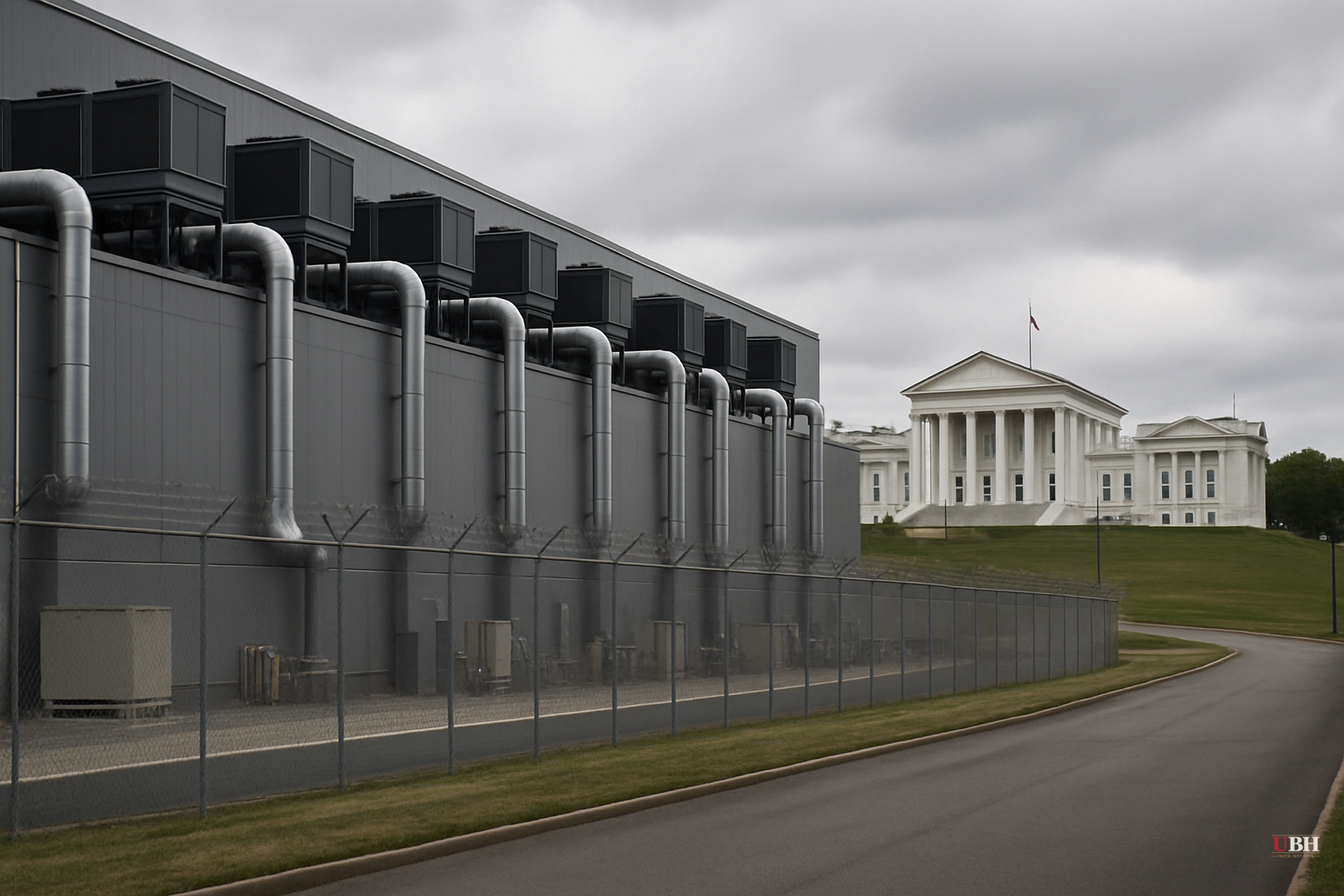
Virginia's Budget Standoff, Explained
Virginia's two-year state budget is supposed to take effect July 1. Democrats control the state Senate, the House of Delegates, and the governor's mansion. They still don't have a deal.
The sticking point is a retail sales and use tax exemption that was designed to attract data center construction to Virginia. When legislators originally put it in place, according to state Sen. Mamie Locke (D-Hampton), the projected cost was $1.5 million per year. The actual cost, as of June 2026, is $2.9 billion per year and growing, Locke told a Chesterfield County audience Tuesday.
That is a massive overshoot by any measure.
Lucas vs. the Tech Industry
State Sen. L. Louise Lucas, the Senate's president pro tempore, has been the loudest voice for eliminating or restructuring the exemption. She launched a statewide "listening tour" this week, appearing in Chesterfield County on Tuesday and Virginia Beach on Wednesday.
"Companies worth trillions of dollars are whining about paying their fair share," Lucas told the Chesterfield crowd Tuesday. "We need to make sure these centers aren't doing harm to our communities."
On Wednesday, speaking to WTKR in Virginia Beach, she was unequivocal about avoiding a government shutdown: "As soon as I can get in the car, I'm on my way back to Richmond. We will have a budget."
Lucas has proposed replacing the exemption with an impact fee that she says could generate as much as $1.7 billion over the next two years.
Not Just a Democrat Fight
The framing of this as a progressive rebellion against tech money is incomplete. State Sen. Glen Sturtevant, a Republican, told the Daily Signal he also wants the exemption repealed.
"I am somebody who thinks we need to get rid of the data center tax break, because I don't think we need to be giving $2 billion a year to huge AI big tech firms," Sturtevant said. "It's ultimately Virginians who pay for that in higher electric bills."
That's a fiscal-conservative objection, not a left-wing one. When a $2.9 billion annual subsidy draws opposition from both the Senate's pro tempore Democrat and a Republican senator on the same grounds, the policy probably has a real problem.
The Case for Keeping the Exemption
The data center industry has a legitimate counter-argument. The exemption helped build Virginia's position as a major data center market, and the tax base, jobs, and infrastructure investment that came with it. Eliminating it abruptly risks signaling to tech companies that Virginia's regulatory environment is unpredictable, potentially slowing future investment at a moment when AI infrastructure demand is surging.
Gov. Spanberger has said she supports maintaining the tax break. "I'm not going to break a contract that the state has signed," she told Cardinal News last month. "What if it's XYZ industry tomorrow or another one the day after. And so, it is essential that the commonwealth of Virginia not just keep its word but actually abide by contracts." The exemption is not set to run out until 2035.
The question is whether the state captured enough offsetting economic value to justify that cost. Based on the sources available, no one in the legislature has publicly answered that question with hard data.
The "Listening Tour" Problem
One detail from Tuesday's stop in Chesterfield merits attention. The event at Manchester Middle School was hosted by state Sen. Mike Jones, who told the audience they would hear from "people from across the spectrum." According to the Daily Signal's Rich Tucker, who was present, every invited speaker — including educators, a meteorologist, and county government officials — spoke in opposition to data centers.
A listening tour where all the listeners agree with the host is a press event, not a listening tour. The public case being built against the exemption is being constructed selectively.
What Happens to Spanberger
The political casualty in this standoff, regardless of how it resolves, is Gov. Abigail Spanberger. Her party controls every lever of state government, and her first year has been consumed by an inability to pass the most basic legislative deliverable: a budget. Even if Virginia avoids a technical shutdown before July 1, the months of public infighting are a record that follows her into the rest of her term.
Spanberger has also criticized senators for failing to produce a concrete plan. "What we're seeing on the Senate side is there is no written proposal," she told WTKR on Monday. "There is no explanation of how it is that they intend to arrive at whatever or what it is they're proposing relative to data centers."
What Comes Next
The House of Delegates released a proposal late last week that would balance the budget and retain the tax break. House Speaker Don Scott, who presides over a 64-36 majority, warned that Lucas has triggered "a civil war among Democrats" and that she is "refusing to negotiate a compromise." Scott had planned to convene the House on Thursday but shelved that until there is some movement among Democrats. The Senate is scheduled to meet next week.
Lucas's proposed impact fee of up to $1.7 billion over two years remains unresolved as of June 18. The commonwealth of Virginia has not had a state government shutdown in modern history. Democrats, however, are bringing a shutdown closer than it has been in modern memory, with full responsibility for the outcome falling on a party that controls every lever of state power.
Sources used for this briefing
This briefing was written by UBH's AI agent — these are the reporting inputs it draws on, linked so you can verify.