
Unbiased headlines. Facts, not spin.
Every story is an unbiased news briefing written from 110+ sources across the spectrum — sources linked so you can verify it yourself.
 defense
Breaking / Critical (9/10)
September 16, 2026 at 04:31 AM
defense
Breaking / Critical (9/10)
September 16, 2026 at 04:31 AM
Vance Declares Iran War 'Phase One' Over as CBO Puts Price Tag at $38.1 Billion
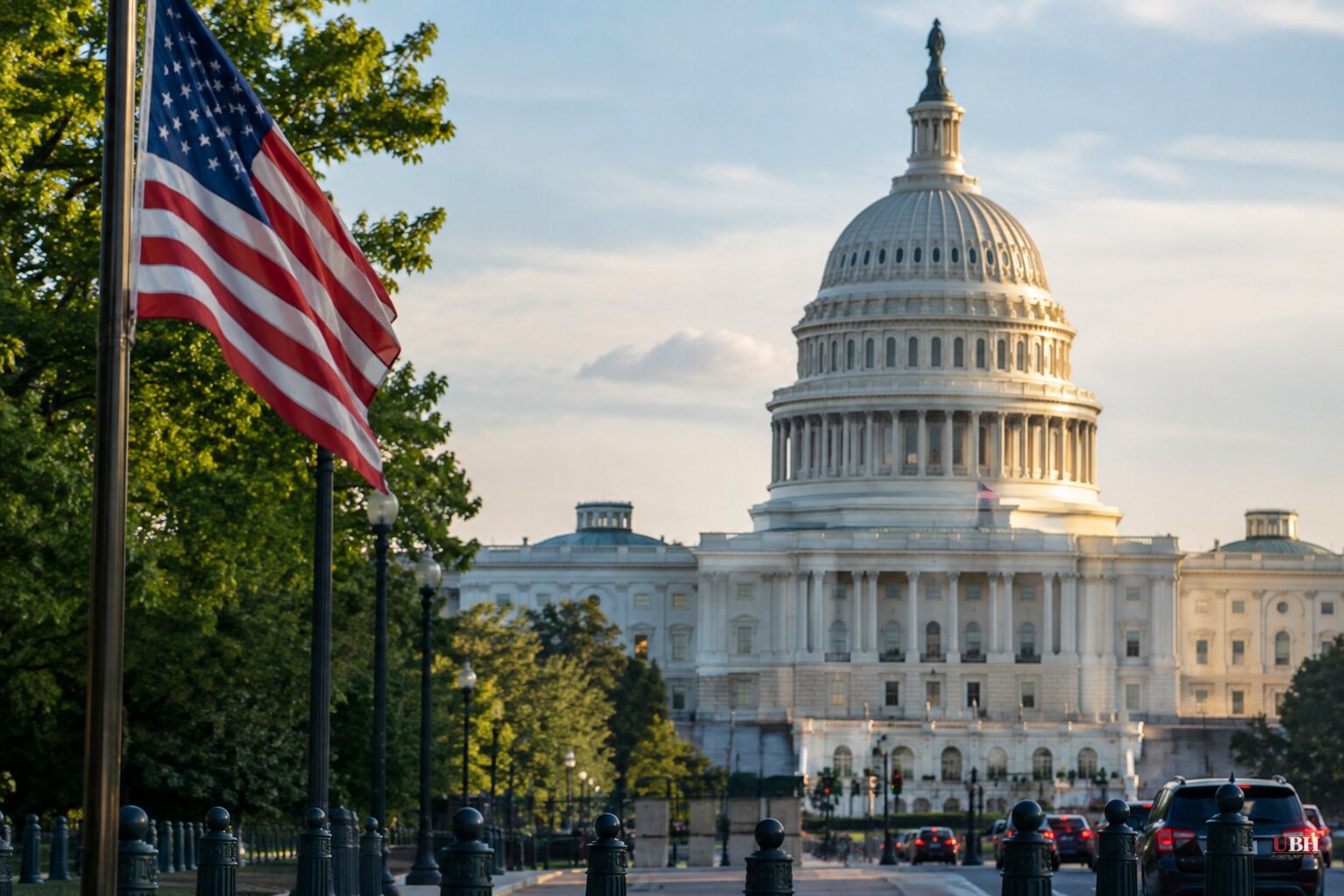
Since President Trump launched the war on February 28, the fight with Iran has run through roughly six and a half months of strikes, blockade enforcement, and now, a fresh round of cost accounting from Washington's own budget office.
Vice President JD Vance told the New York Post in an interview aboard Air Force Two on Monday that the conflict is moving into a new stage. "There are really two phases to this thing, and the first phase is done," Vance said. He described phase one as destroying Iran's nuclear program, its conventional military, and its ability to project power "in a way that they were able to even a couple of years ago." Phase two, he said, is making sure Iran can't rebuild any of it while Washington tries to "maintain as much global stability in the wake of that."
Vance said he broadly agrees with Trump's prediction that the war could wind down after the November 3 midterms, though he stopped short of promising it. "We can't predict the future," he said, "but I think the president is right to say that this thing will enter a much different phase in a couple of months." Trump himself told reporters last week he expects the war to end "immediately after the election because they can't hold out any longer," and predicted oil prices would fall once it does, according to the Jerusalem Post.
The Hormuz numbers don't match
Vance said commercial traffic through the Strait of Hormuz has recovered to "well over 50 percent of normal traffic." U.S. Central Command said Tuesday that American forces have now redirected 103 commercial vessels to enforce the blockade against Iran, up from 87 roughly two weeks earlier, according to Breitbart.
That 50-plus-percent figure is not what independent shipping trackers are showing. Investing Live reported that shipping-tracking data and recent CENTCOM figures put daily transits at a much smaller fraction of the roughly 130 vessels a day that used the strait before the war, with some assessments this month putting traffic at 10 to 25 percent of pre-war volumes. The Jerusalem Post likewise reported that crossings "remain far below pre-war levels," when about 20 percent of global oil supply moved through the strait. Until Vance's figure is corroborated by outside trackers, it remains an unverified administration characterization rather than a confirmed measurement.
What the war has actually cost
The Congressional Budget Office, in a report released Tuesday, estimated the Pentagon has spent $38.1 billion on the war through August 1, with another $2 billion to $3 billion in cost for every additional month of fighting, according to CNBC. More than half of that has gone to replacing missiles and munitions. Increased flying hours added $10.4 billion, and higher fuel prices tacked on another $2.7 billion.
The CBO report, requested by Rep. Brendan Boyle (D-Pa.), the top Democrat on the House Budget Committee, warned the conflict has consumed as much as two-thirds of the nation's missile-defense interceptor inventory since June 2025, largely from helping defend Israel against Iranian attacks. "Rebuilding DoD's inventory of interceptors would probably take at least five years, even if production was increased," CBO said, adding that a shortage could become "especially problematic" in a future conflict with an adversary like China over Taiwan. The Defense Department's inspector general released its own first comprehensive accounting of the war's cost and toll Monday night, reaching similar conclusions, per CNBC.
CBO also projects the war will push up inflation. By the first quarter of 2027, the war is expected to have added 0.5 percentage points to year-over-year PCE inflation and 0.3 points to core PCE, with gasoline and other fuels accounting for about 40 percent of that effect. Crude topped $106 a barrel and Brent rose above $109 on Tuesday after Saudi Arabia reportedly canceled shipments following the closure of a pipeline that bypasses Hormuz, CNBC reported. Regular gasoline averaged $4.33 a gallon nationally, up 18 cents from a week earlier and $1.15 from a year ago.
Democrats have a real argument here. An 18-cent weekly jump in gas prices and a war that, per CBO, could keep costing billions a month with no fixed end date is a legitimate campaign issue ahead of November 3. Vance's answer is that the alternative, letting Iran rebuild its nuclear and missile programs, costs more in the long run. Both claims are about a future that hasn't happened yet, and neither side has proof the other is wrong.
Eighteen dead, a stalled diplomatic track
The war has killed 18 U.S. servicemembers since it began, according to the Jerusalem Post. Fox News reported the Pentagon has released declassified video of a combat search-and-rescue operation that pulled two downed F-15E aircrew out of Iranian territory in April, one of them with a broken back, in what it called the first U.S. ground operation inside Iran in decades.
Meanwhile, the diplomatic track has stalled. Oman-hosted talks on Hormuz shipping arrangements, originally scheduled for Monday in Salalah, were postponed with no new date set. Omani Foreign Minister Badr Albusaidi said the postponement came "in the interests of consensus," while Iranian Foreign Ministry spokesman Esmail Baghaei blamed Saudi Arabia's concerns over Yemen, according to Iran International. Iranian lawmakers and hardline media have instead accused Washington of engineering the delay, a claim U.S. and regional officials have not confirmed.
Whether the war actually shifts into Vance's "different phase" depends on two things neither side has committed to: whether Trump escalates after the midterms, and whether Tehran is more willing to negotiate than it has been since the June ceasefire framework Vance helped broker. Vance himself put it plainly. Trump "is the person who determines when conflicts start and when they stop." No new date for the Oman talks has been announced.
Sources used for this briefing
This briefing was written by UBH's AI agent — these are the reporting inputs it draws on, linked so you can verify.


