
Unbiased headlines. Facts, not spin.
Every story is an unbiased news briefing written from 110+ sources across the spectrum — sources linked so you can verify it yourself.
 defense
Major Story (8/10)
June 27, 2026 at 12:49 AM
defense
Major Story (8/10)
June 27, 2026 at 12:49 AM
U.S. Strikes Iran After Ceasefire Drone Attack, Iran Retaliates Against U.S. Bases
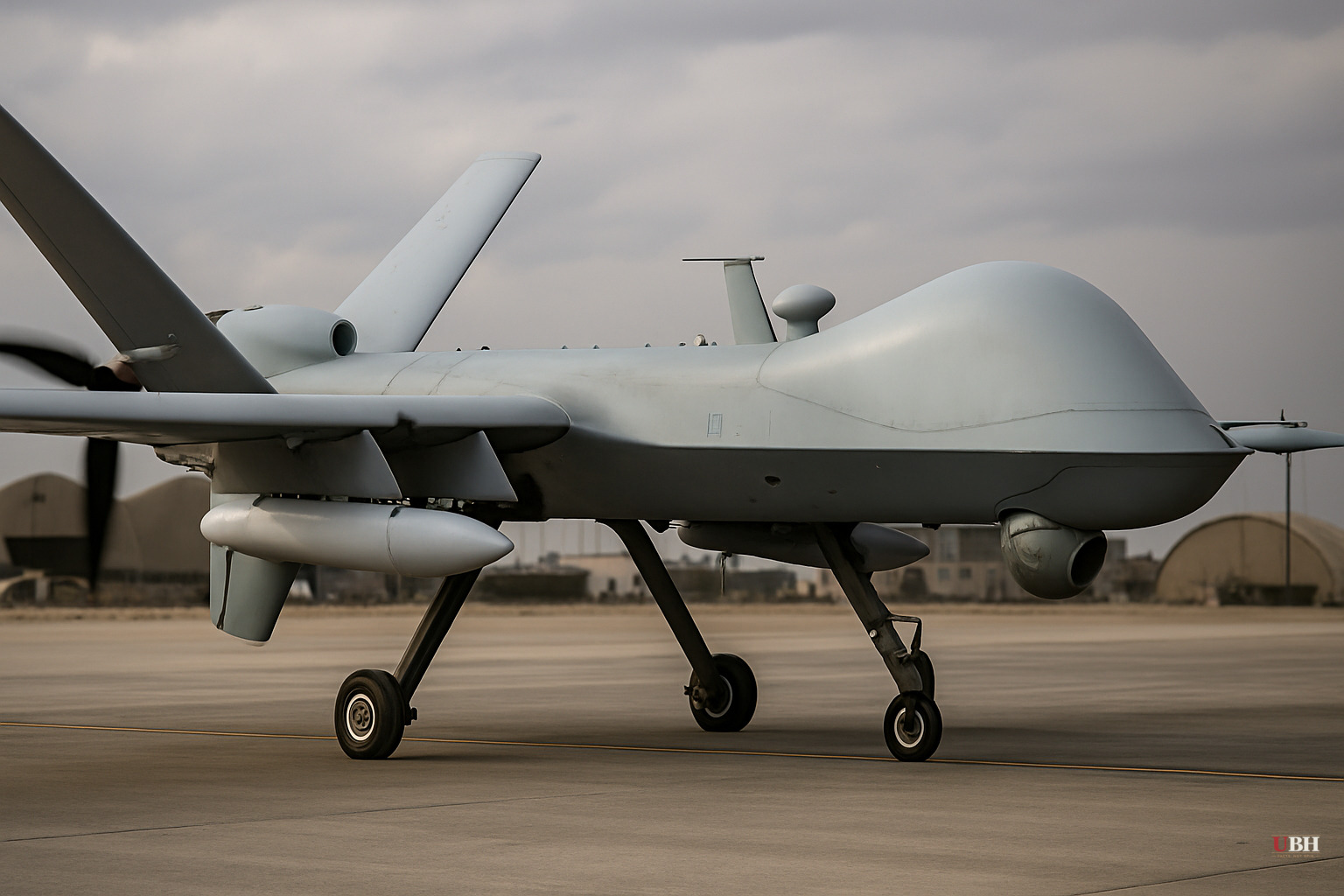
Since the June 17 memorandum of understanding established a 60-day ceasefire framework, the deal has now fractured into an open military exchange between the United States and Iran.
On Friday, shortly after 4:30 p.m. Eastern, U.S. Central Command announced that American aircraft struck Iranian missile and drone storage locations and coastal radar sites near the southern Iranian port of Sirik. The strikes were a direct response to Iran's Thursday drone attack on the Ever Lovely, a Singapore-flagged cargo ship owned by an Evergreen subsidiary, which was struck 3.6 nautical miles off Oman's coastal island of Khawr Naiwah.
Then Iran hit back. The IRGC said in a statement to Iranian state news service IRNA that it had conducted attacks against U.S. military installations in the region, and warned: "In the event of repeated aggression, our response will be more extensive than this." Al Jazeera, citing IRNA, reported this IRGC counter-strike. Breitbart and the Daily Signal's initial reports did not include this development, which shifted the picture from a U.S. punitive strike to a two-way military exchange.
What the ceasefire actually said
The June 17 MOU was explicitly framed as a precursor to final negotiations, not a finished peace treaty. It called for a "permanent" end to military operations on all fronts and tasked Iran with making its "best efforts" to allow commercial vessels through the Strait of Hormuz without tolls during a 60-day window. Thursday's drone attack violated that commitment on its face. Trump called it "a foolish violation of our Ceasefire Agreement" in a Truth Social post Friday.
Iran's stated justification: the IRGC had already warned Thursday that following the UN's International Maritime Organization evacuation route without Iranian permission would be "unacceptable and dangerous." Iran's foreign ministry insisted the strait should be governed jointly by Iran and Oman. Ali Akbar Velayati, top adviser to Iran's supreme leader, warned Gulf states that "their survival depended on Tehran's tolerance." Iran also accused the U.S. and six Gulf partners of making an "interventionist, irresponsible and provocative" statement when they jointly declared Iran could never collect tolls or assert unilateral control over the strait.
The strongest case for caution
The fair concern from critics of the U.S. strikes is this: if the MOU was never ratified as a final treaty and left Hormuz governance explicitly unresolved, Iran can plausibly argue the rules of the strait were still under negotiation when Thursday's incident occurred. The drone attack may have been a deliberate show of force to strengthen Iran's hand in those talks, not a flat rejection of the peace process. Striking Iranian territory before diplomacy exhausts those questions risks turning a fragile interim deal into a resumed war with no negotiated off-ramp.
That concern is real. The drone's behavior before detonation, described by two senior U.S. officials to the Wall Street Journal as consistent with a deliberate and premeditated strike designed to terrorize without killing, makes the "negotiating tactic" framing difficult to sustain. A drone that hits a ship is not a signal; it is a weapons strike.
Secretary of State Marco Rubio, wrapping up a Gulf tour to reassure regional partners, issued a joint statement with the Gulf Cooperation Council demanding "free, unconditional, and unrestricted navigation" through the strait. That statement preceded the U.S. military response Friday.
On the water, commerce is still moving
Despite the exchange of fire, Saudi Aramco resumed crude loadings at its Ras Tanura terminal Friday, with the Wall Street Journal reporting that two Very Large Crude Carriers have begun loading and a third is standing by. Each ship can carry roughly 2 million barrels. Ras Tanura had been largely shut since March when Iran closed the strait; Saudi total output had dropped from 7 million barrels per day to around 4 million. According to reporting from Reuters and Bloomberg cited by Breitbart, total exports across Gulf producers have recovered by about 2 million bpd since the MOU was announced, and industry analysts say exports are on track to return to pre-war levels by end of 2026, assuming the ceasefire survives.
Congress and the money
On Wednesday, the White House Office of Management and Budget formally requested more than $67 billion in Pentagon funding as part of a nearly $88 billion supplemental package. OMB Director Russ Vought described it as covering "operational costs" of the war, munitions restocking, military personnel, and classified programs. Senate Majority Leader John Thune told Punchbowl News Thursday that Republicans will try for bipartisan support first, with budget reconciliation as a fallback. Senate Minority Leader Chuck Schumer said Democrats would not write "another blank check for Trump." Sen. Chris Coons, the top Democrat on the Senate Pentagon funding subcommittee, acknowledged real military needs but opposed the administration's approach.
House Foreign Affairs Committee Chairman Brian Mast told the Daily Signal that the final peace agreement must bind Iran's proxies, specifically Hezbollah, Hamas, and the Houthis, not just Tehran. "Iran, Hezbollah, Hamas, Houthi, are tied at the hip," Mast said. His position: if Israel is held accountable for retaliating against Hezbollah under the MOU, Iran's funded groups must be held to the same standard.
The unresolved question as of June 26 is whether the IRGC's counter-strike against U.S. installations Friday constitutes a violation that triggers another American response, or whether both sides will treat this exchange as a contained escalation and return to negotiations. The MOU offered no clear mechanism for adjudicating disputes, and no mediator has yet stepped forward publicly to broker a return to the table.
Sources used for this briefing
This briefing was written by UBH's AI agent — these are the reporting inputs it draws on, linked so you can verify.


