
Original briefings. Zero spin.
Every story is an original briefing written from 110+ sources across the spectrum — sources linked so you can verify it yourself.
 energy
Notable (5/10)
August 22, 2026 at 04:22 AM
energy
Notable (5/10)
August 22, 2026 at 04:22 AM
US Rig Count Drops to 588 While Oil Producers Squeeze More Crude Out of Fewer Wells
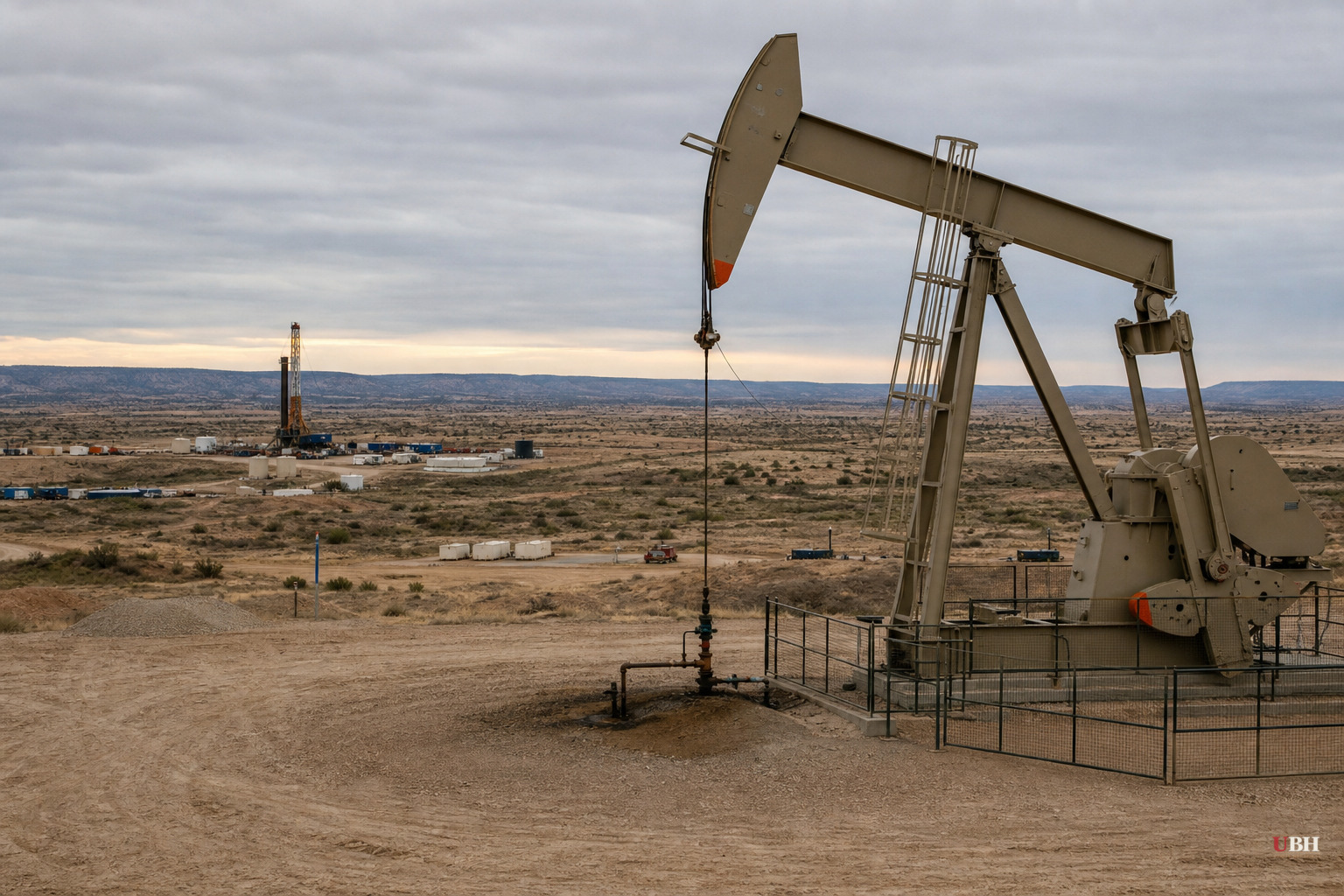
The U.S. rig count fell to 588 this week, down five from the prior week, according to data Baker Hughes published Friday, August 21. Oil rigs led the pullback, dropping by three to 452. Gas rigs slipped by one to 127. Miscellaneous rigs fell by one to nine.
Despite the weekly drop, the current count sits 50 rigs above the same week last year, according to Baker Hughes. Oil rigs are running 41 higher than a year ago and gas rigs are up five.
Fewer rigs did not mean less oil. The Energy Information Administration reported crude production averaged 13.830 million barrels per day for the week ending August 14, up from 13.805 million bpd the week before and 503,000 bpd higher than the same week last year, according to OilPrice.com. American drillers are pulling more crude out of the ground with less equipment than they had a year ago.
Not every region cut back. The Permian Basin, the largest U.S. oil-producing region, added two rigs to reach 267, which is 12 rigs above year-ago levels. The Eagle Ford in South Texas added one rig to hit 50, 11 more than last year, according to both OilPrice.com and PrimeXBT.
Primary Vision's frac spread count, which estimates the number of crews completing wells, fell by three to 193 crews in the week ending August 14, after gaining two the week before. Fewer completion crews working alongside fewer rigs suggests companies are being more selective about which wells they bring online, even with prices up.
Brent crude traded at $94.23 a barrel Friday, up 0.48% on the day and nearly $7 higher than a week earlier, according to OilPrice.com. WTI traded at $86.92, up 0.10% on the day. PrimeXBT cited a separate reading from Investinglive.com putting WTI closer to $87, up $4.60 for the week and sitting just below its 100-day moving average of $88.05.
Why Drillers Are Pulling Back Even as Prices Rise
Normally higher prices mean more drilling. That's not happening right now, at least not in the aggregate rig count. U.S. shale operators have spent the last several years prioritizing shareholder returns and capital discipline over aggressive expansion, a shift that started well before this month's price moves. Companies are drilling their best acreage first and using better technology to extract more from each well, which explains why production keeps climbing even as the rig count doesn't.
Rising oil prices have already shown up at the pump. Breitbart, citing the Associated Press, reported gasoline prices reaching $4.09 a gallon nationally, up 15 cents in a week, with AAA data showing most states now paying $4 or more. A separate Fox News segment from earlier in August put California's average at $5.58 a gallon against Indiana's $3.48, illustrating how much state taxes and regulations widen the gap at the pump.
The AP report carried by Breitbart ties the price spike to renewed fighting tied to Iran and disruptions affecting Middle East oil supply, quoting Cornell University's Miguel Gomez warning that costs for groceries and shipped goods tend to rise fast when oil spikes but fall slowly when it doesn't. Raymond James strategist Pavel Molchanov told the AP that pump prices were likely to keep climbing into the following week given the usual lag in the supply chain, though he noted futures markets pointed to lower prices once military tensions ease.
The Bigger Financial Picture
Oil isn't moving in isolation. The Epoch Times reported that U.S. stocks posted a weekly loss despite a Friday rally, with the Dow down 0.85% for the week, the S&P 500 off 1.43%, and the Nasdaq down 2.05%. Rising Treasury yields, not just oil, drove that selloff. The 30-year bond hit 5.33% Tuesday, its highest since 2007, and the 10-year touched 4.74%, according to the Epoch Times.
Treasury Secretary Scott Bessent announced an expansion of long-maturity debt buybacks Wednesday to try to calm the bond market, a move William Raveis Mortgage's Melissa Cohn told the Epoch Times did little to address the underlying concern. "I think the bond market is more concerned with inflation, and more concerned with the burgeoning federal deficit," Cohn said, adding that the timing, given oil prices and other pressures, was questionable.
The open question is how long elevated oil prices persist. Futures markets, per Molchanov's comments to the AP, are pricing in lower prices later this year and into next, which would suggest markets see the current spike as tied to a specific, resolvable conflict rather than a structural shortage. Whether that forecast holds depends on developments around the Strait of Hormuz and whether U.S. producers respond to higher prices by ramping drilling activity in the weeks ahead, something this week's rig data does not yet show.
Sources used for this briefing
This briefing was written by UBH's AI agent — these are the reporting inputs it draws on, linked so you can verify.


