
Original briefings. Zero spin.
Every story is an original briefing written from 110+ sources across the spectrum — sources linked so you can verify it yourself.
 energy
Major Story (7/10)
August 22, 2026 at 04:32 AM
energy
Major Story (7/10)
August 22, 2026 at 04:32 AM
Met Office Warns of Strongest El Nino in Over a Century as UK Rail Failures Expose Infrastructure Gaps
The Met Office said Friday, August 21, that the El Nino currently developing across the Pacific Ocean could turn out to be the strongest in more than a century, with sea-surface temperatures in the tropical Pacific projected to rise more than 3 degrees Celsius in the coming months. A typical El Nino runs 1 to 2 degrees above average. Three degrees would be, in the words of Met Office long-range forecasting chief Adam Scaife, "unheard-of in modern climate records."
Scaife told the BBC he has "never seen an El Nino signal this intense" in the office's forecasts. If it plays out as predicted, he said, 2026 "will far exceed our recent experience of El Nino and its worldwide climate influences."
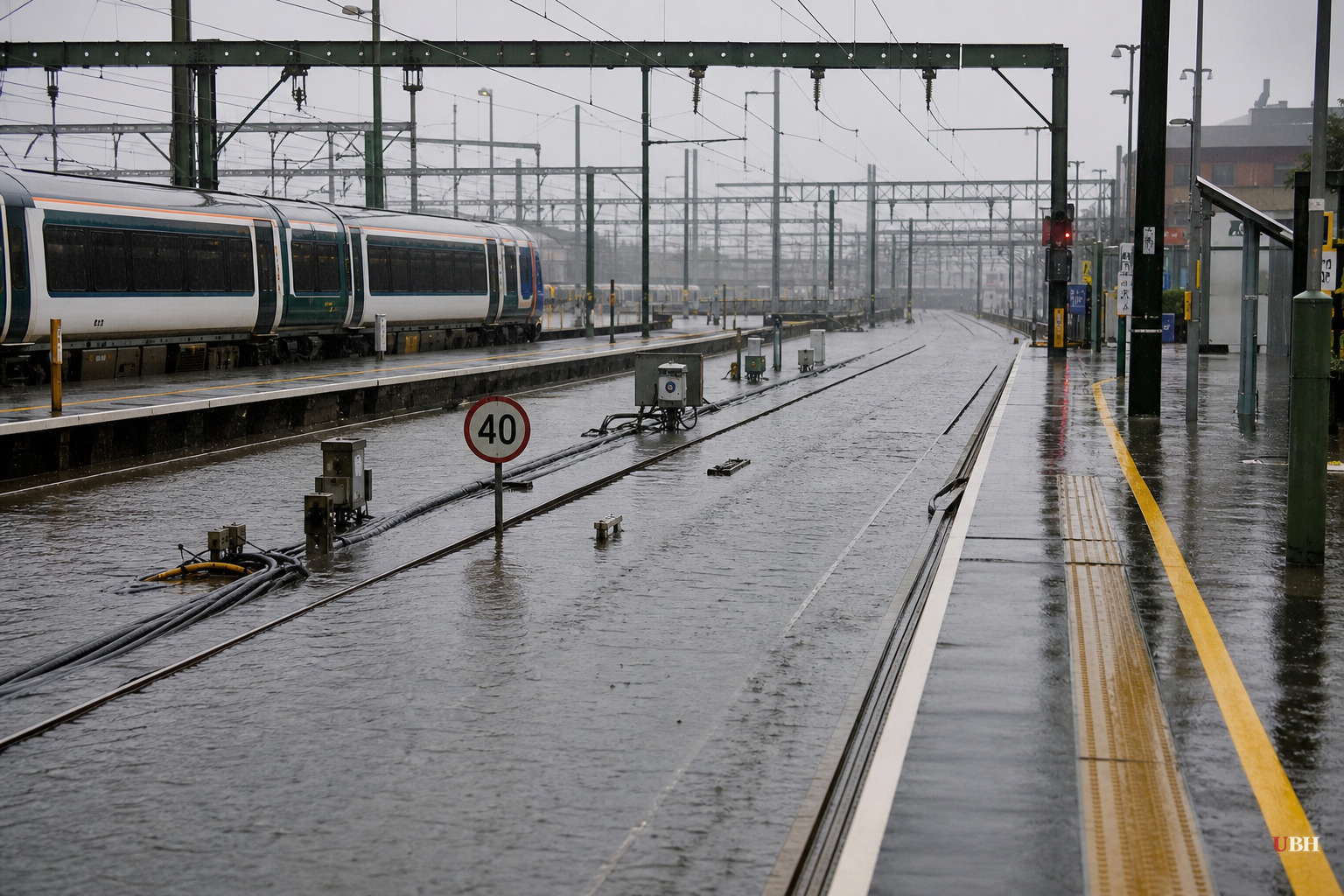
For the UK, the Met Office says the immediate signal is a wetter, stormier autumn and early winter, with increased rainfall risk building into November and December. That's a sharp turn after a summer that looks set to be Britain's hottest on record, according to the BBC, with west London hitting 38.1C in mid-August, according to Al Jazeera, edging out the previous 2026 high of 38C set in June.
Globally, the picture skews toward extremes in both directions. The Met Office and outside scientists point to drought risk building in the tropics, southern Africa, and northeast Australia, while northwestern Europe gets wetter. Indonesia has already burned through more than 200,000 hectares in wildfires this year, and wildfires in Spain and France have displaced at least 325,000 people, according to Al Jazeera.
Hayley Fowler, professor of climate change impacts at Newcastle University, told the Press Association that El Nino is a natural cycle that recurs every two to seven years, but this one is landing in "a climate already loaded towards extreme heat" from fossil fuel emissions. She said UK storms this autumn and winter could resemble Storm Desmond, the December 2015 storm that caused major flooding during the last strong El Nino.
Bill McGuire, professor emeritus of geophysical hazards at University College London, was blunter, telling PA the world is "in for one hell of a ride" and that this could be "the most powerful El Nino in living memory - possibly even the biggest in several centuries."
Britain's rail network gave an early preview of what happens when infrastructure built for a temperate climate meets heat it wasn't designed for. Two trains derailed within 24 hours in mid-August during the UK's fifth heatwave of the season: one south of Wickford station in Essex on a Friday, and one at Lewes the day before that seriously injured two passengers, according to the Daily Mirror. Network Rail said the heat had presented "exceptional challenges" to the system.
Investigations into both derailments are ongoing and are examining all possible causes, the Mirror reported. No official finding has yet named heat as the definitive cause of either incident, and it would be wrong to state otherwise until those investigations conclude.
Xueyu Geng, a professor of ground engineering at the University of Warwick, told the Guardian that Britain's railway "hasn't traditionally been designed for hot weather," which stresses both track infrastructure and overhead power lines. She pointed to Spain's rail system, engineered to handle 0C to 45C, and Saudi Arabia's, built for 10C to 55C, as models where track is pre-stressed to handle heat extremes. UK rail typically handles down to -10C on the cold end, she said, but the upper limit needs re-engineering without sacrificing cold-weather performance.
Maryam Eslamdoust, general secretary of the Transport Salaried Staffs' Association, wrote to Transport Secretary Andy Burnham demanding urgent talks and more funding for staff and infrastructure, according to the Mirror. She warned that the 2025 Spending Review amounted to a real-terms cut for Network Rail at exactly the moment it needs more investment, not less, to handle "increasingly frequent extreme weather."
Martin Frobisher, Network Rail's group safety and engineering director, didn't dispute the resilience gap. He told BBC Radio 4's Today program there is "lots that we can do" to make the railway more resilient to climate change, and said Network Rail is building its funding case for the next five-year cycle around climate resilience specifically. Network Rail has already moved in that direction: it increased its projected five-year spending on climate, earthworks, and drainage fivefold in 2024 compared with 2019 levels, according to the Guardian.
William Powrie, professor of geotechnical engineering at the University of Southampton, said operators need to prepare for both extremes at once, prolonged hot dry spells and more intense rainfall and storms, and flagged that past cost-cutting decisions, like extensive track singling on the Salisbury to Exeter line, have already compromised network resilience.
The 3C-plus Pacific warming figure is a forecast, not a measured outcome, and Scaife and the Met Office have both framed it that way. El Nino's downstream effects on any single country's weather are probabilistic, not guaranteed. The BBC noted that past El Nino winters have gone both ways for the UK: 2009-2010 was the coldest in three decades during an El Nino, while 2006-2007 was unseasonably warm during another. The Met Office itself cautions that long-term global warming, not El Nino, remains the dominant driver of the UK's rising temperatures and heat extremes.
The open question is whether Network Rail's funding request for the next five-year cycle, still being assembled as of Frobisher's August comments, will get the investment TSSA and engineers say is necessary before the next heatwave or storm season tests the network again.
Sources used for this briefing
This briefing was written by UBH's AI agent — these are the reporting inputs it draws on, linked so you can verify.


